Follow Us on Google

From Godwin Tsa, Abuja
The Federal Government has identified 268 federal laws as obsolete, archaic and spent, and will drop them from the statute books as part of a comprehensive review of the Laws of the Federation of Nigeria (LFN).
A further 664 enactments, together with their subsidiary legislation, have been earmarked for inclusion in the LFN 2025. They will be transmitted by President Bola Tinubu to the National Assembly for consideration and passage, to bring them in line with international best practice.
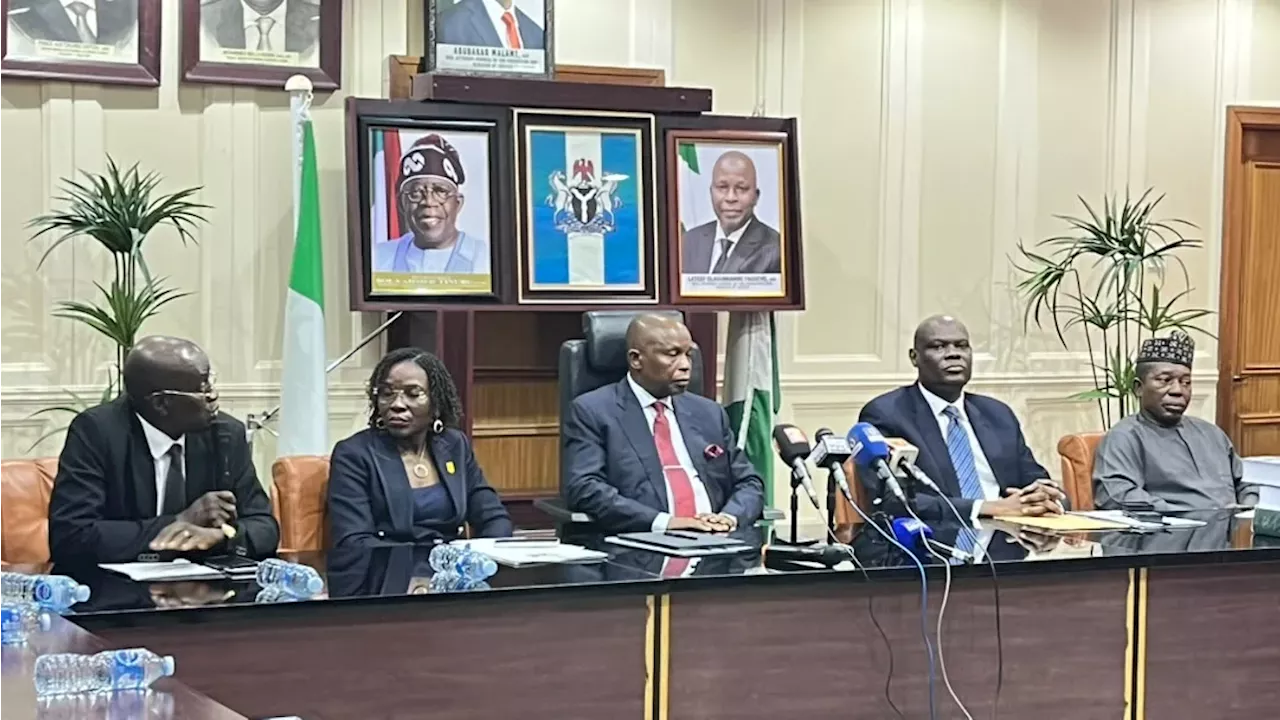
The Attorney-General of the Federation and Minister of Justice, Prince Lateef Fagbemi, disclosed this in Abuja on Thursday while receiving the report of the Law Review Committee, chaired by Olawale Fapounda.
First review in over two decades
Fagbemi noted that the last official review of the Laws of the Federation was done in 2004. He said more than 20 years had passed, during which Nigeria had seen significant legislative, constitutional, institutional and technological changes.
According to him, new enactments and amendments had accumulated over the period, making a comprehensive review imperative to keep federal laws coherent, current, accessible and responsive to the country’s needs.
He described the exercise as a major milestone in the Federal Government’s efforts to strengthen the justice sector and modernise the legal framework.
The AGF said the Laws of the Federation must serve as a reliable reference for the courts, legal practitioners, public institutions, investors and the general public.
Fagbemi said the committee examined 932 federal enactments and 731 pieces of subsidiary legislation. Of the 932 enactments, 664 were identified for inclusion in the LFN 2025.
The work was carried out through 14 thematic working groups, supported by retreats and technical engagements in different locations.
These sessions, he said, allowed the groups to harmonise their outputs, benchmark international best practice and strengthen quality assurance.
Other News
He commended the chairman and members of the committee for their diligence and professionalism, particularly in the face of logistical and technical challenges.
The AGF said the next step was to submit the report to the President for onward transmission to the National Assembly.
He called for the cooperation of lawmakers in ensuring timely consideration of the proposed measures, noting that the exercise required the continued collaboration of the Executive and the Legislature.
He warned that the two-decade gap between reviews must not be repeated because of its negative consequences for national development.
“We must strengthen our capacity to track new enactments, amendments and subsidiary legislation so that our laws remain current and responsive to emerging developments,” he said.
He added that the exercise must establish a sustainable foundation for periodic review and updating of the laws, with the ultimate aim of building a modern, coherent and accessible legal framework that promotes the rule of law, strengthens the administration of justice, supports effective governance, protects citizens’ rights and contributes to national development and security.
Fagbemi stressed that the quality, accuracy and practical utility of the final publication must remain the priority.
He thanked development partners and collaborating institutions for their support: the ROLAC Programme, the Law Commission of England and Wales, LexisNexis South Africa, the Lagos State Law Reform Commission and Law Pavilion.
Fapounda said it took the committee more than two years to review, harmonise and consolidate the federal legislation.
He identified areas requiring further legislative attention, including archaic statutory language, cumbersome cross-references, outdated chapter numbers and inconsistencies in the sequencing of some Acts.
He thanked the Federal Government for funding the committee’s work.