Follow Us on Google

By Josfyn Uba
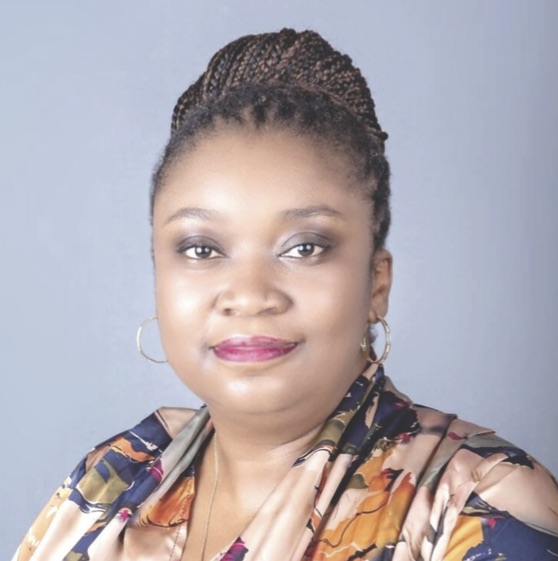
Ifeoma Malo is a lawyer, energy access expert, and CEO/Co-founder, Clean Energy Hub, a leading voice in renewable energy, climate policy and strategy told Daily Sun, in this interview that women must be intentionally included in energy, climate, and development policies, rather than simply being mentioned in them.
We are just four years away from the 2030 SDG deadline. Are you optimistic about where women stand in the global sustainability agenda?
I am cautiously optimistic about the role of women in Nigeria’s sustainability agenda. Women are already driving change at the community level by adopting clean cooking solutions, running energy and climate-smart businesses, managing savings groups, and addressing climate impacts that affect their livelihoods. Globally, women make up 32% of the energy workforce, indicating that many still face barriers such as limited access to finance, skills, mentorship, and opportunities for decision-making. As we approach 2030, women must be intentionally included in energy, climate, and development policies, rather than simply being mentioned in them.
We often hear about global climate goals. What are the most pressing sustainability challenges you see right now in our local context, and how are women uniquely positioned to solve them?
The most pressing local challenges are energy poverty, the climate finance gap for enterprises, and weak circular economy infrastructure. Energy poverty creates vulnerabilities that terrorists exploit. The Chibok girls became targets where development, especially electricity, was absent. Meanwhile, global grants are declining, yet local entrepreneurs can’t access capital to scale solutions. Women are uniquely positioned to solve these because they experience them most directly. A woman managing a household without electricity knows exactly what access would mean. The lack of energy access greatly affects women and does so differently. When women have access to electricity, it empowers them to become more economically engaged and helps them become contributors to household income. A female farmer feeling post-harvest losses becomes the fiercest advocate for solar dryers. We saw this in Gombe State: 50 women with solar tools generated 40% income increases and 400 jobs.
In Abuja, women-led cooperatives achieved 70% clean cookstove adoption within months. Women don’t just adopt solutions; they multiply them through networks. The problem isn’t that women lack solutions; it’s that financing hasn’t caught up to their potential.”
Research shows that when we give women resources, we gain innovation. Can you share a project where a woman-led initiative outperformed traditional methods because of a more inclusive approach?
Let me tell you about our Inclusive Climate Entrepreneurship project in two Abuja communities, Nyanya and Kpaduma. We piloted a model designed specifically for rural women microentrepreneurs. Instead of imposing top down solutions, we used our Street Business School approach: we listened first, then trained them in financial literacy and clean energy business models, formed them into cooperatives, and secured microloans at just 1% interest through microfinance partnerships.
The results were striking. Within months, 70% of these women transitioned to clean cookstoves, not because we mandated it, but because they calculated the health and cost benefits themselves. They became peer mentors, recruiting neighbors into the cooperatives. Business productivity increased, respiratory issues declined, and they began scaling without waiting for handouts. Compare that to traditional methods, where donors install technology and leave. Those projects often fail because they ignore local knowledge and ownership. Our women-led approach worked because the women weren’t recipients; they were decision makers. They adapted solutions to their realities. That’s what inclusive design delivers: solutions that stick because the people who need them built them.”
As we move deeper into 2026, we are seeing a shift from “reporting” sustainability to “executing” it. What practical changes should businesses be making to stay relevant?
Other News
Businesses should focus on working hand in hand with local partners to understand and drive real impact in grassroots communities. These are the people most affected by climate change and energy poverty. By collaborating closely, companies can deliver solutions that truly meet local needs, empower women, and create lasting social and environmental benefits. However, in executing women-owned businesses should also toot their horns and report their business successes and outcomes. Women are still not seen or heard enough in this industry, and sometimes don’t get enough spotlight for the work they do or the innovations they build. So I strongly advocate executing and reporting.”
If there is one thing you want the government and private sector to “give” to women this year to ensure a sustainable future for all, what would it be?
If there is one thing the government and private sector should give to women this year, it is access, access to affordable finance, skills, and opportunities. Nigerian women already have the ideas, discipline, and networks to drive sustainable change, but they are often locked out of funding and decision-making.
The theme for International Women’s Day (IWD) 2026 is “Give To Gain”, which emphasizes the power of reciprocity—the idea that when we invest in and “give” to women (through resources, mentorship, and opportunity), the entire community “gains.”
How does this philosophy resonate with your work in sustainability?
The Give To Gain theme highlights a reality that I experience in my work at CTH, where we believe that women are natural multipliers. They plan carefully, manage resources, and invest wisely. They easily form or mobilize themselves into groups, cooperatives, and networks, sharing knowledge and encouraging others to adopt new practices. For instance, in our pro-empowering women through microcredit and productive use of renewable energy supported by Climate KIC and Irish Aid, we trained 200 women in two different communities, Kpaduma and Nyanya in Abuja, on finance, entrepreneurial skills, and clean technology adoption. We also established a cooperative for them and connected them to a microfinance bank, allowing them to access microloans to expand their businesses and adopt clean energy solutions. As a result, these women were able to quickly embrace sustainable practices, reduce their reliance on polluting fuels, and create lasting benefits for their families and communities.
In what ways has “giving” back to your community or industry helped you “gain” as a leader?
Giving back has been central to my growth as a leader. By supporting women in communities through training, mentorship, access to finance, and clean energy solutions, I have seen them thrive, form cooperatives, and influence others. Their successes inspire new ideas, build trust, and create stronger networks, which in turn strengthen my leadership and help me drive a bigger impact across the energy sector. Even more important is my philosophy on giving back through mentorship and promoting women deliberately into leadership positions. My gain is when I see women who passed under me or through me succeed. The only thing I ask is that they pay it forward.
Can you recall that moment that led you to pursue a career in sustainability, and how have you navigated being a woman in a field that often intersects with male-dominated sectors like energy and construction?
Two moments shaped my path to sustainability. The first was professional: working in government, I watched brilliant young entrepreneurs, especially women and those without connections, hit wall after wall. No support. No capital. No pathways. The system simply wasn’t built for them. The second was deeply personal: the kidnapping of the Chibok girls. Those young women were pursuing education to lift themselves out of poverty, yet they became targets. The most glaring absence in their region was electricity. No power meant no development, and that vacuum created space for insurgency. Women and girls became casualties of that neglect. Those experiences forged my conviction: the government alone cannot solve Africa’s energy problems. We need private sector-led solutions that empower those closest to the challenges. Navigating male dominated energy and construction spaces hasn’t been easy. I learned early that as a woman, your expertise gets questioned differently. So I let results speak, like growing an industry by 55% and expanding market size by 40% in just two years at Power For All. More importantly, I’ve made it my mission to pry open doors for others. At Clean Technology Hub, we’ve funded over 500 start-ups, with half of these being women-owned start-ups and MSMEs. We have intentionally multiplied women and youth in this sector. That’s how we create lasting change, not by waiting for seats at existing tables, but by building our own.”
Who was the woman who “gave” to you early in your career, and how are you paying that forward to the next generation of female sustainability practitioners?
The women who ‘gave to me’ early were not a single person, but a network of women in government, in development, and in the private sector who took me aside and said, ‘You will be questioned differently in rooms. Be over prepared. Let the numbers speak. And when you get a seat, do not be the only one sitting. They taught me that navigating male-dominated spaces like energy and construction requires not just competence, but strategy. They showed me how to absorb the slights without absorbing the doubt. They gave me the gift of honest feedback when I needed it most. I pay it forward by design, not by accident. At Clean Technology Hub, we intentionally hire women and create space for women to thrive. We have also built programs that multiply women in this sector. Our SheSustains Accelerator supported 273 women in the three cohorts we did, with 56 receiving grants. We ensured Persons with Disabilities were included, and one emerged as an awardee. Our Driving Local Solutions project in Gombe led to the formation of five women-led cooperatives and linked them to microfinance institutions that have lent to them and are helping to inject capital into their small businesses. But mentorship alone is not enough. We put capital behind our commitment of $67,000 in grants to women-led enterprises, 5,200 women-led microenterprises supported since inception. We are not just opening doors; we are building an entirely new wing of the house where women hold the keys. That is how lasting change happens.
For a young girl reading this and wants to “save the world,” what is the first step she should take?
To the young girl who wants to change the world: you have all the potential within you. I advise young girls and ladies all the time to dream, but act on those dreams. Write them down one by one. All you need to do is start where you are. Learn more about the issues you want to tackle and how you plan to address them. Ask questions, seek mentorship, and believe in your ideas. You don’t have to save the whole world at once; focus on solving one problem at a time, in your home, school, community, and eventually, the world.”