Follow Us on Google
From Juliana Taiwo-Obalonye, Abuja
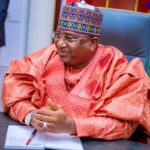
In a sweeping critique of Nigeria’s 25-year democratic experiment, Minister of Federal Capital Territory, Nyesom Wike warned that elections alone have bred “ritual without substance,” failing to deliver roads, power, and hospitals that dignify citizens.
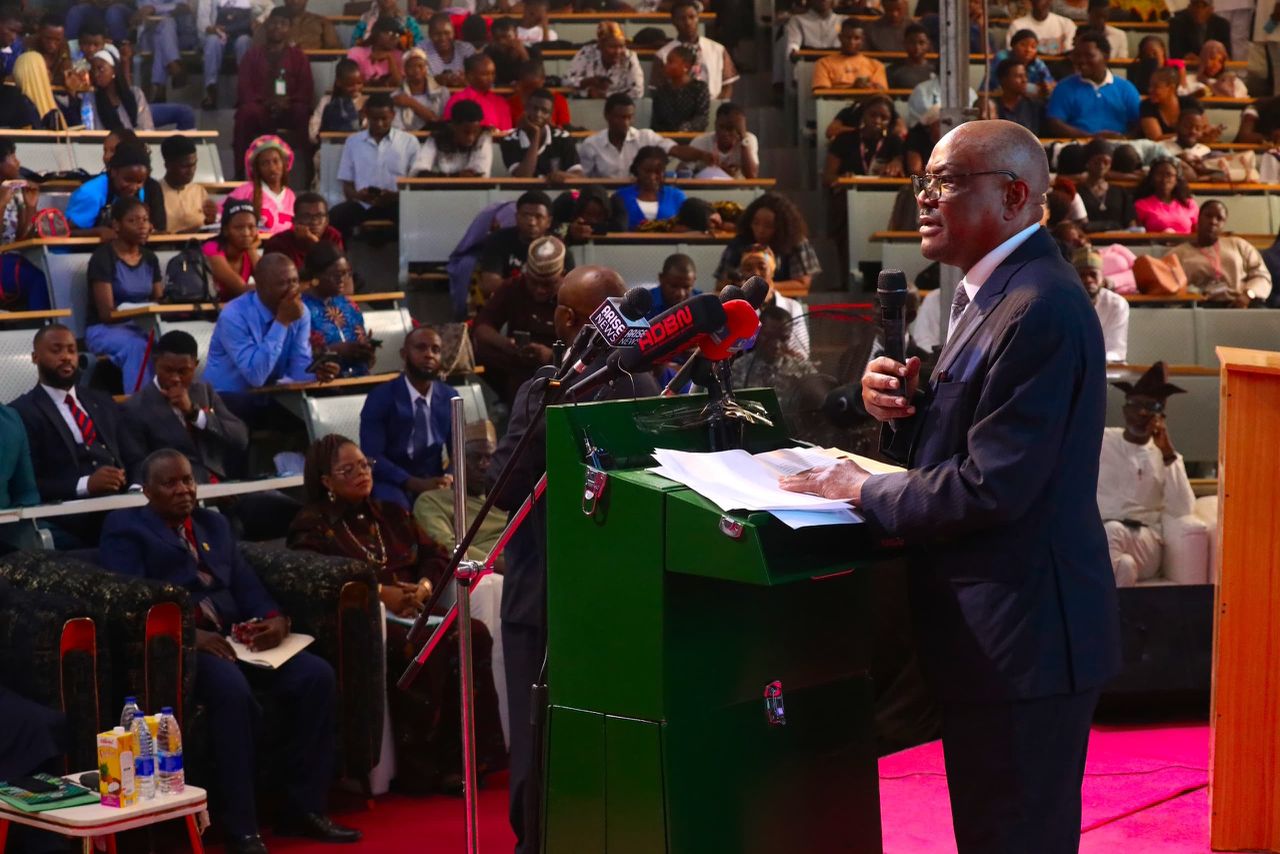
Delivering the Faculty of Social Sciences’ Distinguished Personality Lecture at the university’s main campus auditorium on Tuesday, Wike urged purposeful leadership under President Bola Tinubu to forge the “bridge between democratic ideals and developmental realities.”
His address, titled “The Impact of Political Leadership on Infrastructural Development in Nigeria: Between Dividends of Democracy and Good Governance,” drew thunderous applause from academics, students, and policymakers, framing Abuja’s rapid makeover as proof of what’s possible.
Wike opened by questioning Nigeria’s democratic practice since 1999: “What kind of democracy are we practicing? Is it one that merely confers political legitimacy through periodic elections, or one that translates political freedom into tangible improvements in the everyday lives of the people—through infrastructure that works, services that deliver, and opportunities that uplift?” He depicted democracy as a “social contract” tested not at polls but in “roads that work, schools that inspire, hospitals that heal, water that runs, security that reassures, and cities that dignify human life.” Where it falters, he said, “democracy becomes fragile; reduced to ritual without substance, form without meaning.”
Echoing scholars like Larry Diamond, Wike stressed democracy’s fragility: “It is one thing to get democracy. It is another thing, often more difficult, to keep it, to consolidate it, to breathe real life and meaning into it, to make it endure.” He pinned Nigeria’s woes on “poor and mediocre leadership,” quoting Chinua Achebe: the nation’s “fundamental problem is the failure of leadership.” Consequences? “A succession of leaders lacking preparation, courage, patriotism, and character,” leaving basics like infrastructure in tatters. “Institutions matter, policies matter, and resources matter, but leadership ultimately determines whether they function or fail.”
The minister hailed President Tinubu as embodying “purposeful and servant-oriented leadership,” citing his Lagos governorship and bold national moves. “His long-standing commitment to the democratic struggle—at great personal risk—established his credentials well before he assumed the presidency,” Wike noted. Day one? Fuel subsidy axed: “A policy long acknowledged as economically destructive but avoided by successive administrations for lack of political courage. While the reform has generated short-term pains and resistance, it has also freed resources for subnational development, halted the spiral of unsustainable debt, and initiated the difficult process of restoring market discipline to the energy sector.”
Other News
He spotlighted further strides: “The administration has begun confronting Nigeria’s structural imbalances through the devolution of development initiatives via zonal and regional commissions… Security reforms, increased funding, and systematic training of the armed forces further reflect an effort to rebuild state capacity.” Under the Renewed Hope Agenda, “Nigeria is witnessing tangible improvement in infrastructure… Through decisive investment and political courage, the administration is confronting long-standing structural challenges that previous governments avoided.”
Wike positioned Abuja as exhibit A: “The rapid transformation of Abuja under my watch stands as compelling evidence… In less than three years, the Federal Capital Territory has accelerated toward the standards of a modern city befitting a great nation.” Key wins include “massive investment in road networks to improve mobility, stimulate economic activity, reconnect communities, ease congestion, and unlock productivity,” plus “systematic renewal of urban infrastructure” and “firm yet humane enforcement of planning regulations.” He balanced firmness with fairness: “Legality has been balanced with compassion, and discipline pursued not as punishment, but as a prerequisite for shared prosperity.”
Abuja, he said, is “not merely a city; it is a national statement… a mirror of our national conscience and a measure of our collective ambition.” Infrastructure here is “not as a favour dispensed by power, but as a right owed to citizens; not as propaganda, but as policy,” extending to satellite towns so “no part of the capital is left behind.”
Good Governance: The Ethical Imperative
Underpinning it all? “Good governance is the moral foundation upon which sustainable development rests.” Wike defined it bluntly: “Transparency in decision-making, accountability in resource use, fairness in policy implementation, and respect for institutions and the rule of law.” Without it, “infrastructure built without these principles collapses… Democracy without good governance produces inequality, resentment, and instability.” Leadership must choose “systems over personalities, service over self, accountability over convenience, and national interest over narrow advantage.”
Wike tasked institutions like UniAbuja: “Universities occupy a sacred space in nation-building. They preserve memory, interrogate power, and cultivate the courage to speak truth to authority.” Social sciences faculties must produce minds that “demand accountability, participate meaningfully in nation building, reject manipulation, defend democratic norms.” “A nation that neglects political education prepares the ground for democratic decay.”
In conclusion, Wike rejected isolation: “No leader—however visionary or courageous—can succeed in isolation. National transformation ultimately depends on the active cooperation of citizens.” He invoked Mandela and Dubai: “Progress is forged where leadership and followership work in synergy.” Legacy, he said, defines true power: “Leaders are remembered not for the offices they occupied, but for the lives they transformed… Democracy derives its moral authority only when it works for the people.”