Follow Us on Google

Ndubuisi Orji, Abuja
RECENTLY, the House of Representatives passed for second reading three bills seeking to grant financial autonomy to the judiciary at both state and federal levels, move the payment of the retirement benefits of judges at the state level to the centre and lastly granting immunity to justices of the Supreme Court and Chief Judges of state judiciaries.
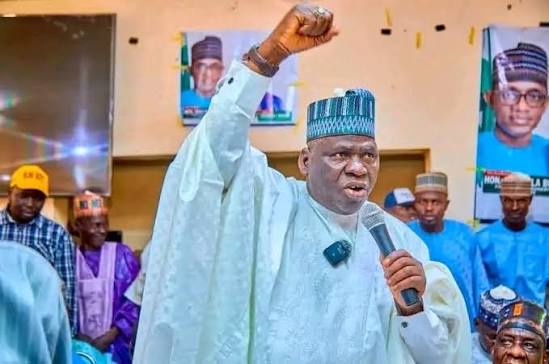
The sponsor of the bills, Hon. Iduma Igariwey, says the proposed legislations are part of efforts to guarantee the independence of the judiciary in the country and safeguard the institution from abuse by politicians.
Igariwey, who represents Afikpo North /Afikpo South Federal Constituency of Ebonyi State on the platform of the Peoples Democratic Party (PDP), says if the proposed legislations eventually become law, they will help to deepen the country’s democracy, owing to the role of an independent judiciary in a democratic state. Excerpts:
Three of your bills on the alterations of certain aspects of the constitution, especially as it affects the judiciary recently passed second reading in the House. What are these bills intended to achieve?
The essence of the alterations of certain sections of the constitution, which I have sponsored is to strengthen that institution. Our democracy is predicated on the tripodal support of three arms of government. Section 4 creates the legislature as we know it. Section 5 creates the executive is we know it. And section 6 creates the judiciary. Now, this three arms are supposed to be equal and coordinate both by virtue of the constitution and legal interpretation by the courts. They are supposed to be equal and coordinates. Now, some of the arms are definitely stronger than the others. The executive among these three arms is too strong. And that is how we imported it. You know our constitution, we try to model it after the American constitution. We have this very strong executive, which is often or some- times overbearing. So, now Section 121(3) talks about the finances of state judiciary and state legislatures. This is the area that is very weak, particularly because of how our state governors relate with the judiciary and the legislature at the state level. As far as you continue to allow the state executive to handle their funds, they will continue to control them and hold them down to their whims and capricises. So, as it stands now, the finances of state judiciaries and state legislatures are incorporated in the state’s consolidated revenue funds. What it means is that the state appropriates for them. And we have seen what the states can do, including to even the local governments system. So, what alteration of Sec- tion 121(3) seeks to achieve is to take away this from the purview of the states, so that it becomes a charge directly to the consolidated revenue fund of the federation under the control of the Accountant General of the federation. So, that it is the Accountant General that sends funds directly to the heads of these bodies in the states. In this case, the state legislatures will get their money directly from the Accountant General of the federation. And the judiciary of the various states will get their money directly from the Accountant General of the federation. So, that generally is the summary of the alteration sought to be made on Section 121(3) of the constitution. Then you go to Section 291 of the constitution, which talks about the retirement age of judges and then their retirement benefits. As it stands now, justices of the Court of Appeal and justices of the Supreme Court may retire at 65, but must mandatorily retire at 70 . If they like, they can go beyond 65 years up to 70 years. But that is not open to other superior court judges. For now, they must retire at 65 years. The essence of the proposed alteration is to en- sue that all justices of what we call superior courts enjoy this same mandatory retirement age of 70 years. One is that it is not easy to train judges. That is number one. Secondly, it is also very expensive maintaining judges. In fact, when they retire, their retirement benefit is complete component of their salary. So, they continue to enjoy their salary. If they are going to be retired and enjoy such benefits, why retire them early? Why not have the most from them. That is the essence of the first arm of altering Section 291. The other arm is right now, their retirement component of their retirement benefit is still handled by the state from the state consolidated revenue funds. So, what it means is that sometimes they retire and the states are unable to pay them. It is possible a judge wasn’t very friendly to the executive arm and you find out that such a judge may retire and don’t have the retirement benefits or the states can claim that they don’t have money. So, you see a lot of judges, who have struggled and have retired and they are languishing and they don’t have their retirement benefits. What this second arm of altering Section 291 seeks to do is to ensure that their retirement benefits come from the national directly.
What informed the bill seeking alteration of Section 308 to grant immunity to some category of judges?
Section 308 in the first place talks about the immunity enjoyed by the executive arm. Right now, it is the president, the vice president, the governor and deputy governor that have immunity. And if we truly say that we have three arms of government, which are equal and coordinate, why should we protect the head of one and leave the other ones, open to the vagaries of criminal or civil proceedings while they are in office. The argument is that especially in the third world, particularly in Nigeria, where we have weak institutions, it is good to shield these people, who are at the command- ing height of our judiciary from interference from politicians. We all know how important Supreme Court judges, judges generally, whether Court of Appeal judges, whether judges at the state level, are. The argument is that they should enjoy immunity from civil and criminal prosecutions while they are in office. Because it is the same way, it is couched for the executive while they are in office. This is made in recognition of the fact that time does not run against a criminal act.
If you commit a criminal act as a judge, whenever you retire, you face your trial. The same way a governor or a president is, so shall it be for justices of our courts. And of course, we are making the same argument for the Speaker of the House, the Deputy Speaker, the Senate President and the Deputy Senate President. These people shouldn’t be distract- ed. We all saw what Saraki went through in the Eight Assembly, it was a lot of distraction and it affected the country one way or the other. Let them be and do their jobs. Whenever they leave, if they have anything to answer before the courts, they can go. Same should be for our judges at that level so that they can truly dispense justice without fear or favour. Like I said, the whole aim is to secure the independence and integrity of the judiciary. That is the aim. So, that they don’t come under undue harassment from politicians.