Follow Us on Google
From Ndubuisi Orji, Abuja
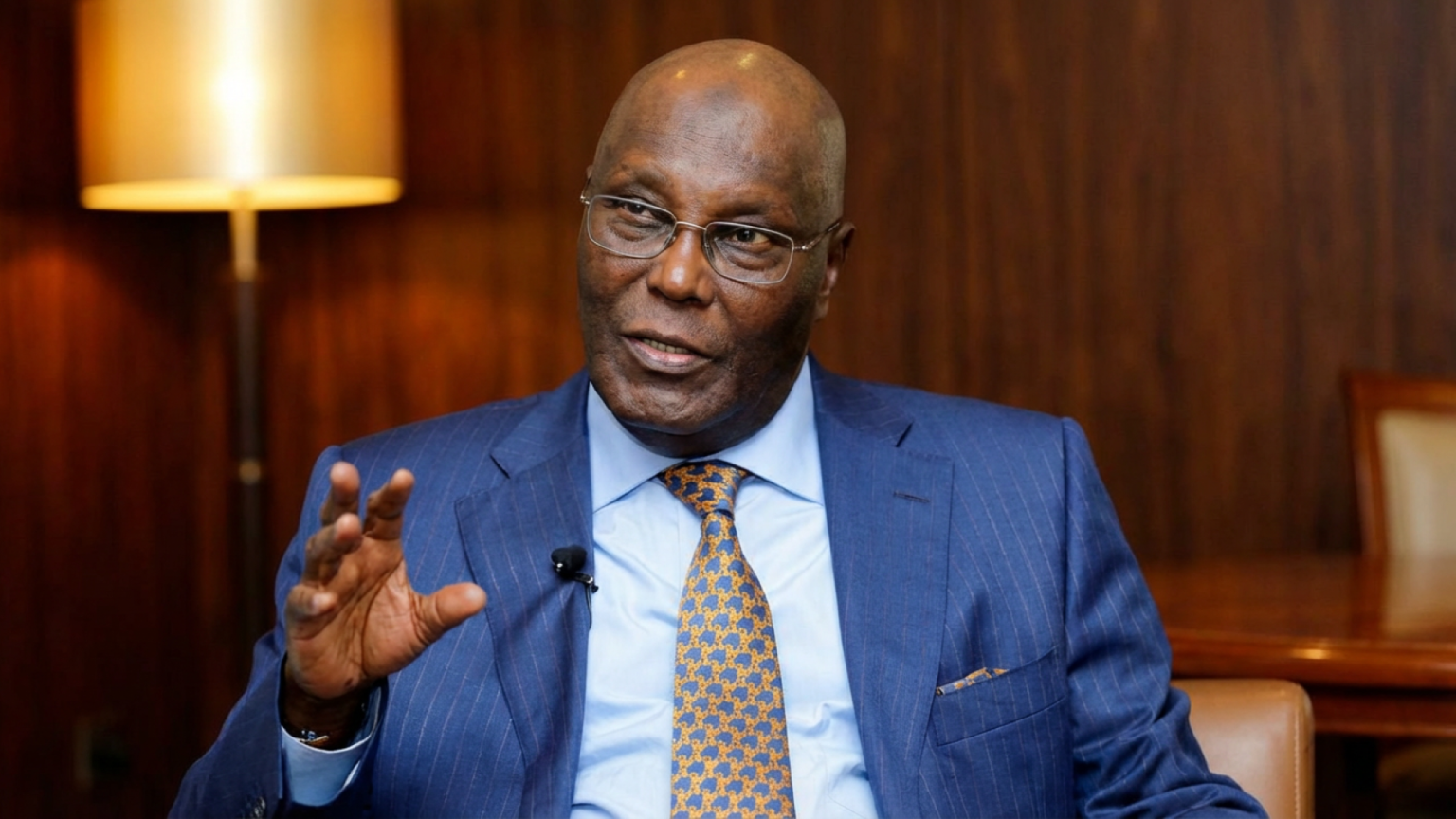
Former Vice President Atiku Abubakar has expressed concern over President Bola Tinubu delay in assenting to the Federal Audit Service Bill months after it was transmitted to him by the National Assembly.
Atiku, in a statement by his Senior Special Assistant on Public Communication, Phrank Shaibu, said the delay in assenting to the bill runs counter to Section 58(4) of the Constitution of the Federal Republic of Nigeria, 1999 (as amend).
The former Vice President observed that the Federal Audit Service Bill was designed to modernise Nigeria’s audit architecture, strengthen the independence of the Auditor-General and improve oversight of public expenditure.
According to him, delaying action on a legislation, which is intended to reinforce transparency, sends the wrong signal at a time when Nigerians are demanding stronger institutions and greater accountability in public finance.
Atiku noted that “Section 58(4) of the Constitution of the Federal Republic of Nigeria, 1999 (as amended) provides: ‘Where a Bill is presented to the President for assent, he shall within thirty days thereof signify that he assents or that he withholds assent.’
“That provision is neither decorative nor discretionary. It is a constitutional command. The framers of our Constitution never envisaged a President who would simply sit on legislation indefinitely while governance drifts without certainty or accountability.”
Atiku noted that “Section 58(4) of the Constitution of the Federal Republic of Nigeria, 1999 (as amended) provides: ‘Where a Bill is presented to the President for assent, he shall within thirty days thereof signify that he assents or that he withholds assent.’
“That provision is neither decorative nor discretionary. It is a constitutional command. The framers of our Constitution never envisaged a President who would simply sit on legislation indefinitely while governance drifts without certainty or accountability.”
The former Vice President observed that the Federal Audit Service Bill was designed to modernise Nigeria’s audit architecture, strengthen the independence of the Auditor-General and improve oversight of public expenditure. Delaying action on legislation intended to reinforce transparency, he said, sends the wrong signal at a time when Nigerians are demanding stronger institutions and greater accountability in public finance.
Furthermore, Atiku added that the President’s alleged disregard ‘for a clear constitutional timeline reflects a broader pattern that has become increasingly evident under the present administration—a pattern in which constitutional safeguards and institutional checks are neglected until governance failures erupt into national controversies.
“Every major scandal begins with a smaller act of institutional neglect. It begins when constitutional provisions are treated as optional, when oversight institutions are weakened and when those entrusted with enforcing the law become comfortable operating outside its clear boundaries.
“That is why the recent controversy surrounding the so-called Presidential Foreign Intervention Promotion Council (PFIPC) should not be viewed merely as an isolated episode. Whatever conclusions ongoing investigations or official processes may ultimately reach, the controversy exposed the dangers that arise when institutional safeguards are weak, official narratives conflict and public confidence in governance is allowed to deteriorate.
“If constitutional timelines can be ignored without consequence, if accountability legislation can remain unattended beyond the period contemplated by the Constitution, and if institutions responsible for safeguarding public resources are denied the reforms they require, then no Nigerian should be surprised when controversies emerge over public institutions, government approvals and official processes.
“The Constitution is one indivisible covenant. A President who treats one constitutional obligation as optional inevitably weakens respect for every other constitutional safeguard. That is how impunity gradually becomes institutional culture and governance descends into perpetual crisis management rather than responsible leadership.”