Follow Us on Google
By Rita Okoye
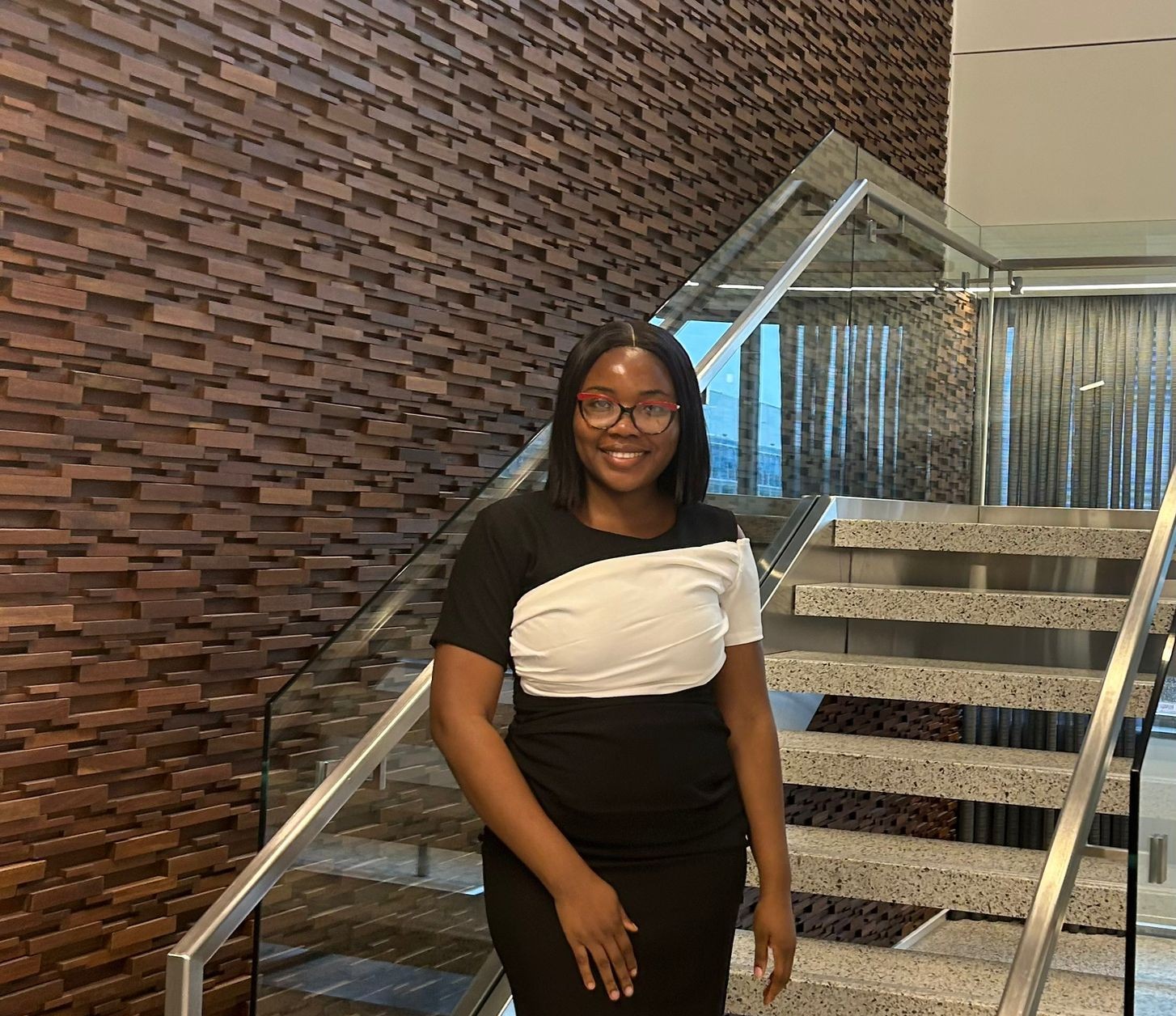
Trade and Business Law practitioner Blessing C. Jones has spent much of her career advising startups and small enterprises on operating within complex legal and regulatory systems.
With professional experience spanning Nigeria and the United States, her work focuses on helping entrepreneurs structure their businesses properly, manage contracts, and remain compliant with trade regulations while pursuing growth.
Across many emerging markets, small businesses face significant legal and regulatory barriers. Entrepreneurs often launch companies with strong ideas and market demand but limited access to professional legal guidance.
Without proper legal structure, businesses can unknowingly operate outside regulatory requirements covering taxation, contracts, intellectual property, and cross-border transactions.
Compliance obligations are often difficult to interpret.
Regulations surrounding imports, exports, and commercial partnerships involve multiple agencies, documentation procedures, and reporting standards. For smaller enterprises with limited resources, navigating these frameworks can become overwhelming.
The consequences of non-compliance can be serious. Businesses may face financial penalties, delayed shipments, broken partnerships, or disputes that disrupt operations. Many entrepreneurs only seek legal assistance after challenges have already affected their business activities.
Another challenge is awareness. Many founders remain unfamiliar with the legal frameworks governing trade, commercial transactions, and business partnerships. Without early legal guidance, companies may enter into agreements that expose them to unnecessary risk or limit future expansion opportunities.
Jones’ approach to these challenges is informed by her academic and professional background. She earned her Bachelor of Laws degree from Ebonyi State University, graduating with Second Class Honors.
Her academic prowess was further solidified when she attended the Nigerian Law School and was called to the Nigerian Bar in 2018.
These experiences provided Jones with the foundational training in Company Law and Intellectual Property, setting her on a clear path toward Business and Trade compliance, an area that would eventually become her professional passion. She later obtained a Master of Laws (LL.M.) in International Business and Trade Law from American University Washington College of Law in the U.S., where she conducted advanced research on international business structures and global trade governance.
Professionally, Jones served as an Associate at The Channings Law Firm, where she supported commercial banks, oil & gas and manufacturing companies by providing legal, regulatory, and strategic guidance that facilitates compliant and profitable trade and preparation of documentation for complex transactions.
It was here that Jones’ passion for international trade began to take shape. As a social responsibility, Jones began to consult for small-scale businesses because she believed many businesses had the potential to compete on a global scale.
“Everyone loves what the big corporations have been able to build over the years but most of them started out small. Now these corporations can afford strong legal teams that provide solutions to every problem. These small companies have just as much potential and Nigeria has the market for them if only someone can give them a chance.” she says.
Jones insists on giving these businesses and individuals the legal platform they need to scale higher. Jones’ legal career took a significant leap when she became Corporate Counsel at Tokunbo Olugbenga & Co. Here, she was responsible for negotiating and drafting commercial agreements, business proposals and researching and advising on cross-border trade deals as well as intellectual property protections.
“Entrepreneurs are often focused on building products and attracting customers,” Jones says. “But strong legal foundations are equally important because they protect the business as it grows.” Her work centers on helping startups understand trade regulations and compliance responsibilities early, providing a secure pathway for growth.
Other News
“Small businesses form a vital part of economic development,” she adds. “When they understand how to operate within the law, they are better positioned to grow, build partnerships, and compete in global markets.”
Through this role, Jones researched and understood what local companies and businesses needed to do to attract foreign trade and support. She developed a sophisticated understanding of the relationship between Law and Business.
“One disadvantage Nigeria might have, which foreign investors have doubts about, is our Judicial system but that has been eliminated by the advent of alternative dispute resolution.” she says.
Instead of spending years in court in any case a dispute arises, parties can resort to Arbitration. And the first step is ensuring the contract between the parties contains a clear arbitration clause that specifies the arbitration institution or rules that will govern the dispute, the seat of arbitration, number of arbitrators and the governing law of the contract.
Both Nigeria and the United States are parties to the New York Convention on the Recognition and Enforcement of Arbitral Awards which allows arbitral awards to be recognized and enforced in courts of member countries. Blessing navigated high-stakes negotiations and worked alongside major corporations making sure they understood trade regulations and ensure compliance.
As her career progressed, Blessing was determined to advance in Trade and Business Law practice. She enrolled in a program in International Business and Trade Law at the American University Washington College of Law. This prestigious pursuit solidified her expertise in the field and provided her with the opportunity to engage in advanced, cutting-edge research at the crossroads of Trade policies and how to navigate them.
Blessing’s determination to bridge the gap between African businesses and global markets earned her a leadership position as Secretary for the African Law and Policy Association at the American University Washington College of Law. In this capacity, she became instrumental in conversations about facilitating knowledge exchange, compliance training, and strategic partnerships that align with evolving international trade rules, fostering a dynamic exchange of ideas between the faculty and students.
Beyond her academic and professional achievements, Blessing is an enthusiastic advocate for justice and fairness in the legal profession.
She has served on the Executive board of the Young Lawyers’ Forum of Nigeria, where she worked to advocate for the rights and privileges of young lawyers within the legal profession. Her commitment to this cause is also reflected in her membership in several esteemed organizations such as, the Nigerian Bar Association, the Institute of Chartered Mediators and Conciliators, and the Chartered Institute of Arbitrators (ACIArb, UK).
In a bid to expand her knowledge in International Trade Law Practice and to raise public awareness, Blessing is also a member of the Institute of Export Operations and Management (IEOM), Washington International Trade Association (WITA), and the Association for Women in International trade (WIIT).
With the advent of the digital age, Blessing believes international trade stands to gain from this new rapid pace of technological innovation. There has been a growing recognition among companies of the importance of robust intellectual property protection in supporting innovation, competitiveness, and sustainable business growth. In 2022, Blessing managed a business research project for the United Kingdom’s Foreign, Commonwealth & Development Office (FCDO) in collaboration with The Initiative for Digital Inclusion (IDI), Lagos, Nigeria, titled “Capacity Building and Testing Business Models for Sustainable Last-Mile Connectivity in Nigeria.” The project focused on strengthening digital access and examining sustainable business models for expanding digital connectivity in Nigeria.
Blessing believes that collaboration among legal professionals, governments, and businesses is key to developing effective solutions for these challenges that companies might face in these digital times.
“We all know small businesses play a vital role in economic development, innovation, and job creation, yet many struggle to participate fully in international trade due to complex regulatory frameworks. So why don’t we help them get a seat at the table?” Blessing says. Companies must comply with multiple legal frameworks, including customs regulations, export controls, sanctions policies, and international trade agreements overseen by institutions such as the World Trade Organization. Navigating these rules requires a clear understanding of both domestic and international trade law, as well as the ability to structure transactions in ways that remain compliant with evolving global regulations.
Blessing C. Jones has positioned herself at the intersection of business development and international trade law to address these challenges. With nearly a decade of experience advising startups and small businesses, she works to simplify complex trade regulations and help entrepreneurs understand how to operate within legal frameworks while pursuing growth opportunities. Through her work in strategic planning, contract management, and cross-border compliance, she supports businesses in structuring legally sound transactions and developing operational models that allow them to scale sustainably.
Beyond legal advisory services, Blessing is committed to education and advocacy. She actively promotes awareness among small businesses about the importance of compliance, intellectual property protection, and legally binding commercial agreements.
By providing guidance on trade regulations and business governance, she empowers entrepreneurs to participate more confidently in international markets. Blessing ability to blend her legal expertise with compassion for developing markets in Africa, positions her as a rising leader in the global legal and trade community.
Her work ultimately aims to bridge the gap between legal systems and small business innovation. By helping entrepreneurs understand the rules that govern international commerce and by promoting responsible trade practices, Blessing contributes to creating more inclusive opportunities for small businesses to thrive in the global economy.
With a career marked by numerous honors and recognitions, Blessing is creating a future where local companies can expand into global markets. “African business owners are hardworking people. We are usually given little to nothing to work with, yet we thrive. We just need a voice, a chance to showcase what we’ve got…” she says.