Follow Us on Google
From Aloysius Attah, Onitsha
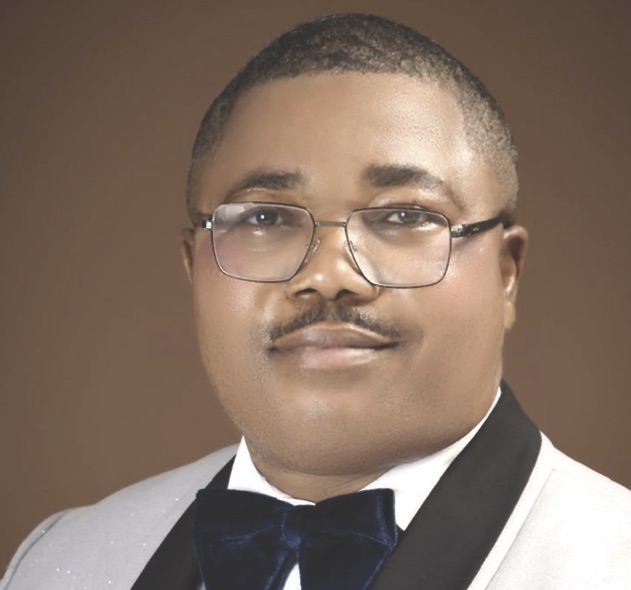
Ifeanyi C. Ejiofor, Esq. (KSC) is a distinguished lawyer and a human rights advocate. Renowned for his unwavering commitment to defending the oppressed, marginalised, and underprivileged, he also serves as counsel for the Indigenous People of Biafra (IPOB), championing the right to self-determination for Indigenous peoples. In this interview, he talks about sundry issues of governance in Nigeria mostly as it affects the Igbo, and recent security developments in his home state of Anambra among others.
The postulations about politics of 2027 general elections are ongoing. Dr Reuben Abati while speaking on national television recently said that the North will not buy into Obi’s one term bid because the civil war events of mistrust has not really ended. What is your take on this?
When Dr. Reuben Abati, respected journalist and former presidential aide, recently declared that “the Civil War in this country has never ended,” as such the North will not buy into the one-term idea being proposed by Peter Obi, he echoed a sentiment that resonates deeply with the lived experiences of millions of Nigerians, especially the Igbo people. This is not a mere metaphor; it is a historical truth that continues to manifest in the political, economic, and social architecture of Nigeria.
Those who dismiss this assertion should pause and reflect on the trajectory of Nigeria’s post-war history and the structural marginalisation that the Igbo nation has endured for over five decades since the guns supposedly went silent in January 1970. The reality is stark: the war ended on paper, but its consequences still bleed into the very fabric of Nigeria’s governance and power distribution.
The marginalisation of the Igbo people did not begin yesterday. It is anchored in deliberate policies designed after the Civil War to weaken and diminish a people who dared to assert their right to self-determination. The infamous “20 Pounds Policy,” where Igbo families, regardless of the millions they had in Nigerian banks before the war, were reduced to a mere £20 after the war, was the first open declaration that reconciliation was a farce.
This was swiftly followed by the Indigenisation Decree of 1972, which opened the door for Nigerians to buy shares in foreign companies. But for the Igbo, who were economically strangled, dispossessed, and stripped of resources, this meant permanent exclusion from the commanding heights of Nigeria’s economy. These policies were not coincidental; they were calculated to perpetuate the consequences of defeat long after the battlefield was quiet.
Fast forward to today, the evidence of structural bias remains overwhelming. Key political positions at the national level are deliberately skewed away from the South-East. In over 63 years of Nigeria’s independence, the presidency has rotated between the North and the South-West, leaving the South-East permanently on the margins of national leadership. The Igbo man’s aspiration for the presidency has become a mirage. It is indeed easier for an elephant to pass through the eye of a needle than for an Igbo to become president under the present political structure. This is the hard reality, which may sound strange to those who choose to live in illusion. The case of DCG Nwafor serves as a contemporary example for this.
For those who doubt Dr. Abati’s assertion, let us examine a recent example that illustrates this age-old pattern of exclusion. Deputy Comptroller-General (DCG) B.U. Nwafor, an accomplished officer of Anambra extraction, stood next in line to succeed the current Comptroller-General of the Nigeria Customs Service, Bashir Adewale Adeniyi. Her track record was impeccable, marked by discipline, diligence, and distinction.
Yet, in a move that reeks of systemic injustice, the presidency extended Adeniyi’s tenure by one year, effectively blocking Nwafor from ever reaching the pinnacle of her career. She will retire next year without attaining the office she merited, not because of incompetence or corruption, but because the civil war has never ended in Nigeria.
Do you think the Igbo are not politically irrelevant in Nigeria because they lack competence or capacity?
Far from that! On the contrary, the Igbo nation boasts of some of the most brilliant minds in governance, industry, technology, and academia. Yet, in the calculus of Nigeria’s power politics, competence is not the currency, ethnic arithmetic is.
The Civil War may have ended militarily, but politically, economically, and psychologically, its embers still burn. The Igbo man is systematically denied access to the center of power, not by accident, but because the Civil War in Nigeria has never truly ended.What makes this reality even more tragic is that many Igbo politicians continue to live in self-denial, chasing shadows, believing that one day the political heavens will open for them. They scramble for crumbs instead of building a united front, failing to appreciate that the Civil War never truly ended, just as posited by Dr. Reuben Abati. This internal disunity has compounded their vulnerability, making them easy pawns in the chess game of Nigeria’s politics.
The insecurity ravaging Ala-Igbo today, the rise of armed groups, criminality, and the breakdown of law and order is not happening in a vacuum. It is the direct consequence of decades of political ostracism, economic strangulation, and internal misgovernance. When a people are excluded for too long, the center cannot hold. Unfortunately, the alternatives resorted to by our restive, frustrated, disenchanted, and disillusioned youths have taken extreme and criminal dimensions, undermining every measure of civility.
Other News
Some analysts are of the view that the Igbo should redefine their agenda in the Nigerian setting as the path forward. Do you share same view?
Yes, I believe that if the Igbo nation must break free from this vicious cycle, it must begin with self-redefinition. A coordinated political and economic strategy that prioritises regional integration and self-reliance.The Igbo must also learn from its visionaries. Embracing developmental models championed by leaders like Dr. Alex Otti of Abia State, Ndubuisi Mba of Enugu State, etc., who are proving that good governance can transform our narrative.They should put an end to all illusions: Accepting the hard truth that the Nigerian state, as currently structured, will not willingly hand power to the South-East. Igbos must therefore innovate, negotiate from a position of strength, and stop living in the fantasy of political benevolence. Until these steps are taken, the Civil War will continue, not with bullets and bombs, but with policies, appointments, and the quiet violence of exclusion. Dr. Abati was right. The war never ended. It simply changed its weapons.
Recently, there was a pathetic case of a young man allegedly killed by the herders in Anambra for refusing to sleep with his blood sister whom were abducted together with him. What do you think should be done to end this ugly situation?
Innocent blood flows on our farmlands and the governors must confront the situation in the states. In one of my earlier reflections, I unequivocally condemned the heinous activities of notorious criminal gangs operating within Okigwe, Obinetiti, and Umualaoma, Arondizuogu in Ideato North Local Government Area of Imo State, who brazenly massacre unarmed civilians in broad daylight. I also warned that while our attention is distracted by the loud and reckless operations of these criminal elements, the dreaded Fulani terror herdsmen would silently strike, killing and dispossessing our people without anyone being on guard.
Sadly, that grim prediction is our present reality. Today in Ala-Igbo, our land bleeds from two wounds. On one hand, criminal elements of Igbo extraction openly kidnap, kill, and destroy, boasting of their evil on social media. On the other hand, Fulani terror herdsmen silently creep into our communities, slaughter our people, maim our farmers, rape our women in their farmlands, and dispossess them of their ancestral heritage; without noise, without videos, without public acknowledgement, but with devastating consequences.
In my previous publications, I specifically raised an alarm about the activities of these terror herdsmen within the Awka North axis of Anambra State, particularly around Ebenebe and Amansea. I gave a verified account of how our mothers, desperate to farm this season, went cap in hand to beg the herders for a mere portion of land to cultivate food, and how their plea was bluntly rejected. I backed this with verifiable evidence, including minutes of the very meeting where these humiliations took place. That publication drew the attention of Prof. Charles Chukwuma Soludo, the Executive Governor of Anambra State, and was equally brought to the notice of relevant security agencies. Yet, till this day, no decisive action has been taken.
My worst fears were confirmed recently. In that same axis, Fulani terror herdsmen ambushed a young, promising Igbo boy who had gone to the farm with his younger sister. In a chilling display of savagery, they ordered him to commit the abomination of defiling his sister or face death. The boy, embodying the dignity of our ancestors, refused. For his courage and refusal to desecrate his lineage, he was brutally killed. His traumatised sister, by a stroke of providence, narrowly escaped to tell the story.This is not just murder. It is genocide in slow motion.
I, therefore, call on Governor Soludo to urgently intervene in the unfolding tragedy within the Ebenebe–Amansea axis, where Fulani terror herdsmen have brazenly seized indigenous farmlands under the watch of the government. We also call on the security agencies to immediately fish out the perpetrators of this barbaric act and restore sanity to our communities.
Let it be known that while criminal gangs openly advertise their atrocities on TikTok and other social media platforms, the Fulani herdsmen are quietly infiltrating every corner of Ala-Igbo; unnoticed, undocumented, and unchallenged.The security of life and property is the first constitutional obligation of any government. The time has come for Anambra State, and indeed all governments in Ala-Igbo, to take decisive steps to expel these terror herdsmen from our ancestral land.
A Finland District Court recently jailed self- styled Biafran agitator, Simon Ekpa. What lessons do you think can be learnt from that development?
Simon Ekpa’s conviction under a jurisdiction that respects human rights and the rule of law offers deep lessons. It demonstrates that no amount of lies, propaganda, or fraudulent appeals to “self-determination” can shield a criminal enterprise built on fraud, bloodshed, and deception.
It is therefore imperative that our people begin to wear their thinking caps and ask hard questions. No rational mind should have believed Ekpa’s outrageous lies about stationed warships and combat-ready jets in Igbo land. His entire project was nothing but an elaborate scam designed to defraud the very people he claimed to liberate.
Even now, some of his misguided followers are being deceived into believing that his conviction somehow “upheld his right to self-determination.” That is false. The court never upheld any such right because his trial and conviction was never about his purported right to self-determination; rather, the court convicted him for fraud, deception, and actions that funded violence against the same people he professed to defend. That is the height of criminality.