Follow Us on Google
It was on June 6, 2018 that President Muhammadu Buhari declared magisterially that June 12 will now be known as Democracy Day in Nigeria. He said: “June 12, 1993 was the day when Nigerians in millions expressed their democratic will in what was undisputedly the freest, fairest and most peaceful election since our independence.” June 12 has since then replaced May 29 which was regarded and celebrated as our Democracy Day since the emergence of the fourth republic in 1999. June 12, 1993 was the day of the presidential election which featured Chief MKO Abiola of the Social Democratic Party (SDP) and Mr Bashir Tofa of the National Republican Convention (NRC). The election was won by Abiola but the Military President then, Ibrahim Babangida annulled it on June 24, 1993 throwing the country into confusion and a crisis of immeasurable dimension. In February 2025, Babangida publicly expressed regret for the annulment and confirmed that the poll was free and fair and was won by Abiola. That ugly chapter of our national life has now been closed.
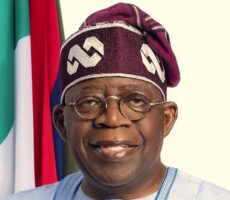
On June 12 this year, we marked our 27th year as a democratic nation. No interruption, no successful military coup and no crisis of monumental proportion. We have had two major parties PDP and APC running the country at the Centre during the past 27 years. Five Presidents have run the affairs of the country since then. They are Chief Olusegun Obasanjo, Alhaji Umaru Yar’Adua, Dr Goodluck Jonathan, Alhaji Muhammadu Buhari and the incumbent, Mr Bola Tinubu. It has not been a perfect, roller coaster journey free of frightening moments. No, it has been an interesting journey through hills and valleys but we have survived. There is yet no big bang effect of near perfect democracy; we are not yet near the happy shores of democratic excellence. Our elections have flaws and are generally disputed; even the road to those elections have always been booby-trapped with law suites, controversies and violence; vote buying is a common phenomenon in some of the elections; there is a huge voter apathy during elections and that has been so since 1999. There is abundant evidence of corruption during elections; the activities of some security personnel are called to question sometimes during elections; ballot box snatching is still a habit in some elections; there is still abundant evidence of the breach of internal democracy within parties; some politicians often choose to make election campaigns a scorched-earth or do-or-die affair; there is an abundance of trust deficit between rulers and the ruled; there is a hiatus in bringing election promises to reality. These fault lines are out of synch with democratic ideals and that is why we have not yet stood out, in democratic terms, like beacons.
Other News
But democracy, even with its imperfections, is still better, much better, than military autocracy, an experience that we had agonizingly gone through for decades. In a democracy, we can mount public protests without being barred; we can take rulers to court without a judge telling us that his hands have been tied behind his back; we can criticize our rulers in the media without being recklessly thrown into detention, without trial or without our media houses being shut down. We can hold meetings with bitter critics of government without being denied that freedom to associate with them. Most, if not all, the freedoms guaranteed in our Constitution are available for our benefit in a democracy. These are the dividends of democracy.
What we need now is to work hard, all of us, the rulers and the ruled, to improve the quality of our democracy because the quality of our democracy depends on us all. In 1843, a British historian, Thomas Carlyle said that “every government is in the long run, the exact symbol of its people, with their wisdom and unwisdom.” That is true because it is not only the rulers who make a country what it is; the followers also contribute to what a country is by their actions and or inactions. The patriotic actions of followers can bring some sunny scenarios into governance thus improving the country as a whole. But in my opinion Nigerians have generally failed in this which is why the country’s democracy is wobbling. We haven’t done enough to keep our leaders on their toes. If we fought for State Police, for example, we would have got it years ago. If we fought for our moribund government refineries years ago, they would have been working by now. As a people we are too laid back for comfort. But, of course, there are exceptions. The media have been a warrior for our democracy. Clap for them. SERAP has been outstanding. Cheers to them. A few other organisations have made contributions that have kept us on track but I would like to see more widespread participation by our people on issues that can bring benefits, immense benefits, to all of us.
Now, what can we do to drastically improve the quality of our democracy and our lives? One, our people especially our youths, women and civil society groups must expand their influence beyond just voting at elections to being involved in the mobilisation of people in their constituencies for public good. Two, members of political parties must insist on obedience to their party’s constitution. They must also insist that marginalised sections of their constituencies such as women must be brought on board and catered for by these parties. I was delighted to learn that the Governor of Akwa Ibom State, Dr Umo Eno had directed that in the election into the 31 Local Government Areas of his state there must be equality between the sexes. He told his people that where the chairmanship candidate was a man the deputy had to be a woman and vice versa. That is an admirable fairness doctrine that deserves to be emulated by all states in Nigeria. Three, there must be a fight for true independence for our judiciary. The judiciary must be a positive pillar for our democracy so that our governance will be based on the rule of law, accountable governance and transparency. This may involve both legislative and judicial adjustments that can ensure that court decisions that affect campaigns and elections are speedily concluded so as not to bring any disruption to our democratic process. Four, we obviously need election reforms that can ease the process of making our elections free, fair, peaceful and credible. These should include having severe penalties for election malpractices by politicians, election officials, security personnel and voters generally. Five, the media must be allowed to have access to important information from parties, INEC, governments and the Judiciary so as to enhance the people’s right to know. The attempts made in the past by the National Assembly to put some curbs on the media must be abandoned because no democracy can survive without a free press. There are already enough laws in the books to contain media excesses. We are willing to admit that some social media platforms have by the flagrant resort to misinformation created room for distrust of such media but these are few and far between and do not provide enough ground for a general crucifixion of the media.
Democracy is a bond, a union, a marriage, between the rulers and the ruled with rules that bind both. It is the duty of both parties to ensure that there is no disconnect between them. Any disconnect has the capacity of disrupting the bond. Both parties must show patience and dedication knowing that democracy is a journey and not a one-day wonder. We must pursue our democratic goal with missionary determination in order to be able to separate pearl from plastic, realism from idealism, sure-footedness from opportunism. We haven’t yet had many sunny scenarios in our governance. We haven’t yet had a barn-storming performance. But we must nurse the hope, backed by a firm commitment, that we will get there some day soon.