Follow Us on Google

Aidoghie Paulinus, Who was in Addis Ababa
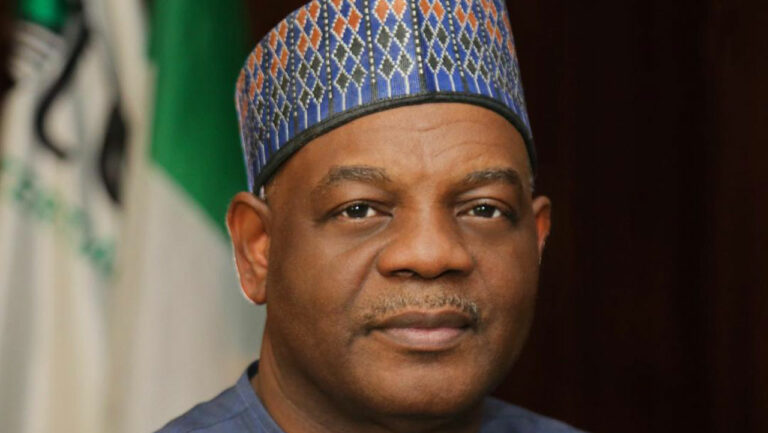
President of the Tanzanian-based African Court on Human and Peoples’ Rights (AfCHPR), the Honourable Justice Sylvain Oré, has said that though Nigeria is already a state that is party to the court, Nigerians cannot benefit from the continental court unless the government makes a declaration.
Oré who spoke with Sunday Sun on the sidelines of the 32nd Ordinary Session of the Assembly of the Heads of State and Government of the African Union (AU), in Addis Ababa, Ethiopia, recalled a sensitization visit to Nigeria by the court during the Goodluck Jonathan administration.
Oré said: “For Nigeria, it is simply declaration because they are already state party of the court and they even have a judge in the court. So, it is just to get them to declare.”
You launched the second volume of the African Human Rights Yearbook today (February 9, 2019). How is it different from volume one?
Thank you for the opportunity you gave me to talk about the court, to talk about what it is doing to advance the knowledge or the protection of human rights on the continent. The volume two of the yearbook is different from the others in the sense that it emphasises on corruption; the link between corruption and human right. This is the main difference with the volume one.
Are you satisfied with prosecution of corruption cases across Africa with regards to human rights?
Let’s say that as a judge, it is not my duty to have such appreciation. But it is true that you cannot say that the fight against corruption on the continent is efficient and we always denounce the lack of true mechanism to fight corruption throughout the continent, even in the international fora like the AU. That was why we declared last year as the year of combating corruption because we knew that there was a lack in the fight.
There have been allegations that government agencies in prosecuting people who indulge in corruption, often time infringe on their fundamental human rights, not following due process. What is your take on this?
You just gave me that information. I didn’t know that it was the case. But as a lawyer or as judge, only what I have to say is that in anything, we have to follow the process. So, there is nothing more to say about that. We have to follow the process. It is not only with regard to the case you are talking about, but in all cases. We have to follow the process because laws, rules have been put in place to be followed because it is only with rules, with mechanism that we can rule the society.
How has it been since you became the president of the African Court on Human and People’s Rights?
We try to follow the path of our predecessor, but also to improve in the management. What we did during these two years was to multiply the number of sensitization visit on the continent because as you may know, the state parties are only 30 out of 55 with the entry of Morocco as member state of the African Union. So, we tried to reach all the member states to make the declaration because our purpose is to work with the totality of the member states, making that ratification. Also, doing the declaration because there is also a declaration to allow individuals and NGOs to bring cases, to have direct access against the state before the court. So, that is what we are doing now.
Declaration by member states is one area that people believe the court still has a long way to go. What specific effort are you making in this regard?
I can say it is politics because we have decided now since 2010, to be more precise, to have this kind of action on the continent because we realised that it may be due to lack of knowledge or lack of political will. But we have to go round the states and meet the heads of state, meet the ministers, the students, the media and the civil societies to explain our mandate and to convince the decision organs, the man who has the power to decide, that it is part of the sovereignty to ratify the protocol because the court is a part of the system and it is also good for the citizens, it is also good for people, for Africans to seize the opportunity of the court because it is a matter of human right.
So, you are poised to create awareness for the court?
Absolutely! That is what we are doing.
When are you taking the advocacy to Nigeria?
In Nigeria, I think many years ago. I think it was 2011. We went there and we met the vice president at that time. You know it is a process. It is a continuous process and it is not because you arrive now, they will make the declaration. For Nigeria, it is simply declaration because they are already state parties of the court and they even have a judge in the court. So, it is just to get them to declare.
How about the issue of compliance with judgement by the court?
This one, we can say, is a big issue. It is a big issue because each session of the African Union, its summit, we make a report to the AU and in that report, we indicate the states that have not complied with the decision of the court.
Have there been sanctions against the countries?
For the time being, let’s say that no state wants to be declared among other states that are not respecting the obligation of the court. We are at that stage for the time being. For this session, the AU or the political organs have decided that we think about measures that we can put in place and they will adopt that project, the rules that can be put in place to sanction or measure that we can take in case there is a state that does not comply.
As the president of the court, can you confidently say the court is meeting its mandate?
In terms of mandate, yes, I can say that we are fulfilling our mandate because you can see by the decision that we have attained since our existence; that we have earned independence, we have earned impartiality, we fulfilled our mandate and now we have confidence from the part of citizens about the court. But, of course, it is not 100 per cent what we want; not because of the mandate itself, but because of the few number of ratification or mainly the few number of declaration. We would have liked that this condition didn’t exist, I mean, the condition of the declaration so that all the states can have access to the court. So, this is our wish that this condition disappears totally.
Do you have records of how many cases are brought to the court yearly?
Yearly? No. Let’s say regarding the number, we are now 180, 170, I think if my memory serves me well; the total of what we have seen since establishment. But yearly, I don’t have the statistics, but I can say around 20. But in some years, we have more.
What is your take on the issue of human rights on the continent?
I think we still have a long way, but we are trying to do our best at our level. But we still have a long way to go. We still have to make effort; we still have to fight to reach a perfect respect of human right.