Follow Us on Google
• Poor pay, low status pushing male teachers from primary, secondary schools
By Kehinde Aderemi
On Monday, October 5, the world stood up to celebrate teachers. Despite the poor economic situation in the country, parents still showed kindness by taking assorted gifts to school for the teachers.
It was World Teachers’ Day — 60 years after the 1966 ILO-UNESCO recommendation that promised teachers rights, respect, decent recruitment and good teaching conditions.

Findings revealed that the recommendation has been celebrated since 1994. But inside classrooms in Nigeria today, an imminent crisis is sounding its own death knell. Male teachers are gradually disappearing in both public and private schools. And with them, discipline, father-figures, and balance in our classrooms.
For instance, figures from the Lagos State Universal Basic Education Board (SUBEB) tell the story bluntly.

In Lagos public primary schools alone, out of 15,623 teachers on the payroll in 2024, only 2,114 are men. That is just 13.5 per cent.
Some of the factors responsible for the decline in the number of male teachers in schools, it was gathered, included poor remuneration, poor economic situation across the country as well as the growing responsibility of male teachers.
According to them, male teachers are hard hit by the poor pay that many of them could not cope with.
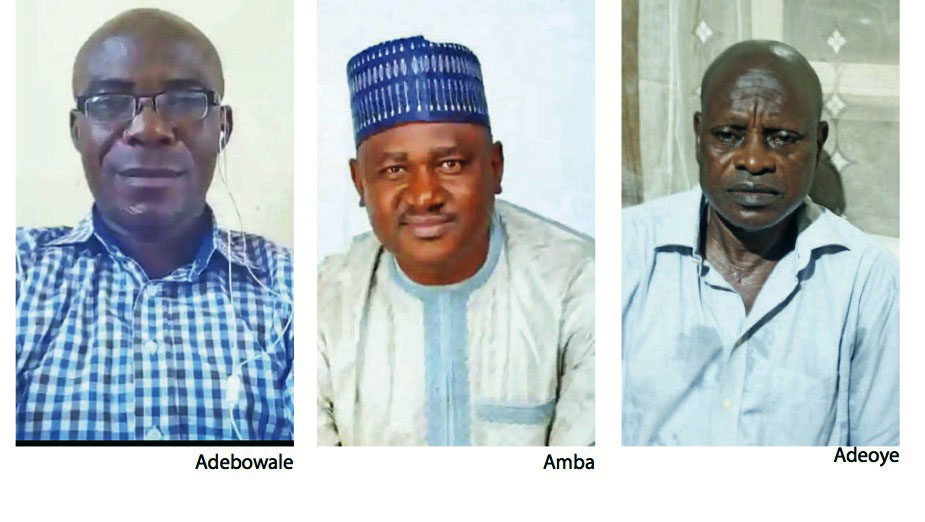
Mr. Francis Adeoye, a retired principal of a school in Ogun State, described male teachers as the endangered species in the school environment.
He pointed out that though male teachers offer the stability, morale and discipline needed in the school environment, there is no motivation for them.
Adeoye explained further that the male teachers usually become vulnerable as many could no longer cater for their families.
In his words, a lot of factors contributed to the decline in the number of male teachers in both primary and secondary schools.
Some of these factors, he said, include poor remuneration, poor working conditions in schools, overcrowded classrooms, inadequate furniture, insufficient instructional materials, dilapidated infrastructure and lack of adequate care for male teachers.
“Teachers are posted to rural areas without any special allowance. They also have families to cater for. You cannot ask a man to leave his family in the city to work in a riverine area and not remunerate him properly. There should be a special allowance for rural posting.”
According to him, teaching is now seen as a female job because even those male teachers that are still on the job are disappearing gradually because they are poorly paid.
“How many male teachers can send their children to university today,” he asked.
Adeoye also noted that the transfer system in the school environment is not fair to men.
“When a male teacher asks for transfer, they refuse, saying a man can work anywhere without complaint. But when a female teacher complains that posting will affect her marriage, they quickly grant her request. We are supposed to be equal before the law.
“Promotion is also not encouraging. Even if you are a level 15 teacher or higher, as a male teacher, you still have to contend with so many financial constraints.”
Adeoye pointed out also that other professionals like bankers, lawyers and even doctors have the financial wherewithal to sponsor their children to the university whereas a male teacher cannot comfortably do that with the stipend he receives as salary.
“A teacher has only teaching as a means of survival. He cannot sell anything in the school.”
The retired principal also expressed worry about lack of discipline in school.
According to him, many of the students of these days lack the discipline needed to learn because the male teachers that are supposed to instil discipline in them are gradually disappearing from school.
“There is no more discipline because male teachers are few. As the principal of my school, whenever I was at the school, no student dared look at my face. They would hurry to class. Today, stubborn boys challenge female teachers because they know the women will not want to be disturbed.
“These days, when you punish a student, parents come to fight the teacher. The culture of discipline is gone.”
According to him, to restore the value of discipline is to encourage male teachers back to school.
“The Federal Government should pay good salary and other incentives to the male teachers. Teachers must also be protected and provided with everything that would make their jobs easy.
“They should teach in conducive environments. Government should stop using posting to rural areas as punishment to male teachers,” he said.
Mr. Idowu Adebowale, a teacher at Ajangbadi Senior High School, Lagos, said the decline in the number of male teachers in schools didn’t start today.
He explained further that the decline was as a result of multiple factors, part of which, he stated, included poor remuneration and lack of respect for male teachers.
Adebowale explained also that the problem is gradually affecting the students, who, he said, did not respect the teachers any longer.
“In my school, we have 40 teachers. Only 14 are male, 26 are female. That tells you everything.
“A man is the head of the family. But the income from teaching is not commensurate with the responsibility at home. You cannot take care of your family with it.
“A major factor is the economy. You cannot compare our days in primary and secondary school with what obtains now. Things have changed.
“Discipline has also dropped in schools, and it is a failure of society — both parents and teachers. Students no longer respect teachers because the culture of discipline is being eroded.
“But if the economy is stable and teachers are well remunerated, more men will come back to teaching. Government should make teaching more attractive to men, because we are role models to these students,” he said.
Meanwhile, Hajia Risqah Ahmad Balogun, a teacher in one of the public schools in Kabba, Kogi State, said the problem is not limited to Lagos, Oyo or Ogun State.
She said the decline in the number of male teachers is a national problem that requires urgent and holistic approach.
Balogun pointed out, though, that the number of newly recruited male teachers has dropped drastically compared to the golden era when teachers were regarded as kings.
She explained that the situation in the country at the moment has really affected every sector of life.
According to her, men of these days aspire higher than in those days. A male teacher today has more responsibilities that involve money. Teaching is now seen as a job meant for women. That is why female teachers are in the majority.
“With the present situation in the country today, a man may not even get a wife or fiancée if he says he is a teacher, because women want to marry someone who can take good care of them. A male teacher’s salary is not enough to take care of a family, except for those who have other businesses.”
Balogun insisted that teaching is always driven by passion, and not by economic value.
She explained further that teachers are most vulnerable because they have no insurance, no proper motivation scheme like health insurance or other enabling facilities.
“The life of a teacher is tied to only salary, pension or gratuity and nothing else and this is too bad when you see the rate at which other colleagues of yours live their lives.
“For a man to go into teaching today, it is either he is jobless and teaching seems to be the last option for him to survive or that he has genuine passion for the job.”
Balogun also maintained that there is nobody that would engage in the teaching because he or she wanted to be rich. The motivation for picking up a teaching job, she said, is to impact the lives of others positively.
She, however, pointed out also that teachers have a better advantage to learn and re-learn as they teach their students.
The teachers, she said, can also manage their time, as they have enough time to take care of the home front.
“But in all, there is a need to review teachers’ salary structure to make it attractive for both male and female teachers,” she said.
She, however, appealed to the Federal Government to create a window of opportunity for teachers so that teachers — both male and female — could be motivated.
Mrs. Adejoke Salami, a teacher in one of the private schools in Lagos, said the number of male teachers is dwindling because they are also not motivated.
According to her, the decline in the number of male teachers in both public and private schools has to do with responsibility. Many male teachers, she said, are demanding, and they cannot cope with the salaries being paid by private schools. That is why their number is reducing by the day.
“In many private schools, male teachers are very few — it is like a ratio of one to five.
“One can only hope that it gets better with a rise in pay, because teachers at all levels go to the same market with lawyers, doctors and other professionals, but the salaries of teachers in this part of the world are not encouraging,” she said.
Mrs Ezemba Ifeoma, a teacher in one of the primary schools in Ikorodu, Lagos, restated the need for an increase the salaries of the teachers.
She maintained that although the focus may be on the decline in the number of male teachers, she admitted that the same problem of poor remuneration and system failure affected both the male and female teachers.
“In my school, we have four male teachers and 21 female teachers. What that means is that the female are still doing more and they need to be motivated.
“As we celebrate the annual Teachers Day, we are determined to play our roles as mothers and fathers to the students, but there is also a need for the government to motivate us and encourage us to do our jobs perfectly, so that we can continue to impact the students positively,” she said.
At the celebration of this year’s anniversary, the Nigeria Union of Teachers (NUT) called on the Federal Government to implement without further delay, the special salary scale approved for teachers.
The teachers insisted that the four-year wait has adversely affected their morale and welfare.
The National President of the union, Comrade Audu Titus Amba, made the call in Abuja at the 2026 World Teachers’ Day celebration held at Eagle Square.
Amba, who was represented by the Deputy National President of the NUT, Comrade Kizito Kalu, said the special salary structure for teachers in basic and secondary schools was approved in 2022 by the administration of former President Muhammadu Buhari alongside other welfare packages.
He, however, expressed concern that implementation of the salary regime had yet to commence four years after its approval.
“We therefore renew our call on government to set machinery in motion for actualisation of the new salary regime for teachers in order to boost their morale and enhance their dignity. A motivated teacher is an asset to national development,” he said.
The NUT president also raised concerns over poor working conditions in schools, citing overcrowded classrooms, inadequate furniture, insufficient instructional materials and dilapidated infrastructure.
He called for increased investment in school infrastructure and the provision of safe and conducive environments for teaching and learning.
Amba further expressed concern over the shortage of teachers in schools across the country, attributing the situation partly to the failure of some state governments to recruit teachers for several years.
He urged governments to recruit adequate numbers of professionally qualified teachers, particularly for rural and underserved communities, while providing incentives to retain them in the profession.
With the decline in the number of male teachers, the deficit, according to the teachers, is on the children — boys growing up without a male figure in class, girls without an example of disciplined masculinity, and schools without the balance that only a father-teacher brings.
However, if Nigeria must keep faith with the promise of the 1966 ILO-UNESCO Recommendation — rights, dignity and decent pay for teachers — then the Federal Government must make teaching attractive again by reviewing the salary structure of both the male and the female teachers, paying rural allowance, initiating insurance scheme to take care of their physical and medical needs and restoring the dignity of the teachers.
This, it was said, can help in restoring the golden era when teachers were treated like kings.