Follow Us on Google
• Reveals Poly before 2016 was in very sorry state
From Geoffrey Anyanwu, Enugu
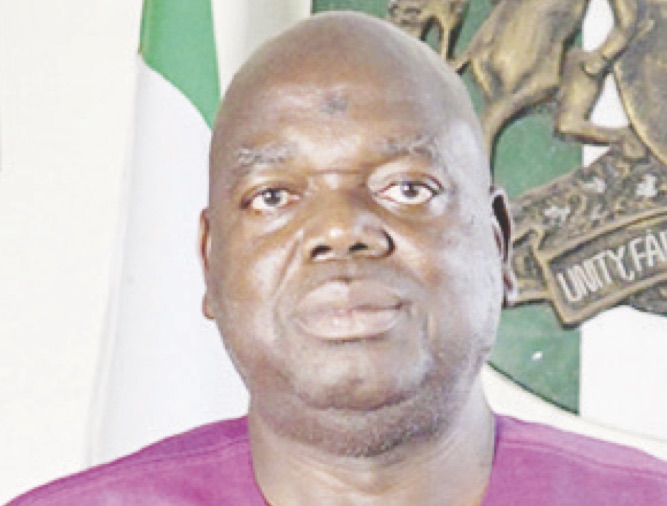
The Rector of the foremost state-owned polytechnic, Institute of Management and Technology (IMT), Enugu, Prof Augustine Nweze, has emphasized the need for Nigeria to pay greater attention now to skills acquisition than acquirement of degrees.
In this interview with Sunday Sun, Prof Nweze explained the importance of skills in the present day world and what his institution, IMT, is doing in that direction.
He talked about the rot that was IMT before he took over the leadership in 2016, to the extent that over 80 per cent of the programmes being ran by the school then had their accreditations expired five years earlier, but was happy that all that were in the past now as the institution has bounced back to form.
Nweze disclosed the frantic efforts of the immediate past Governor Ifeanyi Ugwuanyi’s administration, at restoring IMT to life and what his (Nweze) management has done to revive the institution.
IMT is not insulated from several other crisis polytechnics in Nigeria are faced with, there are universities here and now you’re talking about so many private polytechnics springing up here and there. What will be your own suggestion on how polytechnics can run and run effectively in the context of all these…?
Well, we know that an average Nigerian will prefer his children going to university programme or programmes to polytechnic programmes. Even though the Federal Government had been talking about parity, the truth of the matter is that parity is not yet there, I mean between degree and diplomas. Because even here we still have those that have HND on the Executive line, either Principal Executive Officers or Chief Executive Officers and those who have degrees in a different line. Even those who have HNDs and they are teaching, we call them Instructors, those who have degree and they are teaching they become Lecturers. So, even the system in itself is still favouring the dichotomy, so until that dichotomy is removed polytechnics will not be flourishing the way they should be. The current Executive Secretary of NBTE has been talking about skills not degrees, in any case that’s where we should now be heading towards. Let’s talk about skills acquisition in preference to acquiring degrees. Assuming you have skills, on graduation you can go and set up your own little business and start from there. Coscharis, we understand started with N25,000, Coscharis Motors. N25,000, that was what he started with and today he is more or less a conglomerate. So, the skills we are talking about should be preached and put in place. That is why we have the Director of Consultancy here, we are doing consultancy services, we have Entrepreneur Development Centre, we teach the students a number of skills, including how to mold blocks, how to lay blocks, that is bricklaying, how to bake cakes, how to bake bread, how to weave, a lot of things, we have a complex for skill acquisition and, of course, if you don’t have such a complex NBTE will not give you accreditation that is the current position. NBTE must be convinced you’re imparting some skills on the students otherwise you fall out of grace with them.
You had a week staff event, what necessitated the programme?
The truth of the matter is that since we came on board in 2016, talking about this current management, we’ve been doing our best to raise the bar in the administration of polytechnics with IMT as the case in point. So, we’ve introduced a number of things, then even in the Bible we also have Judas, out of the 12 apostles there is one Judas, so we believe that now we are more than 12, we’re going to have more Judases who have been in one way or the other heating the polity. So, along the line management now reasons, instead of allowing this people, we have our academics going on smoothly, everything going on smoothly, yet a very few are not happy with the progress we are making, so we now said okay let us come with this innovation whereby every staff for one week should come, we have been talking about students’ week, students’ week, we now say for once let us have staff week and in this staff week, we now have to introduce a lot of games, a lot of activities, social amenities so that staff can come and relax and laugh. Because the best form of rest is sleep and rest is defined as change of activity. The change of activity now has to do with going to the field and to play, to run, even indoor games and the rest of them. So, that for once we can relax for one week that informs our decision to introduce it. Coincidentally, the students had their own week last week, so this week is now staff week, then after the staff week, the students already know; by Monday we’ll be in the examination halls so our exams will start. So, in a way it’s another way of announcing the semester is gradually coming to an end because immediately after the staff week we now start final exams. So, it is an innovation by the current management, in fact, the new Deputy Rector (Dr Emeka Ejim) spearheaded the introduction of this innovation and we bought into it, I must be specific and we are all enjoying it.
What message are you trying to send out to the public with these sports activities?
One, to tell the public that IMT is at peace, we don’t have factions, coincidentally, even those that are fighting the management they are also there playing, they would have said no, we will not come, but I saw them there the day I went there, I don’t know what they have in mind. So, one message we want to send across is that IMT is at peace, we are not quarrelling, purely industrial harmony, academic programme going on smoothly, staff, where there is no peace you cannot have this kind of activity, certainly not. So, that is the message we want to send across, we don’t have problem in IMT except for financial challenges anyway because if we have more money, we will put more infrastructure, we pay more staff, we hire staff and all that. Apart from financial challenges, we want to make a point that IMT is doing well.
Prof, you said you took over the administration here in 2016, is it possible for us to know what you’ve been able to do all these years?
Well, except if you insist, otherwise, I thought you came for the staff week grand finale. Well, we can speak on that, ordinarily I run open door policy. Since we came on board 2016, this is our about eight years now, God’s willing we have less than one year to stay. By 2016 when we came here, I don’t know when last you came to IMT, but if for anything or any reason you were in IMT before 2016, you would agreed with me that IMT was in a very sorry state. Starting with this Admin Block you are seeing here, there was no roof on it. For the number of years this building has been in existence they’ve been using decking and at a point the thing began to leak profusely everywhere. And because it was leaking, weeds, maggots and all those things began to grow everywhere which was not healthy to health and all that, it’s not just here, the one behind, including the Medical Centre was in a very terrible state. If you go to Mass Comm, that one was that once our students are having lectures and it began to rain, the students will now know that they have to swim right inside the classrooms because the water will come in such a way they will be inside water. Coincidentally, when we took off on June 10, 2016, we invited His Excellency (Ifeanyi Ugwuanyi) to come on a working visit, in fact, he came on his own and we took him round and he saw all those things by himself and he said no he would not allow this to continue this way. So, that was how he gave us the first intervention with which we were able to put through this fine roof, it is about eight years old now, but it is still looking as if it was done yesterday. Even the Mass Comm we have to re-roof it completely, the roof was flat we had to raise it up, it became very high and right now is not leaking. We also built two studios, one for television and one for radio, we couldn’t have access to transmitter then otherwise by now we would have been broadcasting IMT Radio or IMT TV. Now, it is not just the infrastructure that makes an institution, what about the contents and quality control? That is talking about accreditation and reaccreditation. That 2016 we came on board, more than 50 per cent of the programmes have their accreditations expired way back in 2011, five years before 2016, which means the programmes they were running when we came on board were all expired, about 80 per cent of them were expired and you know It’s an offence to run programme whose accreditation had expired. So, we ran back to the governor and pleaded with him that the next thing we should be talking about is reaccreditation and accreditation of new programmes. He bought into it, gave us another large sum of money which I’ll not want to mention and with that we started with 18 programmes plus institutional accreditation, that is 19 and to the glory of God all of them scaled through both the institutional accreditation and the 18 programmes and we are now fairly comfortable. With that again identified another set of 38 programmes, in fact, eventually 40 programmes whose accreditation had expired, we went back to His Excellency, graciously again through EXCO he gave us a reasonable sum of money with which we now had to embark on that 40 programmes reaccreditation at the same time. In fact, that week we had a total of 101 guests, you can imagine having 101 guests in a week, it was not easy for us. Coincidentally, or I will say unfortunately, I don’t know, that was the time my father-in-law died in my house. The team leader was surprised to hear that I lost my father-in-law and I was still coming to attend to them. Around 12 midnight, we prayed for him, put him in the mortuary and in the morning I had to report, told them this was what I was passing through. The man said he didn’t even expect me to come after he had heard of what happened, but I said no, I would do everything humanly possible to make sure we succeeded with the accreditation and to the glory of God we did, all the programmes fully accredited, so that’s where we are. Then again when we came in 2016, we discovered that many polytechnics and even Colleges of Education now via into what they call affiliation arrangements and unfortunately, IMT that is as old as, founded 1973, was not into any affiliation arrangements. And College of Education (Technical) which is an offshoot of IMT was already enjoying accreditation with Nnamdi Azikiwe University, so we began the plan, at Council level we said the best university to be affiliated with is University of Nigeria. We had to go to UNN, Prof Ben Ozumba was the VC then, he now asked me Rector or Prof, where did you get your PhD? I said from University of Nigeria, Enugu Campus, he said okay, then we can now discuss, I am quoting him. So, perhaps if I’ve not got my PhD from UNN, he would’ve had a different opinion. I am not saying that I single-handedly attracted the affiliation arrangement, but I know I contributed significantly and fortunate for me when we went for UNN Senate approval, the present VC, Charles, was the DVC then and he chaired the Senate session and we were able to get the approval. We’ve already graduated the first set and now the second set will soon graduate. That is why I refer IMT as an academic supermarket, you know if you go to supermarket you have sections: wears, children this, adults this, so if you come here you have option of ND, option of HND or degree. In fact, our initial intention was to make IMT a full fledge university, stand alone university, but you know you can’t do that without the backing of the state government for there has to be a law, so when we saw it was being difficult and to the glory of God we got this as an interim measure, short-term measure and that is the affiliation arrangement we’re enjoying. And that’s why not every student you see here that is a student of IMT, some are of University of Nigeria. Because the first matriculation ceremony they had, the DVC came from UNN and told them that their certificates will not have anywhere IMT will be written on it, that it is going to be University of Nigeria, which means they are UNN students technically-speaking, so that’s where we are. Again when we came in that 2016, there was this N1 billion given to former Rectors, let me put it that way, which even as we speak they have not religiously been able to account for it. So, because of that we are in the black book of TETFUND, they said no more intervention for IMT. But fortunately, along the line we were able to navigate through, they now said okay they will be giving us interventions that was how we started. So, as we speak, we’ve been able to get so many interventions, both infrastructure developments, scholarship progrmmes (for lecturers going outside the country), library, ICT, a lot of interventions even zonal interventions, but they said they’ll not giving us special intervention because we’ve not been able to account for the N1 billion given to us then. Us, because you know there’s what you call vicarious liabilities, even though I was not the Rector then, I am now the Rector so vicariously speaking I am liable, but once it comes to accounting for it I will draw the line, but since it’s a fact that we are discussing generally here we know it is IMT’s challenge. If you go down you see one of the schools, School of Engineering, it’s still uncompleted and even one that was done, School of Technology, I told them it’s better we vacate the students from there because it’s already caving in. I don’t know and that is the problem with us, how can an Igbo man be given contract to go and build a house or build office complex and then you went and did something that is very, very inferior knowing that your own brothers and children will be there, it is too bad. So, we’ve been able to access a lot of money from TETFUND, graciously for us also the state government now paid attention to IMT for the first time after so many years. In fact, there was one EXCO meeting I attended and they were wondering publicly, why was the state government paying special attention to IMT? I don’t know the answer either, but the bottom-line is that the state government under the former governor, Dr Ifeanyichukwu Ugwuanyi, Gburugburu, we call him, paid so much attention to IMT and the lots of building you see there were done for us by the state government and some done by TETFUND. That is why IMT is very beautiful and then not just the houses or buildings, look at the roads, drainage system both ways, nylon coated, so beautiful. So, IMT has been completely transformed, so by God’s grace we are good to go. I think God willing by the time we will be leaving, we will be leaving with our shoulders high because we’ve been able to impact positively to the welfare of IMT. And one thing we don’t joke with is staff welfare, we have it as a policy that 25th of every month we must pay salary except if that 25th is on a Sunday, then we pay the next day. Whether there is subvention or not we have been able to manage our finances that way, so when subvention comes we use it to replace for the previous months. Normally subventions will come into the new months, we don’t wait until it comes, we pay and when it comes we now use it and replace, then keep on that way and staff are happy with it. We’ve sent a number of staff for course programmes even within and outside the country, although outside country essentially is that of TETFUND, but for within the country we have sent so many staff and what is more, many staff embrace my advice, go for your PhD incase IMT becomes a university of its own. If IMT becomes a university and you don’t have a PhD, this place is no longer for you because if you want to be an academic you must have at least a PhD and once you have a PhD you will be talking about publishing and all that, eventually you’re looking forward to becoming a Professor and that is the ultimate for every academic staff of a university. So far, so good we thank God, that’s where we are.
In all these, what can you say about the academic quality of your students?
The best way to rate our students is not just within, let’s do a comparative analysis. By 2016 when we came on board, IMT was ranked 29th, ranking within the country, out of 122 polytechnics. That was 2016 when we came, by 2018 we’ve been able to move from the 29th position to the Seventh position for all the 122 polytechnics. Then if you talk about the state-owned polytechnics, it was only the Polytechnic Ibadan that came first and we came second which means state-owned polytechnics we came second, nationally we came seventh and you know a number of things were considered before they placed us where they placed us, of course, including rating of the students. So, the students are doing so well, and how you know they are doing well is when they go for outside, what we may call competitions with their peers. They went to Abuja for a debate; they came home with the first position. We went for technological exhibition sometime in January, we came tops, so our students are doing very, very well. if you talk about those in our professions like accounting, as soon as they leave here and go where they are doing service, many of them qualify and pass ICAN examinations. That shows you that what we are doing here is of standards, the required standard if not beyond.
Few days ago the committee set up by the state government to look into the school submitted its report to the government. Would see the committee as a blessing for you and the school or…?
Well, I will not want to comment on the committee as a matter of fact, because the state government set it up, they came, they interviewed me, we had about five hours session. That was on the 4th of September, they heard from me. I gave them lots of documents, I heard they have submitted their reports, I think is beyond me now, I don’t want to comment on it. Whatever government wants to do with it so be it.
Prof, going by the number of years you’ve put here which is not less than seven, it means you should be reeling on experience about situation of this place, if you are asked of the problems of IMT, what will you be saying they are?
For now, just like I said earlier, our greatest challenge is finance. Because if we have the money, we’ll be talking about more buildings, if we had the money, once we have more building we will be talking about more programmes. If you go to Nekede they have so many students because they have so many programmes, it’s a function of how many programmes you have, so that is the area. Apart from finances, the other problem you think we have is being caused by just a few, being spearheaded by one person and normally I see the person as a disgruntled element, a very ungrateful person and I qualify him as an un-academic academic staff. Un-academic academic staff that’s the way I qualify him because his colleagues are there running for their PhD programmes, but instead of going for a PhD programme, his own area is writing petitions.
Are you worried that with all the efforts you put to rebrand IMT, there are still few elements that do not want to embrace good things or success?
That’s what I said, even in what I submitted, I told them that the main person writing the petitions, that his head requires medical examination. Because if he is normal he will not be thinking along that line if at all he is normal, that is why I suggested medical examination in his head to ascertain whether he is insane or sane. Because any sane human being will be talking of glories, glories both for state government and the present management of IMT, but unfortunately, one person is saying the opposite without facts. You just open your mouth and say the worst Rector, give me instances, you cannot.