Follow Us on Google

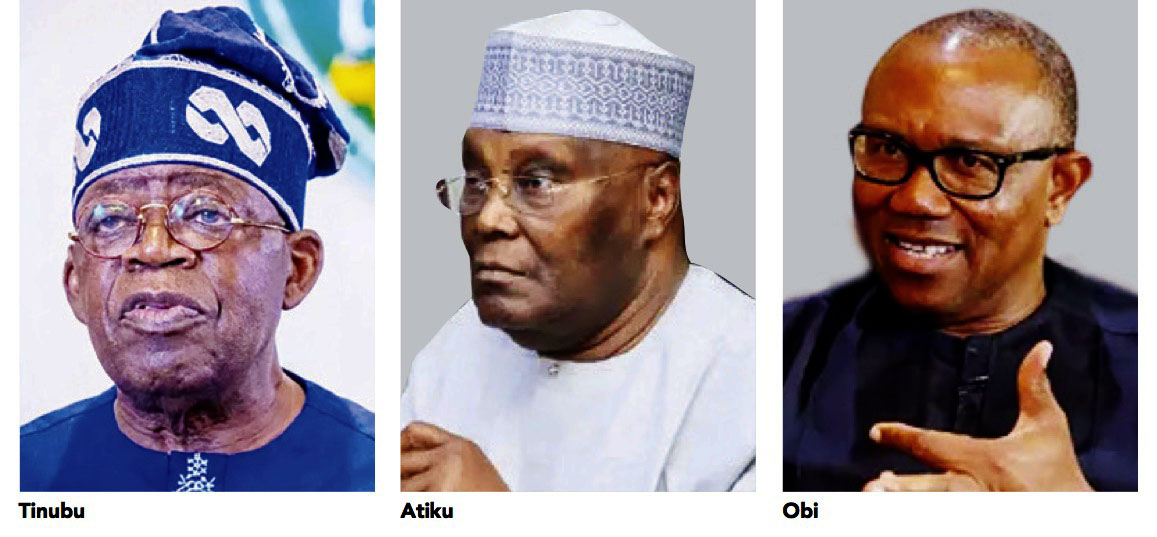
•Ruling party defends reforms, insists on continuity
•Atiku, Obi, others preach policy reversal
Despite the economic hardship and rising cost of living confronting millions of Nigerians, the All Progressives Congress (APC) Campaign Council has remained resolute in defending the policy reforms introduced by President Bola Tinubu, insisting that the difficult measures are necessary foundations for a stronger, more sustainable and prosperous economy. As the country moves towards another electoral contest, the party is increasingly positioning the 2027 general election as a referendum not merely on the performance of the current administration, but on the future direction of Nigeria’s economic policy.
At the heart of the APC’s argument is the conviction that the removal of petrol subsidy and the unification of the foreign-exchange market, though disruptive in the short term, were unavoidable decisions to correct longstanding structural distortions that had weakened public finances, encouraged inefficiency and discouraged investment. The party maintains that reversing these measures, as it argues some opposition proposals could entail, would amount to returning the country to an unsustainable economic order rather than addressing the underlying challenges.
This places the APC on a clear political and ideological footing against the opposition, particularly former Vice-President Atiku Abubakar and former Anambra State Governor Peter Obi, whose criticisms and alternative prescriptions have opened a wider debate over whether Nigeria should consolidate the present reform trajectory or substantially alter its course.
For the ruling party, economic recovery requires consistency, patience and the courage to see difficult reforms through. Yet the APC also faces an important challenge: convincing ordinary Nigerians that the sacrifices they have endured will translate into tangible improvements in their living conditions.
The emerging contest, therefore, is not simply between political parties, but between competing visions of how best to secure Nigeria’s economic future. As the battle for 2027 gathers momentum, one of the defining issues before Nigerians is no longer simply which candidate has the most attractive promises, but which economic direction offers a more credible pathway to recovery, stability and sustainable growth.
For the APC, the argument is straightforward: Nigeria cannot afford to abandon difficult but necessary reforms simply because their immediate consequences have imposed considerable hardship. Having taken the politically difficult decisions to remove petrol subsidy, unify the foreign-exchange market and restructure the fiscal framework, the party maintains that the priority should be to consolidate the gains, address implementation gaps and ensure that the benefits translate into improved living conditions.
Reform gains and its downside
That case for continuity is not made on politics alone. It is also made on what the reforms are said to have already delivered: stability and confidence. The CEO of the Centre for the Promotion of Private Enterprise (CPPE), Dr Muda Yusuf, identified current macroeconomic stability as a major attraction for foreign investment: “One of the gains of the current reform is investors’ confidence. Another gain is macroeconomic stability,” urging the government to sustain the reform. Senator Gbenga Kaka re-echoed the point on the currency: “Besides, foreign exchange is being stabilised.”
For the APC, those two gains — confidence and stability — are the foundation on which the next phase must be built.
External backing for continuity
The APC’s defence is not entirely dependent on the President’s political arguments. International financial institutions have also acknowledged the importance of the structural adjustments, even while drawing attention to the need for stronger social protection and more inclusive growth.
In its October 2024 Nigeria Development Update, titled: Staying the Course: Progress Amid Pressing Challenges, the World Bank described the reforms as necessary and courageous interventions. Its Country Director for Nigeria at the time, Ndiame Diop, said: “Nigeria took the bold and courageous move to undertake difficult but critical reforms.” The bank warned that without the reforms, the country could have descended into a serious fiscal crisis, making it increasingly difficult for government to meet its obligations to citizens.
The International Monetary Fund has similarly acknowledged the importance of sustaining the new direction. In its June 2026 Article IV assessment, the Fund observed that sustained reforms since 2023 had strengthened macroeconomic stability, reduced fiscal vulnerabilities and rebuilt external buffers.
These assessments provide important context for the APC’s insistence that the country should not mistake the difficulties of adjustment for evidence that the reform direction itself is fundamentally wrong.
President Tinubu has remained particularly emphatic on continuity. Receiving a World Bank delegation led by its Managing Director of Operations, Anna Bjerde, at the State House on February 3, 2026, he declared: “Since we went into this journey of reform, we have our hands on the plough, and we’re never going to look back.” He acknowledged the pain associated with the decisions but insisted that the country must remain committed to the process. “It was difficult and painful, but those who win are not those who give up along the way in their difficult times,” he added.
The President’s position was reinforced by Bjerde, who described Nigeria as an example of “steady, credible reform leadership”, noting that consistency and emerging results were helping to build confidence among investors and private-sector operators.
For the APC, these endorsements strengthen the argument that the reforms should be consolidated rather than abandoned.
However, the central challenge remains how to translate macroeconomic improvements into tangible relief.
Opposition’s policy reversal
The opposition, particularly the presidential candidates of the African Democratic Congress (ADC), Atiku Abubakar, and the Nigeria Democratic Congress (NDC), Peter Obi, offers a different emphasis. Their criticisms have been accompanied by proposals for renewed government intervention, particularly in the petroleum sector, and a different approach to managing the consequences of the reforms.
Perhaps the clearest point of departure concerns the future of petrol subsidy. Atiku has repeatedly promised to restore subsidy if elected, although his latest proposition places emphasis on a targeted production subsidy for locally refined petroleum products rather than a return to the old import-dependent arrangement. His argument is that government should intervene to reduce the cost of locally refined products, particularly by making crude oil available to domestic refineries on preferential terms. He believes such an arrangement would lower production costs, reduce pump prices and ease the burden on consumers.
For him, the economic argument is to lower energy costs, reduce transportation and production expenses, improve the competitiveness of businesses and ease pressure on household incomes. However, the critical question is how such intervention would be financed, administered and sustained without recreating the fiscal distortions associated with the former subsidy regime.
It is also important to examine Atiku’s current position against his earlier prescriptions. During the 2023 presidential campaign, he supported the removal of petrol subsidy, arguing that the resources consumed by the arrangement should be redirected towards productive sectors. His present commitment to restore subsidy therefore represents a significant departure from that earlier position.
Second, as former Vice-President, Atiku was part of the old subsidy regime characterised by corruption, rent-seeking and incessant disruption in the supply chain. The more important question now is whether the proposed change is supported by a clearly articulated economic rationale, a transparent financing arrangement and a credible implementation framework.
Nigeria’s experience with petrol subsidy offers important lessons. A policy intended to protect consumers eventually became a major source of fiscal leakage, opacity and controversy. Restoring intervention under a different name would therefore require convincing safeguards to prevent a recurrence.
Peter Obi’s propositions require a somewhat different assessment because his position does not amount to a wholesale rejection of Tinubu’s framework. Obi has indicated that he would retain the floating exchange-rate policy, while arguing that greater domestic production would strengthen the naira and improve the country’s economic fortunes. He has also advocated transparency in the management of petroleum resources and proposed a more structured approach to intervention in the fuel market.
His broader philosophy places considerable emphasis on production, investment, prudent public expenditure, agriculture, manufacturing, education and human capital development. These are important development priorities. Indeed, increased domestic production is essential if Nigeria is to reduce import dependence, create employment and establish a more resilient economy.
However, the disagreement over petrol subsidy remains significant. Obi has proposed a transparent subsidy arrangement, arguing that technological monitoring and greater accountability could prevent the abuses associated with the previous system. The question is whether better monitoring alone can resolve the underlying fiscal and economic problems of a subsidy regime. Even a transparent subsidy must be financed. Its opportunity cost must also be considered, particularly in a country with enormous infrastructure, healthcare, education and security needs.
If government commits substantial resources to keeping petrol prices artificially low, what happens to the resources available for investment in the productive sectors that Obi himself identifies as essential? This is one of the contradictions the 2027 debate must interrogate. It is not enough to promise cheaper petrol and greater investment in production. Candidates must explain how both objectives can be achieved without undermining fiscal sustainability.
APC’s case for consolidation, not retreat
Other News
For the APC, the country should consolidate the transition towards a deregulated petroleum market, encourage domestic refining, strengthen competition and use public resources to provide targeted assistance to vulnerable households rather than re-establishing a broad price-support mechanism.
In an October 11, 2026 statement following a World Bank assessment, Tinubu reaffirmed his commitment to the reform programme, declaring: “Our administration will stay the course of reform and redouble its focus on inclusive growth under the Renewed Hope Agenda.”
This is significant because it suggests that the next phase must go beyond macroeconomic stabilisation to address the social consequences of adjustment. The President has acknowledged that more work remains to ensure that reforms translate into lower food prices and decent jobs.
The party also has an opportunity to demonstrate that subsidy savings and improved fiscal management can finance more productive public expenditure. The increased resources available to state governments, for instance, should translate into better infrastructure, healthcare, education and social services.
But this is where the administration’s credibility will be tested. Nigerians will understandably ask what tangible improvements have resulted from the reforms and when they can expect meaningful relief from the cost-of-living crisis.
The APC cannot simply ask citizens to endure hardship in the name of macroeconomic stability. It must show that stabilisation is translating into employment, higher incomes, improved food security, affordable energy and better public services.
In that sense, policy continuity must be accompanied by a change in the quality and effectiveness of implementation.
That position also places the burden on the ruling party to demonstrate that savings from subsidy removal are being deployed transparently and effectively. It cannot demand patience indefinitely without providing visible evidence of improved public services, infrastructure and household welfare.
Danger of policy uncertainty
Beyond the immediate argument over petrol pricing, the question of policy continuity has implications for Nigeria’s investment climate.
According to experts, economic decisions are rarely evaluated in isolation. Investors consider the consistency of government policy, the predictability of regulations, the strength of institutions and the likelihood that a new administration will retain or fundamentally alter the existing framework. For a country seeking substantial domestic and foreign investment, uncertainty over the future direction of economic policy can complicate long-term business decisions.
The APC’s argument for continuity is therefore rooted partly in the need to establish policy credibility. Businesses that make investment decisions over five, 10 or 20 years require a reasonable degree of confidence that the broad regulatory and economic framework will not be radically altered with every change of administration.
The World Bank’s Anna Bjerde reinforced this point when she commended Nigeria’s reform leadership, identifying consistency as an important factor in building investor confidence. Her assessment underscores the reality that policy credibility is an economic asset that cannot be established overnight.
This does not mean that every policy introduced by an incumbent government must be retained. No responsible administration should be immune from criticism or correction. But wholesale reversals, particularly without a detailed assessment of their fiscal and economic consequences, could introduce another layer of uncertainty into an already challenging business environment.
The opposition, on the other hand, is entitled to argue that continuity should not become an excuse for preserving policies that have failed to deliver sufficient relief or meet their stated objectives.
The real test of the competing propositions is therefore not political rhetoric but the quality of their economic reasoning, the feasibility of their funding arrangements and the likely consequences for productivity, employment, investment and household welfare.
One of the defining features of democratic elections is the opportunity for citizens to reconsider the direction of government policy. Opposition parties are expected to challenge the incumbent’s record, identify shortcomings and offer alternative solutions.
But economic policy should not be reduced to an exercise in political differentiation. The consequences of reversing major reforms must be properly evaluated before promises are made.
The restoration of petrol subsidy, whether in its traditional form or through a production-based arrangement, raises questions about fiscal commitments, pricing mechanisms, crude supply, transparency and the long-term viability of domestic refining.
Similarly, any intervention in the foreign-exchange market must be carefully designed to avoid recreating the distortions that the previous multiple-rate system generated. It is noteworthy that Obi has indicated his willingness to retain the floating exchange-rate framework. This suggests that the 2027 debate is not a simple contest between reform and total reversal. Rather, it concerns the extent to which the candidates would preserve, modify or replace specific elements of the current programme.
Atiku’s proposed production subsidy also differs from a straightforward return to the former import-dependent arrangement. Nevertheless, its implications for public finances and the petroleum market require detailed explanation.
The question for Nigerians is whether these proposed modifications would deliver sustainable relief or create new fiscal obligations that could eventually undermine the economic stability they are intended to protect.
The real test
The central issue is therefore not whether Nigerians deserve immediate relief. They do. It is whether that relief can be delivered sustainably without recreating the economic weaknesses that made the present reforms necessary.
Tinubu’s proposition is to consolidate the reforms already introduced, deepen structural adjustments and pursue economic expansion. Atiku’s proposal includes renewed intervention through a production-linked subsidy, while Obi advocates greater transparency, productivity and selected interventions alongside retaining the floating exchange-rate system.
These positions reflect different approaches to balancing immediate welfare concerns with long-term sustainability. For the APC, the challenge is to make a convincing case that continuity is not simply about retaining power or defending the President’s political legacy. It must demonstrate that the reform programme is producing measurable benefits and that the next phase will place greater emphasis on household welfare, job creation and productive investment.
For the opposition, the responsibility is to show that its alternative proposals are not merely reactions to the political discomfort generated by difficult decisions, but carefully costed and workable programmes capable of delivering better outcomes.
Nigeria has paid a considerable price for years of economic distortions, weak fiscal discipline and inconsistent policy direction. It would be equally dangerous to assume that every reform is automatically successful simply because it is difficult, or that every proposed reversal will necessarily improve the lives of citizens.
The ultimate measure of any economic programme must be its capacity to create wealth, expand opportunities, protect vulnerable citizens and improve living standards. Whether through continuity or carefully designed policy adjustments, that is the standard against which every candidate should be judged.