Follow Us on Google

By Kareem Islamiyat
As nations race toward renewable energy, a major technical challenge looms large: integrating solar, wind, and other inverter-based resources into power grids designed decades ago for large, rotating fossil-fuel generators. The United States is no exception. Experts warn that without advanced modeling, this transition could threaten both grid stability and national security.
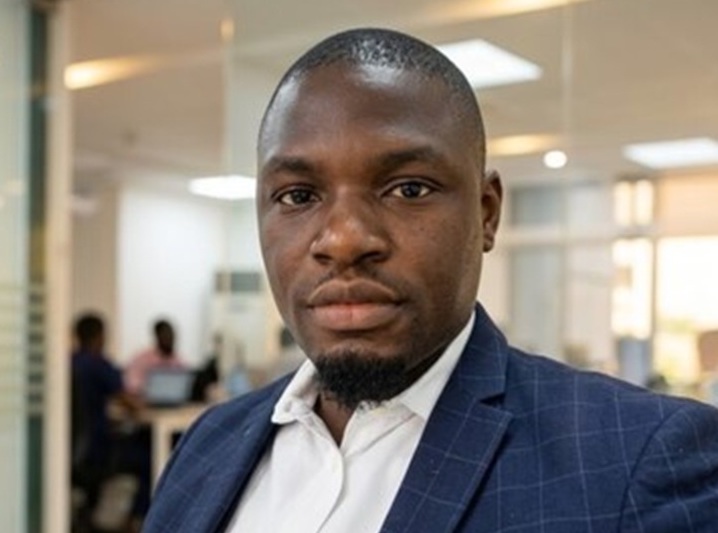
At the forefront of tackling this challenge is Christian Chukwuemeka Nzeanorue, a Nigerian engineer working with PJM Interconnection, operator of North America’s largest power grid. His research explores the intricacies of smart grids, renewable integration, and real-time energy management, bridging the gap between theoretical research and practical grid operations.
His published work, including Smart Grids and Renewable Energy Integration: Challenges and Solutions and A Sustainable Energy Future: Leveraging the Potential of Smart Energy Systems, provides a foundational framework now being adopted by industry peers. Nzeanorue’s expertise has established a new benchmark for modeling inverter-based resources such as solar and wind farms, ensuring that millions of people enjoy reliable electricity while the U.S. transitions to a cleaner energy future.
In this interview, Nzeanorue discusses the role of advanced modeling, artificial intelligence, and smart technologies in creating a resilient grid, the risks of failing to modernize, and the investments and collaborations needed to power the clean-energy transition safely.
Renewable energy adoption is accelerating globally. Why has grid modeling become such a critical issue at this moment?
We are entering an era where the electricity grid is transforming faster than ever before. With the massive addition of wind and solar resources, the biggest challenge is accurately predicting and ensuring grid stability. Traditional grid physics were anchored on large spinning machines, but a grid dominated by electronic inverters behaves completely differently. My work focuses on developing models that capture these new dynamics. Without such models, any future expansion of renewable energy becomes risky.
What, specifically, makes renewable-heavy grids more complex to manage?
The shift from a few large power plants to thousands of smaller, weather-dependent generators creates a visibility and predictability problem. You are dealing with intermittent resources that require digital oversight. This is why technologies like IoT-enabled sensors, real-time data analytics, and AI are indispensable. In my research — including work on energy harvesting, sensor networks, and smart energy management systems — I outline how a “central nervous system” of sensors feeding a digital twin of the grid can help operators anticipate issues long before they cause disturbances.
At PJM, we use these principles daily. The methodologies I developed for using ambient data to calibrate generator models in real time have significantly improved the accuracy of our dynamic stability assessments. That translates directly into greater grid resilience.
Other News
What are the risks if countries fail to modernize their grid models?
The consequences are severe. First is national security. The power grid underpins everything, from water systems, transportation, financial markets, and healthcare. If we operate with inaccurate models, the risk of cascading blackouts increases dramatically. A widespread outage is not just an inconvenience; it is a threat to public safety and the economy.
My work on generator modeling feeds directly into standards used by the North American Electric Reliability Corporation (NERC). Ensuring that the digital representation of the grid mirrors the physical system is vital to preventing events that could cost billions and endanger lives.
Without advanced models, the clean-energy transition also slows down. You cannot decommission old fossil plants confidently if you cannot predict how high-penetration renewables will behave. In my publication reviewing sustainable energy development, I explained that solving the technical bottlenecks of stability and visibility is essential to meeting federal and state clean-energy mandates.
You’ve mentioned a “digital twin” of the grid. How central is this concept to the future of power systems?
It is foundational. As the physical and digital layers of the grid merge, having a real-time digital replica becomes indispensable. This model allows operators to run simulations, anticipate faults, and prevent instabilities before they escalate. The grid of the future will be digitally native — built around advanced modeling, smart sensors, AI, and automated controls. This is the direction in which PJM and other system operators around the world are moving.
What investments are most needed to build a resilient, renewable-ready grid?
We need continuous investment in developing accurate, dynamic models for emerging technologies like hybrid plants and large-scale batteries. These models are the blueprints for a resilient grid. Many of the techniques I’ve published are already being referenced by researchers and technology developers.
Solutions also require cross-sector collaboration. The answers exist at the intersection of power engineering, computer science, and data analytics. Researchers, utility operators, and technology developers must work closely together. My research bridges academic concepts with real-world implementation for grid operators.
Finally, regulatory standards must evolve as quickly as technology. Bodies like FERC and NERC are already discussing updates to interconnection rules and reliability standards, and my research contributes to that ongoing dialogue.
Given the scale of the challenge, are you optimistic about the future of the grid?
Absolutely. We are making tremendous progress. With intelligent modeling, smart technology, and strong collaboration, we can build a grid that is not only resilient and secure but also fully capable of supporting the clean-energy future we all envision. The stakes are high, but the tools and expertise required already exist, so we simply need the commitment to deploy them.