Follow Us on Google

From Fred Ezeh, Abuja
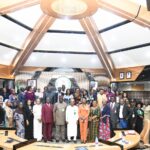
Worried by the poor reportage/presentation of cases of human trafficking in Nigeria by journalists and other civil society groups, the National Agency for the Prohibition of Trafficking in Persons (NAPTIP) recently organized a three-day training on trafficking in persons for media corps to expose them to the reporting template of the matter.
NAPTIP said the aim of the workshop was to bring the journalists face-to-face with the reality of the menace of human trafficking to humanity, the society and the economy of Nigeria.
Aside from journalists reporting human trafficking and other related offences, the media deskds of the Nigeria Immigration Service, Nigeria Police and other partners participated in the workshop, which was supported by the Action Against Trafficking In Persons and Smuggling of Migrants, funded by the European Union and implemented by FIIAPP.
NAPTIP director-general, Dr. Fatima Waziri-Azi, thanked journalists and other civil rights groups for their years of support to NAPTIP’s activities, which has been helpful in the reinvigorated onslaught on human traffickers and violators of human rights.
She tasked the Nigerian media community on giving prominence to reports on issues of human trafficking and other forms of gender-based violence, urging them to do more by exposing the high-profile traffickers so they could be prosecuted.
The NAPTIP boss appealed to the media to join hands with the agency in the areas of increased sensitization, advocacy and information-sharing on issues of human trafficking and gender-based violence.
She explained that the capacity-building workshop was necessitated by the fact that some journalists involved in the coverage of the activities of NAPTIP lacked certain knowledge about human trafficking, hence, the need to expose them to deep things about human trafficking and other related activities of traffickers to help improve their output.
She expressed confidence in the ability of the resource persons to make maximum impact, leveraging on their wealth of knowledge and experience.
The NAPTIP boss challenged participants to take advantage of the opportunity to learn and relearn so that they can be better in their reportage and presentation of issues of human trafficking.
The president of the Journalists International Forum for Migration (JIFORM), Ajibola Abayomi, in a statement, raised the alarm that trafficking in persons had assumed a dangerous dimension in Nigeria and beyond.
He said human trafficking was inimical to humanity such that every trafficked person was a huge loss to the nation, arguing that it was time to cripple or weaken the traffickers by tracking their illicit proceeds and funds as cash flow in and out of Nigeria.
He urged Nigerians not to be carried away by the feats achieved by the NAPTIP over the years despite the obvious paucity of funds, as there was need to do more.
He said: “For this to happen, there must be collaboration between the Economic and Financial Crimes Commission (EFCC) and the NAPTIP. Every trafficked child is a potential president, governor or future leader. That is why reportage capturing the injustice to the victims with a view to bringing the perpetrators to book by the media is always very crucial.
“Although the narrative on human trafficking is changing for good because NAPTIP is making the nation too hot for human traffickers, but we must not pretend on this. For the fight to be sustained, the Federal Government must allow NAPTIP to bear arms because the police have limited personnel with huge responsibilities at hand.
“There is a need to effectively fund the budget of NAPTIP to enable it deliver on its mandate, allow its presence in the 774 local governments, empower the agency to recruit more personnel across the nation and work more with the Immigration service to strategically monitor the flow of migrants, where necessary.
“It’s now expedient for the government to stop gambling with the leadership of the agency. Appointment of three director-generals for NAPTIP in less than six months is not good for stability.
“Our expectation is that the current NAPTIP boss will be retained for an adequate period to enable her consolidate on the gains of the agency. In Nigeria, we need both strong leadership and institutions to achieve results.”
The NAPTIP director of intelligence, training and manpower development, Arinze Orakwue, said human trafficking was a multibillion-dollar business, thus advocating that people who were feeding fat from it should be stopped through the combined efforts of the media and other stakeholders.
He confirmed that Nigeria was a country of origin, transit and destination for human trafficking, adding that persons were trafficked from Nigeria to other countries in Africa and Europe.
“Benin Republic is prominent in the list as a major passage. Others include Togo, Mali, Burkina Faso, Libya and some other African countries, as well as Europe,” he said.
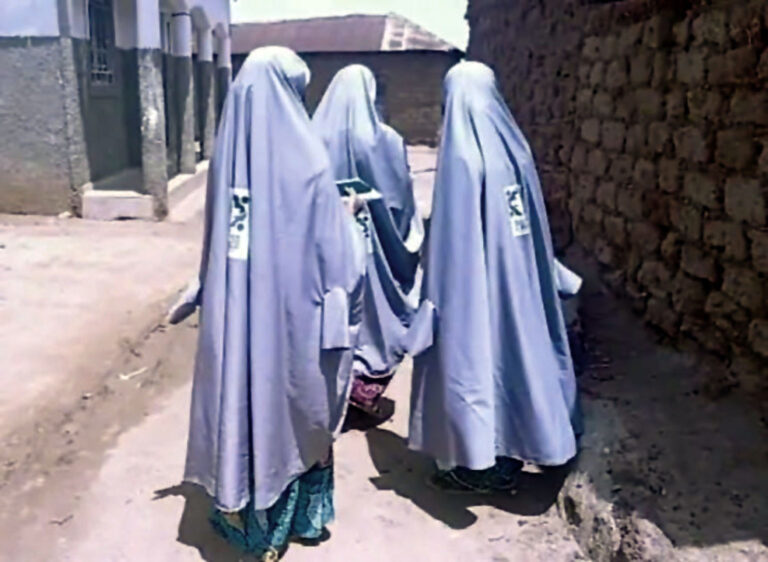
He said human trafficking was usually for the purpose of sex work, forced marriage, begging, forced labour, ritual/organ harvest and debt bondage, among others.
He added that ignorance, lack of vocational opportunities for the youth and other factors were making more people vulnerable to trafficking, urging the media to amplify the call for improved funding of the activities of NAPTIP to help salvage the future of Nigeria.
In a similar presentation, NAPTIP’s director of public enlightenment, Josiah Emerole, warned about the dangers of unrestricted media to the fight against trafficking in persons.
He said: “There’s need for the media be restricted in the reportage of trafficking related activities. If not, the reports could jeopardize investigations and result in resentment by victims.
“Not restricting the media can expose the victims to danger, which can lead to re-victimization of victims and even death of such victims. So, it’s expedient that media continue to be professional in their conduct when reporting of trafficking in persons, as it will go a long way in ensuring that victims are well shielded from predators.”
He, thus, advised journalists to protect the identity of victims of human trafficking, in some cases, so that such persons can have life after the traumatic experiences.