Follow Us on Google
By Juliana Taiwo-Obalonye
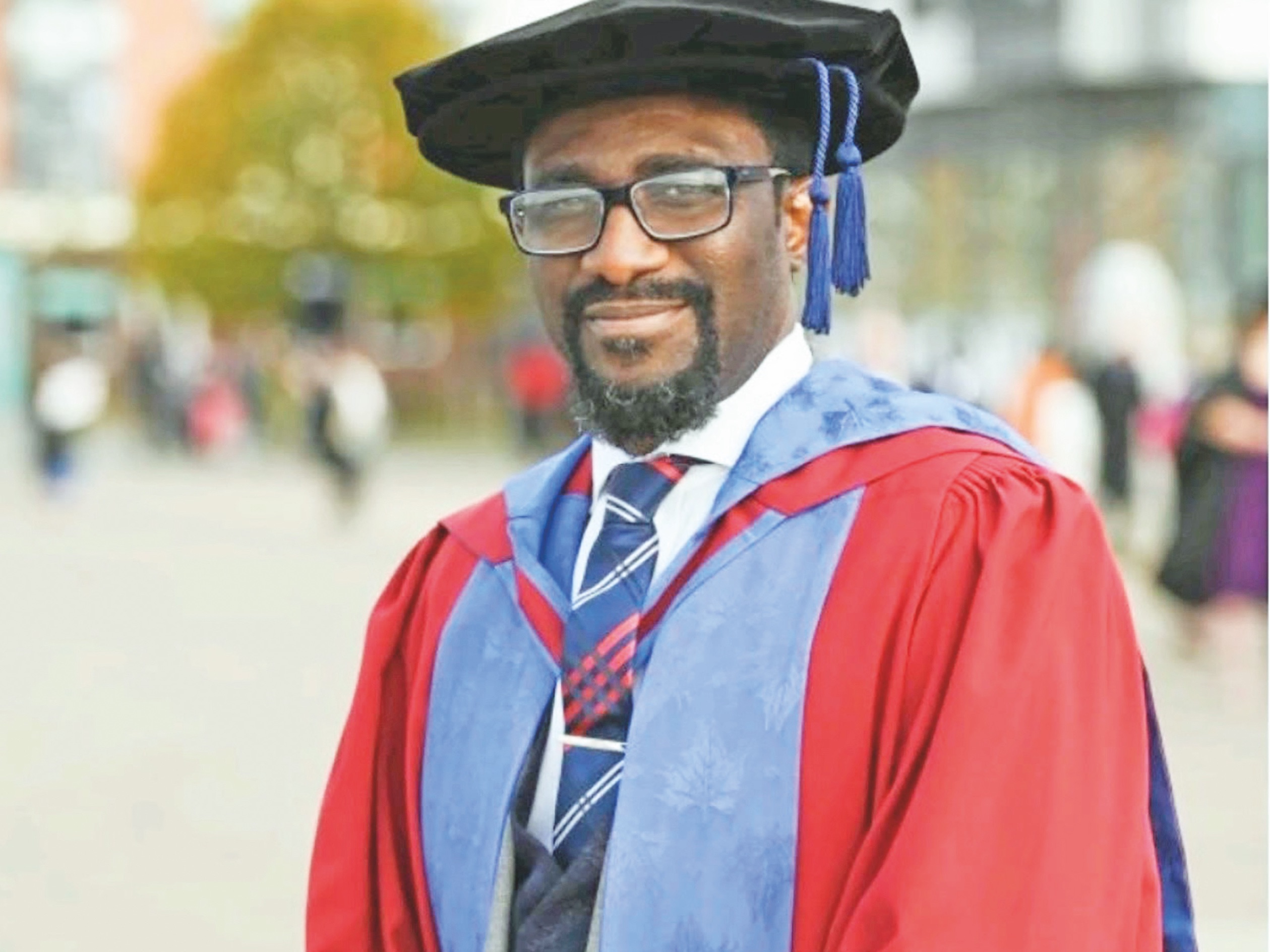
Dr. Obinna Ejiogu’s story is truly inspiring. From a successful career in Nigeria’s banking sector to earning his PhD at the University of Suffolk, his dedication exemplifies resilience and purpose. Now, as he reflects on a remarkable milestone—seeing his first Master’s students graduate just after completing his own doctoral journey—his pride is palpable. “I can’t put into words the joy of witnessing my students walk across the stage,” he shares, capturing the essence of his impact as a mentor and educator.
Let’s begin with how you felt about the recent graduation of the Masters students you lectured coming a year after you got your PhD?
The pride I feel when witnessing my master’s students graduate is deeply intertwined with my own journey toward earning my PhD. Both experiences represent the transformative power of education and the relentless pursuit of excellence. Watching them walk across the stage, dressed in their gowns and caps, fills me with a deep sense of joy and accomplishment. It reminded me of my own path, facing challenges, pushing boundaries, and persevering through rigorous academic work.
My journey to attaining a PhD was marked by similar moments of determination and resilience. Completing my doctoral degree within three years, amidst balancing professional responsibilities and personal commitments, was a milestone that required unwavering focus and faith. The pride I see in my students’ accomplishments fuels my motivation and reinforces my belief in the importance of perseverance and mentorship. It reminds me that every step, every late night, and every obstacle overcome is part of a larger story of growth and achievement.
Seeing my master’s students succeed affirms that education is a shared journey, one that transforms both the learner and the mentor. Their success story inspires me to continue my own pursuit of knowledge and to support others in their academic endeavours. Ultimately, both experiences are chapters of the same narrative: a testament to resilience, dedication, and the transformative impact of education. It’s a reminder that the journey of learning is lifelong, and the pride in achievement is amplified when shared with others on the same path.
How do you tailor your mentorship to support international students facing cultural and academic challenges?
Supporting international students requires sensitivity, understanding, and adaptability. I recognise that students from diverse backgrounds face unique cultural, language, and academic challenges. My approach begins with establishing an open, approachable relationship. I encourage students to share their concerns and goals freely, creating a safe space for dialogue. I also try to understand their cultural contexts, which helps me tailor guidance appropriately.
I emphasise the importance of cultural exchange and mutual learning. Encouraging students to share their perspectives enriches the academic environment and fosters inclusivity.
Academic support is tailored to individual needs. For students struggling with language or academic conventions, I recommend additional resources, workshops, and peer support groups. I also provide clear, structured guidance on research and coursework expectations.
Mentorship extends beyond academics. I advise on balancing cultural adjustment with academic commitments, developing resilience, and building networks, both within the university and in the wider community.
Finally, I serve as a role model, demonstrating perseverance, humility, and a growth mindset. I remind students that challenges are opportunities for learning and that their diverse experiences are assets that can contribute to their success.
Supporting international students is about fostering confidence, belonging, and resilience—values I strive to embody and impart in my mentorship.
What is the story behind your relocation?
The story behind my relocation is a journey rooted in a desire for growth, opportunity, and service. Originally from Nigeria, I started my career from engineering sector to banking sector, where I gained valuable experience managing public sector relationships and risk portfolios. Over the years, I recognised the importance of expanding my horizons and deepening my knowledge through advanced education and international exposure. There was also this big question why MSMEs in Nigeria are not thriving to their full potential even when there seem to be some government, financial and regulatory policies and incentives to help them thrive. This ambition motivated me to pursue PhD research on MSMEs, having previously laid the groundwork through my qualifications with an MBA and an MSc in Finance.
Another factor that fuelled my decision to relocate was driven by a calling to contribute more meaningfully to society through education and community service. In 2021, I made the pivotal move to the United Kingdom to pursue my PhD in Business Management at the University of Suffolk. This step was not just about academic advancement but also about my desire to contribute to the development of the MSME space, embracing new cultural perspectives, building international networks, and immersing myself in a vibrant academic community.
Relocating was both challenging and rewarding. It required adaptability, resilience, and an open mind. I faced the initial cultural adjustments, but I viewed these as opportunities for personal growth. The UK offered a platform to refine my expertise, engage in impactful research, and mentor students from diverse backgrounds. Ultimately, my relocation symbolises a commitment to lifelong learning and service, an ongoing journey of transforming challenges into opportunities and contributing to society on a broader scale.
How did your upbringing and family background in Nigeria shape your personal values and career ambitions?
Growing up in Nigeria, I was nurtured in an environment that emphasised resilience, hard work, and a deep sense of community. My family instilled in me the importance of integrity, humility, and service to others, values that have remained at the core of my personal and professional life. My parents, who were hardworking and dedicated, always emphasised education as a transformative tool. They believed that through education, one could uplift not only oneself but also contribute meaningfully to society.
This foundation shaped my career ambitions early on. I aspired to excel academically and to leverage my knowledge for societal development. Like I said earlier, my background in Nigeria exposed me to the realities faced by many small and medium-sized enterprises (SMEs), which inspired my research focus on their resilience and sustainability. I saw firsthand how perseverance and strategic thinking could help businesses survive in challenging environments, fuelling my desire to contribute solutions through academia and industry.
Furthermore, my upbringing taught me the value of community service and cultural exchange. I learned to appreciate diversity, patience, and adaptability, traits that have helped me navigate different cultural and professional landscapes, from Nigeria to the UK. These foundational principles continue to guide my leadership style, academic pursuits, and community engagement, reinforcing my commitment to making a positive impact wherever I go.
What major challenges did you face working in Nigeria, and how have they helped you adapt to life and work in the UK?
Growing up and working in Nigeria, I encountered several challenges that tested my resilience and adaptability. One of the most significant was navigating resource constraints, limited access to advanced technology, infrastructural shortcomings, and economic volatility. These conditions often meant that progress required ingenuity, patience, and persistence. For instance, managing multi-country programmes at the Horn of Revival Ministries involved overcoming logistical hurdles and cultural differences, which sharpened my problem-solving skills and ability to operate under pressure.
In the banking sector, managing public sector relationships and risk portfolios demanded strategic thinking and a deep understanding of complex regulatory environments. These experiences cultivated a strong sense of discipline, accountability, and strategic planning, traits that proved invaluable when transitioning to the UK academic environment, which emphasises research rigor, innovation, and academic integrity.
Adapting to life and work in the UK involved embracing new cultural norms, academic standards, and professional expectations. My Nigerian experiences provided a solid foundation of resilience and flexibility, enabling me to approach new challenges with confidence and an open mind. I learned to value diversity, leverage cross-cultural communication, and adapt quickly, skills essential for academic collaboration and community building in the UK.
Ultimately, these challenges taught me that adversity can be a catalyst for growth. They equipped me with the mental fortitude to excel in unfamiliar environments and reinforced the importance of continuous learning, humility, and perseverance in both personal and professional realms.
What advice do you have for professionals juggling multiple qualifications alongside career demands?
Embarking on multiple academic qualifications while juggling a demanding career requires strategic planning, discipline, and a clear sense of purpose. My journey from Civil Engineering to Finance, Business Management, and Human Resource Management was driven by a desire to broaden my expertise and address complex challenges with a multidisciplinary perspective.
My foremost advice is to maintain a strong sense of purpose. Clearly define your goals for each qualification and how they align with your long-term vision. This focus helps sustain motivation during challenging times.
Time management is crucial. Prioritise tasks, set realistic schedules, and remain disciplined. Break down study goals into manageable milestones and use tools like calendars and to-do lists to stay organised.
Seek support from mentors, colleagues, and family. A strong support system provides encouragement, guidance, and accountability. Don’t hesitate to delegate or seek flexibility at work when necessary.
Embrace lifelong learning as a mindset. Each qualification adds a new dimension to your skills and perspectives, making you more adaptable and innovative. Lastly, practise self-care. Balance is key, allocate time for rest, hobbies, and spiritual nourishment. Maintaining physical and mental well-being ensures sustained productivity and enthusiasm.
In essence, pursuing multiple qualifications is demanding but rewarding. With focus, resilience, and support, professionals can successfully integrate academic growth with career advancement, ultimately enriching their contributions to their organisations and communities.
How did managing public sector relationships and risk portfolios in Nigeria’s banking sector equip you for leadership and researching MSME resilience?
Managing public sector relationships and risk portfolios in Nigeria’s banking industry was an intensive training ground for leadership. It required strategic thinking, stakeholder management, and the ability to make sound decisions under uncertainty, skills that are directly transferable to leadership roles in any sector.
Dealing with government agencies, NGOs, and public institutions sharpened my negotiation, communication, and diplomatic skills. I learned how to build trust, foster collaboration, and navigate complex bureaucracies, capabilities essential for effective leadership and community engagement.
Handling risk portfolios provided insights into financial sustainability, credit analysis, and the importance of risk mitigation. These experiences deepened my understanding of the internal and external factors influencing business survival, especially in challenging environments like Nigeria.
This background directly informed my academic research on MSME resilience. Understanding the practical realities faced by Nigerian entrepreneurs, such as limited access to finance, infrastructural deficits, and market volatility, allowed me to identify relevant, actionable strategies. My industry experience enabled me to ground my research in real-world challenges, making my findings practical and impactful for policymakers and business owners seeking sustainable growth.
Overall, my banking career cultivated a strategic, solutions-oriented mindset, resilience, and a deep appreciation for the importance of supportive ecosystems, traits that continue to underpin my leadership philosophy and research focus.
What practical lessons can businesses and policymakers learn from your research on Nigerian SMEs’ survival in tough environments?
My research on Nigerian SMEs underscores that resilience hinges on several key factors: strong leadership, access to finance, innovative adaptation, and supportive policy frameworks. Practically, businesses should invest in leadership development and entrepreneurial skills that foster agility and strategic thinking. SMEs must cultivate a mindset of innovation, embracing new technologies, diversifying income streams, and adopting flexible business models to respond swiftly to market changes.
Access to finance remains critical. Policymakers should work to improve credit facilities, reduce bureaucratic barriers, and develop targeted financial products that cater to the unique needs of SMEs. This includes fostering inclusive financial systems that reach underserved entrepreneurs.

A robust support ecosystem, comprising mentorship, training, and networking platforms, can empower SMEs to navigate challenges effectively. Governments and development agencies should facilitate capacity-building programmes, incubation centres, and market linkages.
Regulatory reforms that create a conducive business environment are vital. Simplifying registration processes, enforcing property rights, and reducing corruption can enhance the confidence of entrepreneurs and investors.
Finally, fostering a culture of resilience and learning from failures is essential. Encouraging data-driven decision-making and continuous improvement can help SMEs adapt to economic shocks and infrastructural deficits.
In summary, a holistic approach, combining strategic leadership, financial inclusion, supportive policies, and capacity building, can significantly enhance the survival and growth prospects of SMEs in Nigeria and similar challenging environments.
How does your Christian faith shape your leadership and approach to academic work?
My Christian faith is the bedrock of my approach to leadership and community service. It instils in me principles of humility, integrity, compassion, and service, values that shape how I interact with colleagues, students, and community members.
In academia and industry, I believe that leadership is about serving others and empowering those around you. My faith encourages me to lead with empathy, patience, and a genuine desire to make a positive difference.
Faith also provides resilience during challenging times. It reminds me that setbacks are opportunities for growth and that perseverance, anchored in purpose, leads to meaningful achievements.
Moreover, my spiritual principles motivate me to uphold honesty, fairness, and ethical conduct in all my endeavours. I see my work as a calling, a platform to influence society positively and to inspire others to live purposeful lives.
Community engagement and mentorship are also driven by my faith’s emphasis on love, service, and stewardship. I aspire to be a role model who exemplifies these values, encouraging others to pursue excellence with integrity.
Ultimately, my faith provides clarity of purpose and strength, guiding me to lead with humility and to serve with sincerity.
What does being a “prophet in the marketplace” mean to you, and how does it influence your approach to business and leadership?
Being called a prophet in the marketplace is about embodying integrity, wisdom, and moral conviction, serving as a moral compass and catalyst for positive change within society. It involves leading with purpose, speaking truth, and guiding others toward ethical and sustainable practices.
In my mindset, this role encourages me to prioritise values over mere profit. I believe that true leadership involves influencing others through example, demonstrating fairness, compassion, and social responsibility.
This perspective shapes my approach to business by emphasising the importance of ethical decision-making, transparency, and community uplift. It reminds me that leadership is not just about achieving targets but also about fostering trust and building legacies that benefit society.
In practice, being a marketplace prophet means advocating for policies and practices that promote social justice, inclusivity, and sustainable development. It also involves mentoring others to pursue purpose-driven careers and to see their work as a form of service.
Ultimately, this role inspires me to lead with moral clarity, to speak truth in the face of challenges, and to serve as a positive influence, aligning my professional pursuits with higher principles of justice and love.
What hobbies or activities do you pursue outside work to maintain balance, and how do they enhance your leadership and mentorship?
Balancing a busy professional life with personal interests is vital for sustained effectiveness. I enjoy engaging in community service, reading, and spiritual activities that nourish my mind and soul. Reading widely, especially on leadership, philosophy, and faith, broadens my perspectives and inspires innovative approaches.
I also enjoy participating in sports such as football and running. These activities help me maintain physical health, discipline, and mental clarity. Engaging in sports teaches teamwork, strategic thinking, and resilience, traits directly applicable to leadership.
Cultural activities, including music and traditional Nigerian arts, connect me to my roots and foster creativity and cultural appreciation. Celebrating diversity through these activities enhances my ability to lead inclusive teams and communities.
Travelling and exploring different cultures broaden my worldview, making me more adaptable and empathetic. Mentoring students from diverse backgrounds benefits from this openness and cultural sensitivity.
These interests contribute to my effectiveness by providing mental refreshment, fostering interpersonal skills, and reinforcing values like discipline, perseverance, and humility, all essential qualities for impactful leadership and mentorship.
How do you balance being a father, husband, brother, and son while staying present for friends and mentees?
While societal expectations often differ, I believe that being present and supportive in all aspects of life requires intentionality and balance. I prioritise quality over quantity, being fully engaged when with family, friends, or mentees.
Effective time management, planning, and clear boundaries are crucial. I allocate specific times for family and personal relationships, ensuring I am emotionally and physically available. Regular communication and active listening help deepen these bonds.
I also rely on a supportive network, spouse, family, colleagues, who share similar values and understand the importance of mutual support. Delegating responsibilities and sharing roles within my family and community allows me to be present without feeling overwhelmed.
Practising gratitude and mindfulness helps me stay grounded and appreciative of the moments I share with loved ones and mentees. Celebrating milestones and showing genuine interest in their lives fosters trust and strengthens relationships.
Ultimately, I see my role as a steward of relationships, nurturing them with love, respect, and commitment. Balancing these responsibilities is ongoing, but with intentionality and a heart of service, I strive to be a dependable presence in all spheres.
How did it feel to speak for the valedictorian, and what message did you share with your fellow graduates?
Being chosen to speak on behalf of the valedictorian was a profound honour, an acknowledgment of my journey, perseverance, and the values I uphold. It was a moment of reflection and gratitude, realising that my story could inspire others to pursue their dreams regardless of challenges.
My message to fellow graduates centered on the themes of resilience, purpose, and continuous growth. I wanted them to understand that education is a powerful tool that opens doors, but true success depends on perseverance, integrity, and a commitment to making a positive impact.
I emphasised that their journey is just beginning and encouraged them to embrace challenges as opportunities for learning. I urged them to remain humble, stay curious, and serve others with compassion and integrity.
Most importantly, I wanted to instil in them the belief that they possess the potential to shape their future and contribute meaningfully to society. With faith, purpose, and resilience, they can overcome obstacles and leave a legacy that transcends personal achievement.
Being a speaker was not just about delivering a speech; it was about inspiring a collective sense of hope and responsibility. I hope that my words resonated and motivated my fellow graduates to pursue excellence with purpose.