Follow Us on Google
By Jude Dangwam, Jos
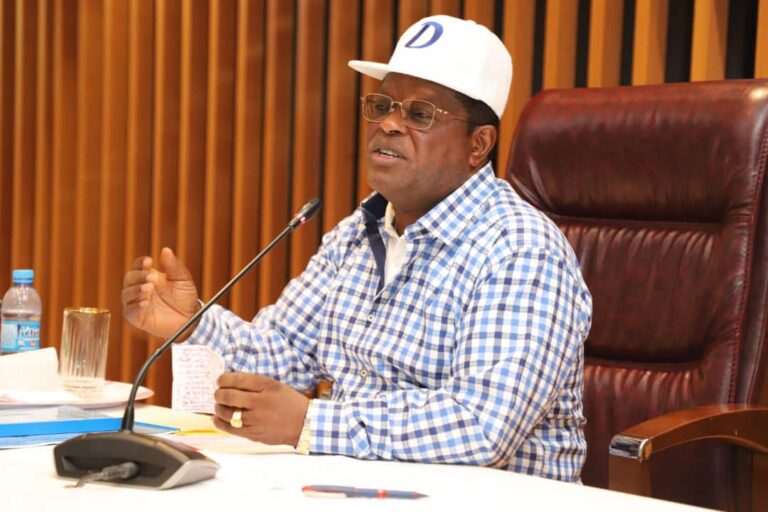
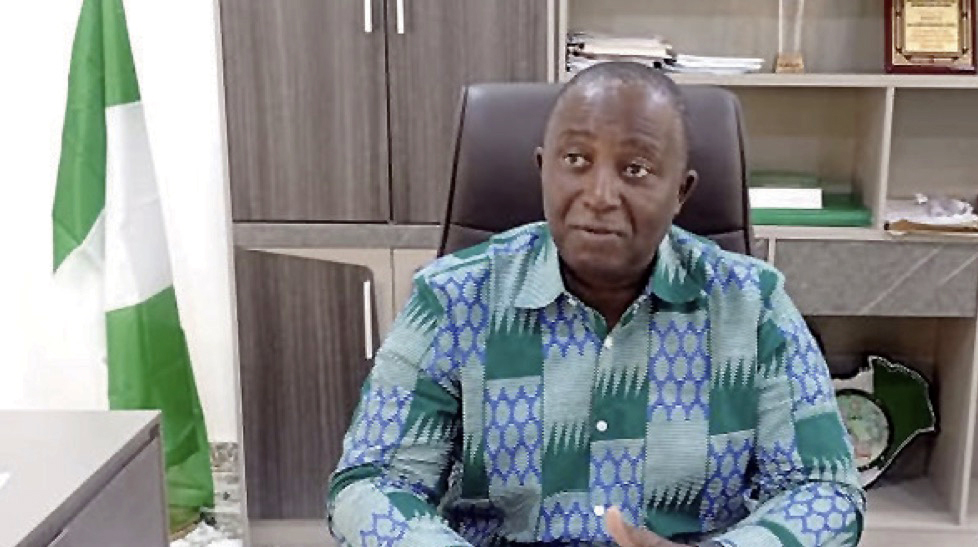
The Secretary to the Government of Plateau State, Arch. Samuel Nanchang Jatau, has clocked three years in office. In this exclusive interview with Daily Sun, he explains why the much talked about monthly allocations are not meeting government policies and programmes, and sheds more light on why the office of the SGS is considered the melting pot in governance. Jatau reaffirms that Jos remains the safest state capital in Northern Nigeria, as he shares his challenges and his role in coordinating and implementing the policies of the Mutfwang administration over the last three years.
Sir, can you explain why the office of the SGS is considered the engine room of government?
Well, I don’t know why you refer to it as the engine room of government, but for me, I think it’s because government is made up of many parts, just like the different parts of a car. The Office of the Secretary to the Government coordinates the activities of government with the various MDAs, with the public, with civil society organisations, and other stakeholders.
So you can say it is a melting pot, a meeting point for government policies, government ideas, implementation, and the driving of government programmes. That is why I think it is referred to as the engine room. Everybody from everywhere comes here, as you can see, people come into this office daily. Even those who are just passers by on the street can walk in and say they have a complaint, and you have to attend to them. So I think that is part of the reason. It is an amalgamation of everything that happens in government.
How challenging has it been for the past three years?
It has been very challenging, particularly when you look at resource constraints and the policies for implementation. Everything needs to be done with adequate financing, especially when you are trying to meet the expectations of the people.
We came in three years ago at a time when there were virtually no resources. The civil service was demoralised, with a backlog of five months of unpaid salaries. We started from there. You may recall that the Governor said we had to take a facility of about N15 billion from UBA to clear those unpaid salaries and get things moving. Now, when revenue comes in, the figures may appear high, but what is the purchasing power? That is the question. We need to be analytical when making comments. You see people on Facebook and other platforms commenting on government performance, but the Governor explained it clearly. Last month, about N12 billion came in. Out of that, over N6 billion went to salaries and other entitlements. You have to give the Judiciary its statutory allocation, and the Legislature its own percentage. By the time you do that, you have spent over N8 billion. What remains? Just over N3 billion.
Then you have emergencies. Security challenges arise almost every day. A few days ago, there was a cholera outbreak in Mangu. That was not planned for, but you must respond because our people are affected. When you begin to look at these realities, and then factor in infrastructural development, you will agree with me that there is serious infrastructural decay in Plateau State. That is why people are crying out. How much does it cost to construct a kilometre of road today? How much is a bag of cement in the market? It is over N12,000. When you begin to factor in these realities, N12 billion becomes peanuts. If you want to do a proper analysis, ask yourself: what does N12 billion represent in dollar terms today? What did N12 billion represent in 2024, 2023, 2022, 2021, or 2020? When you do that analysis, you will realise that the purchasing power of the naira has dropped significantly.
Unemployment is high, over 30 per cent in the country, I believe. Inflation is also very high. So there are many challenges confronting governors across the country, but we are concerned about Plateau State. What we are trying to do, and what I think the people should do, is support the Governor. We thank God that we have a God fearing Governor. We thank God that we have a Governor who is focused. We should give him the space, the time, and the support necessary to continue the work he is doing. As he has said, road projects are ongoing across the 17 local government areas of Plateau State. On Saturday, while returning from Shendam with His Excellency, he stopped in Jibam to inspect the progress of road construction. I was surprised to see how far the asphalt work had already progressed. I can also tell you that asphalt work is ongoing on several roads, including the Jebbu Bassa Miango Road and the Fobur Angware Road, among others. Quite a number of road projects are under way. The security challenges we face are unfortunate. Nobody wants them, and nobody is happy about them, but they are a reality we must confront head on. That said, I dare say that Jos remains one of the safest state capitals in Northern Nigeria today.
Can you tell me some of the achievements of this administration under your watch as Secretary to the State Government?
The roads I have just mentioned are achievements. The relative calm we enjoy, the fact that we can sleep with both eyes closed, is an achievement. Businesses are still thriving. Nightlife is still active in Jos. That is an achievement. The peace within the workforce, labour unions, and the civil service is an achievement. Look at our tertiary institutions. You can see the progress. You can see where Plateau State University is today. It is no longer a mediocre institution. You can see the increase in enrolment. When we came in, enrolment at Plateau State Polytechnic was about 3,000 students. Today, it is approaching 16,000. Enrolment has increased significantly across our tertiary institutions. If you visit the state university, you will find students from almost every state in Nigeria. For someone to travel from Akwa Ibom to study here means there is something positive happening. People are now coming from outside the state seeking admission into our institutions.
The courses offered by Plateau State University have increased. The Faculty of Pharmaceutical Sciences is doing well, and the Faculty of Medicine is about to take off fully. Just last week, His Excellency released N600 million for the fencing of Plateau State University. These are successes. The Metro Bus initiative is also a major success, especially given the difficult economic conditions we are facing. The cost of fuel today is enormous. When we travelled on Saturday and returned, I was discussing the expenses with my drivers. It feels as though money simply disappears. People are in pain, people are suffering, but this is a general problem. Nobody is going to come from Jupiter to solve these problems for us. We have to come together. That is why I always say that a cord of three strands is stronger. Unity is better than constantly quarrelling with one another.
There are different aspects of governance. Which aspect is this administration prioritising at the moment?
When we came in, Plateau State was in a difficult condition. When you are dealing with a difficult situation, everything becomes a priority, but if you try to tackle everything at once, you may not have the capacity to do so and may end up overwhelmed by the problems. So, while we are pursuing a holistic approach, a lot of reforms are ongoing. There are legal reforms, welfare programmes for citizens, efforts to strengthen the workforce, initiatives to improve the image of the state, and continued attention to security, which remains a major concern. At the same time, there is poverty and hunger. Therefore, one of our major priorities is agriculture and food security. “The Land is Green” is our mantra for a reason. Plateau State is more than 70 per cent agrarian. If over 70 per cent of our people depend on agriculture, and we are also facing high unemployment, how do we get people out of the labour market and into productive engagement? The easiest and fastest way is through agriculture.
That is why we are encouraging people to farm as part of our policies, but not the kind of subsistence farming that brings little or nothing into your pocket. If you recall, His Excellency spoke about the hand tillers. The government has procured over 200 hand tillers. We are going to test run them this year and make them more available to our people so they can cultivate larger areas of land, earn more income, and improve productivity. We are also paying attention to the kinds of crops we cultivate. That is why we embarked on the Plateau Potato initiative. We are bringing in hybrid seedlings, and over ten containers of the hybrid have since arrived. They are currently being developed so that our farmers can achieve higher yields and optimise the use of their land. Just a few days ago, the groundbreaking ceremony for the abattoir project was held in Heipang. You were there. That abattoir will have the capacity to process 500 cattle per day. What are we trying to achieve with that? Apart from Nigeria being a huge market because of our population, we are also looking to tap into the global meat market and earn foreign exchange. That foreign exchange will help us strengthen the economy. At the same time, through the Special Agro Industrial Processing Zone (SAPZ), we are pursuing agricultural industrialisation, agro based industrialisation. Without industrialisation, the economy cannot truly take off.
The SAPZ is a major project for us, and we are excited about the opportunities it presents. Construction has already commenced following the groundbreaking ceremony. This project will create enormous opportunities for our people. Where will the 500 cattle per day come from? Where will the feedlots come from? These are business opportunities for our people, and we are not talking about the traditional breeds of cattle alone. We are looking at improved breeds. People should tap into these opportunities and get into the business. If you do your research, you will find that the average local cow in Nigeria produces perhaps one or two litres of milk per day, but if you go towards Bauchi, there are farms with imported breeds producing up to 16 litres per cow daily. What we want to achieve here is 20 to 25 litres per cow a day. If you own just two cows producing that volume, you are already generating about 50 litres of milk daily. If a litre sells for N1,000, calculate the income. When you multiply that across larger operations, you begin to see the economic potential. These are businesses that can transform lives, and I am not speaking only about cattle. Plateau State is blessed with diverse livestock opportunities. We have poultry, piggery, and several other livestock value chains. These businesses do not develop by chance. You have to be intentional and purposeful about them.
Our poultry products and eggs have some of the best shelf life in Nigeria. Of course, there are costs associated with these businesses, but government is working to create the enabling environment that will allow our people to grow and succeed in them. Even the grass required to feed these improved breeds of cattle presents an opportunity. The Ministry of Agriculture recently visited the grazing reserve in Wase local government area because we have over 100,000 hectares of land suitable for growing pasture.
That grass is in demand globally. People can earn foreign exchange from it. You can actually make more money cultivating quality pasture than selling maize. That is the reality.
So I think people need to investigate government policies more deeply. When policies are introduced, they should look beyond the surface, understand the objectives, identify the opportunities, and take advantage of them instead of simply criticising.
Constant negative criticism alone will not take us anywhere. We need to support one another. We need to work together because, however we look at it, we are all Plateau people. We have a common destiny, and we must see Plateau progress. The people of Plateau State are beautiful people. They are hospitable, hardworking, and generally very peaceful. I believe that much of the misunderstanding comes from a few dissatisfied individuals or people pursuing political interests, but I think the majority of our people are enlightened enough to see what is happening on the ground. Whenever His Excellency, Governor Caleb Mutfwang, moves around the state, you can see the response from the people. You can see that he connects with them and genuinely has their interests at heart. Take the Metro Bus programme as an example. During the media chat, he explained the savings. Depending on where a worker lives and travels daily, the Metro Bus system saves between N30,000 and N50,000 every month. That is significant. We have a N70,000 minimum wage, yet with the current cost of living, people are still struggling. I watched a programme on television yesterday where a journalist said that N70,000 cannot adequately feed one person and cover transportation to work for a month. These are the realities facing us as a country. It will take all of us working together to find solutions. We cannot wait for somebody from outside to come and solve our problems. There is no magic wand.
Agriculture remains the pathway. Another sector where we are trying to make significant progress is mining. Mining falls under the exclusive jurisdiction of the Federal Government, but there are ways the state can participate and benefit. At the moment, much of the mining activity on the Plateau is taking place without substantial benefits flowing back to government or host communities. The communities whose lands are affected often receive very little in return. That is why we are determined to find ways of regulating these activities and ensuring that communities benefit from the resources extracted from their land. Tourism is another priority sector. As you know, we are partnering with the UNDP on the development of a tourism master plan for Plateau State. We have already received the interim report. In fact, I had a meeting in this office yesterday with key stakeholders in the sector, and we are currently fine tuning the framework ahead of implementation.
We have also entered into Public Private Partnership arrangements with investors in the tourism sector. The Hill Station Hotel is nearing completion and should become operational very soon. Plateau Hotel is also progressing towards completion. The Wildlife Park is gradually being revived. We are working with experts and international partners. The Namibian Ambassador visited about two weeks ago, and we are exploring collaborations in wildlife management and conservation. So many initiatives are under way. However, as I have repeatedly said, resources remain limited, and these things take time. We therefore ask for the patience, understanding, and support of the people of Plateau State as we work to bring these projects to fruition. I believe we are on the right track because there is renewed interest from investors. We are seeing more expressions of interest from local and international investors who want to do business in Plateau State. Just recently, we met with investors who came with a ministerial delegation. They met with His Excellency and discussed a proposed investment of over $400 million in the livestock sector, particularly dairy production. They are coming from the United Kingdom. These discussions are still at a preliminary stage, but they demonstrate the level of interest that exists.
Government is open to these partnerships, but we also want to ensure that our people are not left behind. We do not want a situation where outsiders come in and take all the opportunities. We want Plateau people to participate, invest, and become major players in these sectors. One of the biggest challenges we face is poverty. Many people lack economic opportunities. Our responsibility is to create the enabling environment that allows them to access those opportunities and increase their incomes. When people have more money in their hands, they become self sustaining. When there is food security, families are happier. When children are fed, households become more stable. It is as simple as that. That is why these initiatives are important. We have the State Research and Development Office (SRDO), which serves as a monitoring and policy coordination body. In fact, I spoke with the head of the office last night, and we will soon hold a meeting because there are emerging situations where some government MDAs have overlapping responsibilities. We need to clarify these mandates to avoid duplication. This is how important the office of the Secretary to the State is.
For example, the Ministry of Works is constructing roads. The Ministry of Housing is also involved in road infrastructure. Historically, agencies like JMDB have had responsibilities for urban roads as well. The Ministry of Agriculture is also involved in road construction, but mainly rural access roads under programmes such as the RAMP project.
These roads are designed to help farmers move their produce from farms to markets. One reason food prices are often high is because poor road access creates opportunities for middlemen. When farmers cannot easily transport their produce, others buy it cheaply at the farm gate and sell it at much higher prices in urban markets. But when roads are accessible and farmers can bring their produce directly to market, food becomes more affordable. Our people are straightforward people. They will sell directly when given the opportunity. So when we make food available and affordable, the land becomes greener and more prosperous. When mining is properly managed, when tourism is fully developed, and when we harness our agricultural potential, the value chains across these sectors become enormous. The opportunities for economic growth are tremendous, and they can create exponential benefits for our people, and with that, I think we will be on course for progress and success.
We have seen that Tati Hotel has been refurbished and converted to government offices instead of running it as a hotel. How can government recover the money sunk there now that it has converted it to government offices? There is also the issue of Order 003. Why are cattle moving on city streets, especially in the Rayfield area?
Tati Hotel was originally a privately owned hotel. Unfortunately, the owner passed away, and I believe the family decided to sell the property. Government acquired it in the overriding public interest.
As government continues to grow, new agencies emerge and existing ones expand. One of the major challenges we face is office accommodation. Even as I speak to you today, there is still a serious shortage of office space.
I currently have over six federal government agencies that want to establish offices in Jos, and we are still trying to secure suitable accommodation for them because we want to encourage them to operate from here. The idea behind Tati Hotel did not begin with this administration. During the administrations of Governor Jonah Jang and Governor Simon Lalong, there were plans to remodel the facility into office accommodation for government agencies. It is only under the administration of His Excellency, Governor Caleb Mutfwang, that the project has been completed and put into use. That is why agencies such as the Plateau State Electricity Regulatory Commission and the Plateau State Internal Revenue Service are located there. PLASMEDA is also there. You may recall that PLASMEDA was previously occupying a rented property. The landlord sold the building, and since it was not government owned, we had to relocate the agency. PLASMEDA is a very important institution for government. We could not allow it to operate without office space. Fortunately, Tati Hotel was available and ready for occupation. Most of the agencies occupying the facility are revenue generating institutions. If they function effectively, they generate revenue for government. That is one way government recovers its investment.
Recovery does not necessarily have to come through rent payments. When you understand how government works as a system, you realise that enabling these agencies to operate efficiently ultimately generates returns for government. Now, concerning cattle and Executive Order 003, I can tell you that I currently have a memo from the General Manager of JMDB before His Excellency regarding the need to fund enforcement activities under Executive Order 003 over the coming months. The issue was also raised during the recent media chat. As I have repeatedly said, all these things require resources. That brings us back to the issue of purchasing power and available funds. We are working on it.
You are correct that one aspect of the order has received more attention than another. However, governance requires sensitivity and caution. You must be careful not to create unnecessary tension, especially in a state that is already dealing with security challenges.
We have to ask ourselves, how do we manage it in a way that promotes peace and stability? We are addressing the matter tactfully. I can assure you that the situation is already improving. The incidence of cattle roaming within urban areas is gradually reducing. That is one reason the Governor has continued to advocate for ranching and designated livestock areas. The idea is simple: identify specific locations where people can keep their livestock. It is not meant for Fulani people alone. It is not meant for indigenous communities alone. It is not restricted to any ethnic group or religion. It is for everybody. You have a designated ranching area, you acquire your allocated space, you keep your cattle there, and you manage them properly. People can come from their communities, tend to their livestock, and return home. We have to change the way we coexist. We must learn to live together in an integrated society. We cannot continue living in isolation from one another. Growing up as a child, I remember that during Christmas and Sallah celebrations, our Muslim neighbours would bring food to our home. During Christmas, we would send food to their families as well. Those interactions strengthened relationships and built trust between communities. Unfortunately, we do not see as much of that today. We must rediscover the values of coexistence and mutual respect. God did not make a mistake when He created us differently. God knew why He made me a Christian and a Taroh man. I will never deny my identity as a Taroh man, but that does not mean I should look down on someone from another tribe. Everyone has the right to their identity. The important thing is that we share a common interest: our state must prosper. Our land must work for all of us. People should be able to wake up in the morning, go about their business, and earn a decent living.
When you go to a hospital, you should receive quality healthcare from qualified professionals. Your children should be able to attend safe schools and be taught by competent teachers.
I remember when I was doing my master’s degree at one of the universities in this country. A classmate of mine from Kaduna State introduced me to a friend who was undergoing teaching practice at a College of Education. We visited her classroom one day. She held up an onion and asked the students what it was. The students responded, “Albasa.”
That incident has never left my mind. They knew the local name but did not know the English word. We need teachers who can guide students properly and help them bridge such gaps in knowledge. That is why improving the quality of education and developing our teachers remains a major priority.
Another issue we must address is rural urban migration. There is a growing movement of young people from rural communities to urban centres.
Part of the reason is that they want a better quality of life. They want internet access. They want connectivity. They want opportunities. They want good roads and better infrastructure.
Many rural communities do not currently provide those opportunities.
What we are trying to do is make agriculture attractive to young people. Modern agriculture is different from what many people imagine. Young people do not necessarily have to spend their days using hoes and cutlasses under the sun.
If they realise that agriculture can generate income and provide a good standard of living, they will embrace it. However, this must be supported with infrastructure. We need good rural roads, and that is where programmes such as the RAMP Project become important. We need better telecommunications infrastructure and improved network coverage across our local government areas. We also need innovation centres, business support hubs, and opportunities that allow young people to remain productive within their communities while still participating in the modern economy. These are some of the things government is working towards. We are also looking at business process outsourcing centres. The MTN facility around the Air Force area will soon become operational, and that will create significant opportunities for young people. They will be able to work remotely for companies across the world and earn income in foreign currency. These are some of the opportunities government is trying to create, but development is a process. When you build a house, you must first lay the foundation. When we came into office, there were no official vehicles. As Secretary to the Government, I used my personal vehicle during my first two days in office. After that, I was assigned an old vehicle that could barely function. Today, this administration has procured over 340 vehicles across government. We are gradually putting the structures in place to ensure that government functions effectively. His Excellency has also invested heavily in security. We have acquired gun trucks and motorcycles that are being deployed across the length and breadth of the state to strengthen security operations. There is a lot happening, but because resources are limited and the needs are many, progress sometimes appears slower than people would like. That is why I continue to ask for patience and understanding. We are on course. We have a focused Governor, someone who understands the challenges and is working hard to address them.
My appeal to the people of Plateau State is simple: support him. I believe Plateau has a great future. Whether we like it or not, Plateau remains one of the most attractive destinations in Nigeria. We all travel. Everywhere you go, when people hear you are from Plateau, they say, “I want to visit Jos. I love Plateau. I like that place.” God has blessed us with something unique. Let us not waste it. That is why, whenever I make public speeches, I say: “Welcome to Plateau State, the state with the best weather, the best food, and the best people.” And that is not an exaggeration. Anyone can verify it.
I would like to restrict my question to a specific issue. Does your office also monitor commitments and pronouncements made by the Federal Government to ensure they are implemented at the state level? I ask because of the recent security related promises made by the Federal Government following the security challenges in Plateau State. There was a commitment to provide CCTV cameras and other surveillance infrastructure to support security operations. What is the current status of that intervention? People remain concerned because the security challenges have not completely stopped. Many believe that such technology would significantly improve the state’s security architecture.
Nobody is going to come from Jupiter to solve our security problems for us. I have always maintained that community resilience must remain our first line of defence. Ask yourself: how did our forefathers secure their communities? Did they depend on modern security agencies? They protected their communities through collective responsibility and vigilance.
What is the update on the 5,000 CCTV cameras promised by the President during his visit to Agwan Rukuba?
Yes, the Federal Government announced plans to provide approximately 5,000 surveillance cameras and related security infrastructure. To the best of my knowledge, our officials have already travelled to China alongside the Honourable Minister of Communications. They inspected the facilities, reviewed specifications, and held discussions with the relevant manufacturers. As you know, these things follow due process. I am not a spokesperson for the Federal Government, but just as we face resource constraints at the sub national level, the Federal Government also has procedures that must be followed before funds are released and equipment is procured. These are not items that can simply be picked off a shelf. Specifications must be agreed upon, manufacturing must take place, and then the equipment has to be shipped and installed. Naturally, there will be a time lag. So, as far as I know, the process is ongoing. Our officials participated in the delegation and have since returned. The Honourable Commissioner for Information was part of the process. You may also seek further details from her. I believe the intervention is progressing and will eventually materialise. However, I would also like the people of Plateau State to understand that even before this Federal Government intervention, we already had security mechanisms in place.
We have drones, and we have a command and control centre. We have surveillance capabilities that allow us to monitor developments across various locations in the state. Whenever we receive intelligence from our operational bases in the field, we respond as quickly as possible to mitigate threats. A lot is happening behind the scenes. The reality about security is that the public only hears about attacks that succeed. They rarely hear about the many incidents that government and security agencies successfully prevent. That is the nature of security work, and the same principle applies to pension payments. People often assume nothing is happening because beneficiaries rarely make public announcements when they receive their pensions. If someone receives his pension, he is unlikely to stand on the roadside and announce it to everyone. He sees it as his personal entitlement and quietly attends to his needs.
When His Excellency stated during the third anniversary thanksgiving that government had spent over N16 billion on pensions and gratuities, some people misunderstood the statement. A few days later, while I was in Abuja, someone called me and claimed that government had announced that all pension liabilities had been cleared. I told him that was not what was said. The Governor never claimed that pension arrears had been completely cleared. He simply stated the amount government had spent so far on pension obligations. There is a structured payment arrangement in place. Instead of the old system, which often encouraged corruption and favouritism, payments are now being made according to established timelines and years of retirement. People are paid in sequence. The Executive Secretary of the Pension Board was here yesterday and informed me that they have already progressed significantly through the backlog. One of the years with the largest number of pensioners was 2011, and they have substantially dealt with that category. As long as government continues to release funds regularly, progress will continue. She also made an interesting observation: that most of the complaints we hear about pensions actually come from the children of pensioners rather than the pensioners themselves. Generally speaking, many pensioners quietly receive their benefits and go about their lives without publicising it. That is why I always encourage people to verify information before making conclusions. Sometimes people go on social media and criticise government without having the complete facts. Government is doing a lot. As you know, the total pension liability for both state and local government retirees is estimated at about N60 billion. At the same time, government must fund infrastructure, security, healthcare, education, and many other responsibilities. So, governance requires balancing competing priorities. You address one challenge, then another, and continue making steady progress. That is why I believe the people of Plateau State should continue supporting His Excellency. He enjoys considerable goodwill across the state. Personally, I believe the hand of God is upon him. Despite the challenges and opposition he faces, he has remained focused on the task of governance.