Follow Us on Google
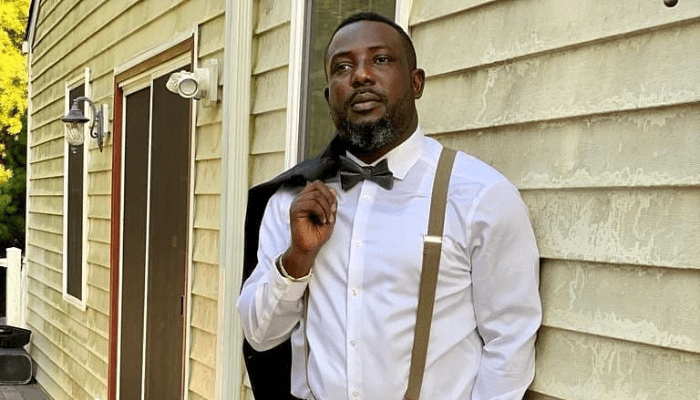
By Maduka Nweke
Metro & Castle Managing Director, Adekunle Abdul, says the company is arming real estate operators with the knowledge and skills to outsmart fraudsters and clean up Nigeria’s property market.
He brings to the real estate sector a wealth of executive management experience built on more than 15 years in the downstream oil and gas industry.
As the Chief Executive Officer of Integrated Metroplex Energies Limited, he successfully led operations before diversifying into real estate development, founding Metro & Castle in 2014.
In this interview with Daily Sun, Dr. Abdul revealed that Metro & Castle is set to launch a comprehensive training programme aimed at tackling corruption and ignorance in the real estate sector.
According to him, the initiative will equip industry operators with the professional knowledge, ethical standards, and practical skills necessary to raise the bar in real estate practice.
Excerpts:
What is peculiar to your company that is not found elsewhere?
We do everything that a community needs to function effectively, ranging from sports outlets, retail outlets, to residential construction, to facilities management and others. Whatever you can think of that a community needs to survive, we do. So, like I said, our message has been very consistent over the years. We know that since the last time we were here, the first five years, 300 housing units has been the slogan for all these years. At that time, we delivered 240 units because of COVID. We had a delay in 2020 due to COVID and had some shortfalls. So, out of 300, we were able to deliver 240 units. From this year 2025 to 2030, our next five-year projection is to deliver 500 housing units. We have started already, and 10 per cent of the housing is already delivered as I speak, and we are rounding up now. We have about 450 housing units to go. We’ve expanded our scope out of this current community to engage a few government bodies to give us some kind of JV opportunity to work with them. Now that we have the proof of concept on the ground, we are no longer going there with our mouths to say we can do this; we are going there to tell them to come and see what we have done. And a lot of them appreciate our handiwork. I think we’ve established our new retail site. We also do retail, which is large supermarket outlets for the community to benefit from. In the current community, we’ve established three of those and one warehouse and a bakery.
Do you intend to expand your facilities to other communities?
We believe that it is more than enough to serve the community that we have now, which is the reason we are expanding our community. We are moving out of this environment to start providing for other communities. In the sports center, we are about to start the sports center for the community next month, actually. The land is just behind us here, depicted by a black dot, and you can see about 8,000 square meters of land. We are about to start the community facility, and we are going to have a football pitch, a basketball pitch, lawn tennis, football, basketball, and real tracks. Also, we are going to have a small recreational area and car park with a few other things in addition. This is also to serve the community that we are in. We had one before, but it was too small. It became too small because it was just a football pitch. We called it a mid-size arena, but we put it down after two years because we couldn’t continue. It was still getting too big for that pitch and that’s why, from 1,200 square meters, we are now moving to 8,000 square meters capacity. Like I said, we are about to start that next month. It’s a dream we dreamt in the morning at that point, but we had to manage, and we had to construct the entire thing. Just right beside us, there is another person building a hospital, which affects the community as well. We have pharmacies; we have all that stuff. So, we are getting to our goal of a completed community cycle that we always wanted. This is our sixth year here, so we are really high on that.
Do you have other opportunities to replicate what you have here?
I think there are opportunities and applications we can go to now to establish the same things here. Finally, I think we have a very great facility management team on the ground. We’ve grown from a staff of eight to a staff of 148, and our facility teams are doing a great job of maintaining all the rental estates within this community. So, if you go there to a pool, gym—everything is working. It’s supposed to work. So, it’s really not rocket science; it’s just the attention to detail that matters. And the community is thriving.
You are about embarking on the training of operators in real estate, what is your target?
In recent times, we have been speaking about rental estates generally. There have been a lot of problems in the country regarding rental estates. We are on a permanent land base or a permanent housing base, so we do not follow any rules or regulations. Real estate is a place to assist; it is such that anybody can look around and call himself any name. Actually, all our friends have their rentals everywhere. They probably work in banks, but they are renters and engage in direct transactional activities. You know that you basically have no complete knowledge about it, but I have friends in the diaspora who say, “Oh, my cousin is a renter.” What qualifies your cousin to be a renter? And this is why you end up in Epe on agricultural land sold to you as an estate, and you are buying it. So, all these other brands being called out all over social media are the same, and we figure out that the problem is the agents, as the renters are not well-equipped knowledge-wise.
Do you need any prerequisites to go into real estate?
You must have the right amount of knowledge. Because if you don’t, it’s almost impossible to take someone’s land and buy an illegitimate property because, as a renter, you have done some level of due diligence. But here, I think the renters are just really focused on their commission and the money they are going to make. So, they come as a landlord and everybody is rushing to be one. And then they are doing a lot of pictures and video clips and just rush there and start paying money. Until this is done, I think the penalty should be that you must have a license to practice. Then you can do your exams, get your license, and so on and so forth, and you can call yourself a realtor. If you are found to do any kind of illegal business, your license will be revoked. That way, people can sit right and ensure that if they want to stay in business, they must get it right before introducing people to invest their money in it. Most people who invest their money this way are losing it to fraudulent activities.
During the training, we will be putting our strides together based on our raw knowledge on the streets—trying to build a community and also bringing in intellectual property with other people. Then, the law of the land—what the law says. We are bringing all these things together; for instance, the Lagos Building Control Agency (LABSCA). Some of you know where they mark buildings. All the markings have different meanings. There are people that come from the head office, while others are people that come from material access. These realtors don’t know these things. There are the ones that are marked for demolition, and as a realtor, if you think your guys are right but they don’t have the knowledge, they will not know the meaning of those applications and legal stakes, so they will lose out. The agencies that cover building and development in Lagos State are more than 15, if I remember. So, all these things are what we want to bring together in a training manner and have these realtors come in batches that we can take. We want to train them, give them tests, and equip them to make sure it reduces the amount of scams.
How much would participants pay to be part of the training?
We are trying to see if we can help the government with this proposal. By training realtors, they would be able to do these exams and have certificates and be certified. So, before you buy property, the first question is: are you certified? Are you satisfied with your assets, necessities, transactions? And of course, there is a difference between a realtor and an agency. An agency is the senior brother. So, before you migrate to an agency, you must first be a realtor for a period, then migrate, and migrate, and migrate like that. By that, this fraudulent activity and corruption in our industry will really slow down. And for this reason, we built our hall. It is a 150-capacity hall in this building. So, we’ll start offering that one hopefully this month or next month. That’s the way we’re trying to support the government. What are you going to pay for? How much? Also, we’ve not actually determined that the first one will be paid for. We’re very modest because I think it’s not really about the money-making focus. We have other means that give us money. It’s actually some kind of a give-back, you know, to society. But, you know, of course, we’re running on power. So obviously, it will probably be free. Yes, so it’s depending on who’s running it, but we’re not being serious. You know, our goal is not to be broke. Our goal is to ensure that the industry is safe for transactions.
Why is real estate booming despite the economic challenges in town?
Whether you like it or not, Nigeria has the population. You know, the housing deficit is still huge. So, real estate will always be in business. Also, I think the government is really focusing on these areas. You know very well real estate is a creative initiative. At least, this is the only government that has seen the most creative initiatives so far. We’re not only there because we’re just building up on. The Ministry of Finance investment, the real estate investment for gold relief is also there. So, I mean, what the government is trying to do is to, on one hand, give them liquidity and cheap interest rates, which are in the single digits. On the other hand, they want to buy. For me, that’s a low demand for supplies. The problem that’s always happened before is people build houses that people cannot afford. You know, that’s the supply side. So, we’re building, we don’t need to bite more than we can chew. So, the government is saying, okay, people actually need it, but they don’t have money to pay for these things. Or, they can’t find cheap money to use to buy. So, the government prefers single digits of 9.7 per cent solution where people can access up to N100 million and buy properties. I’ve done that study. I’ve been doing it for 20 years. So, that’s one of the best initiatives. I know that mutual finance investments have raised about 150 million in this area in the United States. So, of course, we are committed developers, and we also intend to build on that. So, we are engaging them, obviously, to see how we can partner with them and achieve a national output.
How has the Land Use Act impacted your productivity?
It depends because it can impact different areas. I think the major problem, if I get the question there, is people are falling victim to land fraud. You know, this Land Use Act, it’s about 99 years. Yes, and a lot of people, a lot of developers come to me and ask me to repay them. For example, they don’t make a proposal for me to repay them because I have a kind of delay and making the development of real estate very slow. And if they should act on it, let me repay it. So, for us, I think the most important thing for us is to go and put it in law. That’s very important to us now. Based on the information I have, I know that, you know, all the land used to belong to some kind of family settlements. In the past, the government came and took a part of the land and gave them a part of it. But for me, as direct builders, we do not go to those kinds of people to buy land. We go with land with valid titles only. That is our own brand because we try to shy away from these kinds of issues. And unfortunately, our field is so sensitive that a court case, you know, somebody I know bought land of N1.5 billion, just similar to what you are saying, the next road deck, and we are not going to fence the N1.5 billion land. And if you look at what you just saw, I don’t know if this is your own land or your father’s land. He is saying he bought it from the government. It has no title.
And as I speak, over two years now, the case doesn’t have a head on it. He has faith, right? He has faith to say that the amount of time and cases it costs… and that case has been on trial for five years already. What happens to the guys with N1.5 billion land, with investments, with money that has been found? So, these are the issues that we face on a daily basis that cause chaos.
What is your advice in cases like that?
What I would advise people who want to survive in the real estate business is to avoid those kinds of properties at any stage of their career. It’s the easiest way to get there. So, try as much as possible to do your due diligence. Don’t be one of the good lawyers that are the problem. Be a good real estate lawyer. Dig deep like I always say in my training, there’s a difference between search and search. If you want to search the property of this man, and you pay N10,000 or N50,000, but when you pay a lawyer N500,000, he’s going to allow us to dig out the original title. If you start to compare documents and facts, you will do a proper search. And he’s going to pay N50,000, meaning the authority to buy. A real lawyer, who doesn’t have that information, will never achieve the extent that they can tell you to. That’s the difference. So, I think due diligence is very important for us.
How do you feel as Lagos State declares 176 estates illegal?
How do you feel? Is there any government policy? People mistake what Lagos State released to mean that the estates are bad. They are not bad. What government is saying is they are acknowledging that they sold this land to these people. However, how the land is mapped internally… you understand, because you need a town planner to come in and plan the structure. We are not going to leave the planning of our estates to individuals. Governments are not going to trust anybody to assume that they know what they are doing. It’s all an assumption. So, there are people called town planners. They are the ones that take real land, real space, and start to plan it for you— put petrol stations, police stations, and all those things inside. It’s a percentage of that land that goes for recreation. You can’t just build residential on everything. So, I’m not sure of the numbers, but I think something around 10,000 square meters would require layout approval, town planning approval.
You understand what I mean? So, it requires town planners to plan it. When they plan it, they make that plan to get approved. Once it’s approved, the government is saying they are aware of this plan, and they are approving it. Now, think of drainage systems in very large estates of 2,000 blocks. If there’s no town planning, how do you link your drainage to your state’s waterways? You understand the issue of flooding. So, if the government doesn’t plan, the government will be shocked that your drainage channel meets the right channel.
Water flows to the right place, you understand, and goes into the river. But what these developers do is, when they acquire this land, most of them start selling without getting approval.
Or they may have submitted their approval and not gotten any feedback, and they’re just out of their rush. When you think of the cycle, developers borrow money; interest is creating, so it makes it delay to release the approval. Then they start bringing money back so they can pay back. So, that’s how all kinds of things can play within. However, it’s not a reason to break the law. It doesn’t mean that things are bad or the land is bad. It’s not like you just say, come and get your layout approved.