Follow Us on Google
By Enyeribe Ejiogu
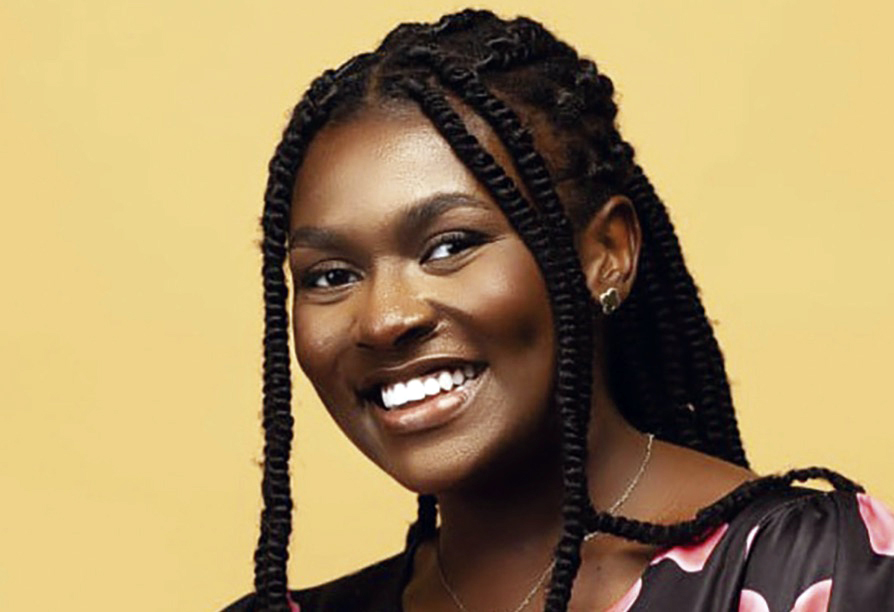
Vivacious Esther Ebubechukwu Anakor has a perfect combination of beauty, brains and intellectual brawn, which she is not shy to deploy and use to impact her generation and the nation at large.
Anakor graduated from Covenant University with a First Class degree in Computer Science. In th university, served as a Welfare Head for three consecutive years, during which she was introduced to the world of social impact.
During her industrial training (IT) year, she co-founded Dear Logbook, a storytelling platform that has since evolved into a weekly newsletter called Adulting.
Anakor has worked across education and technology, and currently teaches at a special needs school, leads a neurodiversity awareness initiative, and helps organizations build systems and automations.
In 2025, she served as Volunteer of the Year for Dyslexia Project Africa and was nominated for the SME 25-Under-25 Awards in Creative Writing and Content Creation. However, being exposed to the global TED programme gave quantum leap exposure to the possibilities of what focused youths can achieve by exploiting their inherent abilities
In the run up to the TEDx Festac Town 2026, she interacted with Sunday Sun. Read on…
What exactly is TED?
TED, which stands for Technology, Entertainment and Design, is a nonprofit, nonpartisan organization dedicated to discovering, debating and spreading ideas that spark conversation, deepen understanding and drive meaningful change.
In the spirit of ideas worth spreading, TEDx is a program of local, self-organized events that bring people together to share a TED-like experience. At a TEDx event, TED Talks video and live speakers combine to spark deep discussion and connection. These local, self-organized events are branded TEDx, where x = independently organized TED event. The TED Conference provides general guidance for the TEDx program, but individual TEDx events are self-organized.
TEDxFestac Town is one such event licensed by TED. Through thought-provoking talks, conversations, and community engagement, TEDxFestac Town seeks to showcase ideas, stories, and innovations that inspire learning, connection, and positive change within Festac Town and beyond.
What was the original spark behind TEDxFestac Town? What made you feel this platform was necessary in the community?
I have always loved attending and volunteering for personal development programmes because they gave me the opportunity to step out of my immediate environment, expand my knowledge, learn from thought leaders around the world and network with like-minded people in a physical setting. However, that passion came with the challenge of distance.
Most of these events were held either on the Island or in places far from Festac Town, so attending often meant either paying for an expensive Uber taxi ride or navigating multiple buses and repeatedly asking for directions. Thankfully, the new Mile 2-Marina train has made things a lot easier.
However, towards the end of 2024, I started wondering if I was the only one who felt this way. I was convinced there must be many people in Festac who also wanted access to these kinds of programmes but were held back simply because of distance and cost.
That realization was the original spark behind TEDxFestac Town. I wanted to bridge that gap and bring the TEDx experience closer to home. With the first event done successfully, I can say I have no regrets.
Looking back at the theme for the first edition held last year, what did you learn from that experience?
The theme for last year’s event was “Awaken”, and honestly, there couldn’t have been a more accurate description of the experience for me.
There was this sense of naive optimism I had when I began the curation process. It was a TEDx event after all and I just assumed everyone would immediately understand the weight and excitement of it. I can’t begin to count how many times I would mention it to someone with such confidence and then hear, “TEDx? What is that?”
There’s actually a cognitive bias for this. It’s called the curse of knowledge, where once you know something, you assume everyone else does too and you relate with them based on that assumption.
That experience taught me a lot about communication and mobilization. It was eye-opening because it showed me that if you truly want to engage and awaken a community, you can’t do it passively or from a distance. There’s little to no room for assumptions. You have to go out, visit people, speak to them directly, and be ready to explain, over and over again, why it matters, because impact at the grassroots level happens through presence, patience, and conversation.
What is the theme for this year, and how relevant is it to people in Festac in a real, everyday sense?
The theme for this year is “Limitless” and one thing I really love about it is how differently it has been interpreted by the few residents of Festac Town we’ve spoken to.
For me, it represents breaking boundaries, not in a vague or overly idealistic way, but in our everyday lives. It speaks to our ability to learn, grow, and evolve beyond what we often assume is possible. It also reflects access to opportunities, and the idea that residing in Festac does not limit what we can achieve. We can serve the world right from here.
I also see “Limitless” as personal and contextual. We are all in different seasons of life, shaped by different circumstances, so it will look different for everyone. In a sense it’s a call to take responsibility for our lives really; to do better; to be people of excellence, to improve the quality of our output, bearing in mind that if we want to serve the world, our standards must reflect that desire.
Also, it reflects a call to realize that we do have power in our hands right now to change our lives if we take it seriously. That’s what makes it powerful: we can’t do everything, but we can do anything we set out to do. And once we give ourselves permission to dream and act, we often realize we are capable of far more than we think.
What moment from last year made you think this is bigger than just an event?
This would have to be the panel session with the speakers. After all the talks and the break session, I honestly expected people to start leaving. We had the panel session on our agenda, but since we started a bit late, I was worried people might be tired, not fully attentive during the talks, or that the speakers themselves might have left.
But to my surprise, the hall was still practically full when we started. Then the questions just kept coming, from all over the room. People were asking thoughtful questions, even about things I didn’t catch during the main talks. It became so engaging that we had to set limits on the number of questions and even direct some conversations outside because it was just too much to contain in the room – and believe me, conversations were held outside.
For me, what stood out was the range of people involved: parents asking questions to the speaker who talked about dyslexia, young people asking about AI and cryptocurrency, among others. It was such a beautiful thing to see. It was at that moment, I realized we had really started something bigger than just an event.
What does TEDxFestac Town stand for today beyond the stage and the talks?
At its very core, TEDxFestac Town stands for access. We want to provide our community, our audience, and even our speakers with access to opportunities, ideas, and experiences that can expand what they believe is possible.
Last year, all eight of our speakers were first-time TEDx speakers, and we’re intentionally continuing that this year because we believe in creating entry points for more people.
For me, it’s about showing people what is possible beyond what they already know. It’s not just about the event itself. It’s about exposure to new ways of thinking and experience.
I took a mentee of mine to TEDxLagos last year, and I saw firsthand how powerful that kind of access can be. She experienced things like an elevator for the first time, automatic taps, and the energy of a space like that. She even had the chance to meet and hug Guinness World Record holder Kaffy. At the end of the day, she said to me, “I didn’t know something like this existed in Lagos State.” And that’s exactly the goal.
We want more people to know what is possible so that their decisions are not limited by lack of exposure, but are made with awareness of options, and then chosen intentionally.
What can people genuinely expect from this second edition, which will be different from last year?
Last year, we introduced TEDxFestac Town to the community in its maiden edition. This year, we’re building on that foundation. People can expect a more intentional experience, from the speakers we selected to the conversations we’re hoping to spark. We’ve also spent more time engaging the community before the event through initiatives like the Limitless Tour, our outreach sessions, roundtable conversations, and the Festac Icons community, with more to come after. Our talks this year explore what limitlessness truly means across different sectors from mindset to biology, to inclusivity in education to technology, the arts, among others. So this year isn’t just an event we’re inviting people to attend. It’s part of a larger conversation we’ve already started and hope to continue long after the event ends.
Organizing something like this in Lagos isn’t easy. What’s been the toughest part of making it happen?
It’s definitely been the financial aspect. Everyone can attest to how challenging the economy is at the moment, and that makes it even harder to convince individuals or organizations to sponsor or support an event like this.
So a big part of the work has been constantly communicating and re-communicating the value of the programme to both prospective attendees, who are new to the TEDx vision and potential sponsors: why it matters, what impact it creates, and why it’s worth investing in.
That process of “selling the vision,” even when you fully believe in it, can be quite stressful, but also fulfilling.
A lot of events come and go. How are you making sure TEDxFestac Town actually leaves a lasting impact?
This year, the mission started long before the event itself. We began a Limitless Tour, which included visiting special needs schools to celebrate them for Children’s Day, sending letters to secondary schools for outreach sessions, and hosting “Limitless” roundtable conversations in workspaces where people could share ideas and thoughts. It’s been about creating touchpoints beyond just one event day.
We also created the Festac Icons WhatsApp community, where we share national and international opportunities weekly, alongside encouraging messages every Monday. The group has over 100 members and is still growing.
We’ve also run a virtual career clinic series, and we’re constantly looking for ways to add value to the community even outside the main event. So for us, impact doesn’t start and end on event day. Right from the process of choosing speakers, who have depth of experience and can genuinely spark transformation in people’s thinking, to our venue, potential sponsors, etc. And then it continues through building community, sharing opportunities, and creating spaces where real conversations and real change can happen.
Who are you really building this for, and why does that audience matter to you?
I’m building this for the young lady who told me she never thought something like this exists in Lagos State, and for everyone she represents. One thing I’m grateful for in my own life is the level of exposure I have had. It has shaped how I think, the opportunities I have pursued, and the possibilities I have been able to imagine for myself. It has taught me that you can’t aspire to what you don’t know exists.
That’s why this audience matters so much to me. Many of us are at a critical stage in our lives where the ideas we encounter, the people we meet, and the opportunities we’re exposed to can genuinely change our direction. We’re often told that we’re the leaders of tomorrow, but the truth is we need to be the leaders of today, starting with our own lives. The choices we make now will shape the lives we eventually live.
I want my peers and those coming after us to have access to possibilities that help them make those choices intentionally. I want them to see opportunities, seize them, and create new ones. And I want fewer young people to feel limited by what they’ve been exposed to so far.
If everything goes right, what will success look like for this year’s TEDxFestac Town?
Success for me isn’t necessarily a packed hall, although that’s the plan. Success is someone leaving with a new idea, a new connection, or a new perspective that changes the way they see themselves and what’s possible for their future.
It’s a young person discovering an opportunity they didn’t know existed. It’s someone deciding to finally pursue an idea they’ve been sitting on. It is attendees continuing conversations after the event and building relationships that outlive the day itself. It’s also speakers leaving fulfilled, knowing they’ve shared from a place of depth and that their story has been heard.
If people leave feeling more informed, more connected, and more empowered to take action, and actually take action; if someone’s life becomes even just a little better; and if someone, in the near future, can point to the event as a defining moment in their life’s journey, then I would consider it a success.
In what way can the GenZ and Millennials make a big difference in the 2027 election? Are you a fan of the “Defend Your Vote” campaign?
I grew up constantly hearing that we are “the leaders of tomorrow.” At age five, I was the leader of tomorrow, and today I’m still being told the same thing while a new set of five-year-olds are also chanting that they are the leaders of tomorrow.
If we’re not careful as a generation, we might end up growing old while waiting for a “tomorrow” that only comes when we decide to take responsibility for it. Whether we like it or not, our nation is our responsibility now and what happens now affects us greatly across all areas of our lives.
For Gen Z and Millennials, the biggest impact we can make in the 2027 election is participation. We need to show up, be informed, intentional, and not outsource our decisions. We need to move beyond sentiment or tribal/political loyalty and start asking real questions: Why am I choosing this candidate? Is it because of their policies, their track record, and their vision, or is it just because of influence, familiarity, or the popular consensus?
That level of awareness is where real change begins. And yes, I’m a fan of the “Defend Your Vote” campaign, because anything that encourages young people to be informed, intentional, and active in the democratic process is necessary.