Follow Us on Google
By Oluseye Ojo
In a bid to bridge the gap of digital divide, Gotocourse Incorporation, a leading digital education platform, has unveiled its latest AI-powered solution, GMIND AI 2.0, with the ambitious goal of training 100,000 people by the end of 2024.
Digital divide refers to the gap between individuals, households, businesses, and geographic areas at different socio-economic levels with regard to their opportunities to access information and communication technologies (ICTs) and to use the internet for a wide variety of activities. The digital divide, according to experts, can lead to social and economic disparities, as those with limited access and skills may be disadvantaged in areas like education, employment, and civic participation
The grand unveiling of the game-changing AI solution was done at the Gotocourse Digital Literacy Centre in New Bodija, Ibadan, Nigeria, some days ago.
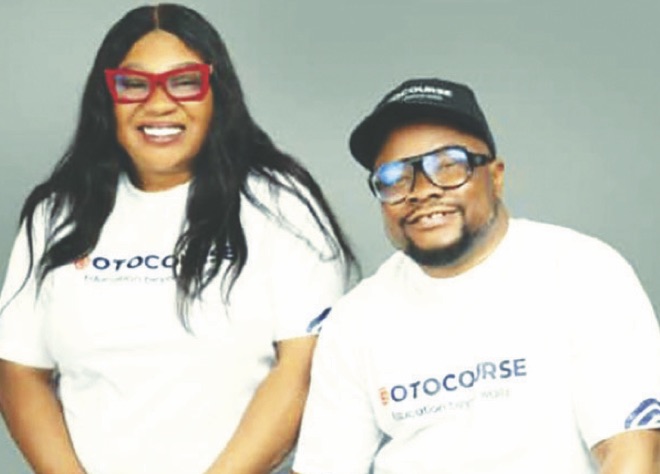
The solution is expected to pave the way for a future where the power of AI is harnessed for the betterment of all. The event was marked by a sense of excitement and anticipation as Gotocourse’s Chief Executive Officer (CEO), Dr. Success Ojo, shared the company’s vision to make AI accessible to all.
According to her, “As we stand at the threshold of a new era in AI, where technology meets human potential, it is my great honour to welcome you to the grand opening of the unveiling programme of GMIND 2.0! Today, we celebrate a significant milestone in our journey to make AI accessible to all.” She described GMIND AI 2.0 as a cutting-edge educational technology designed to empower teachers and content creators with robust and comprehensive educational content.
Ojo added that the platform boasts an enhanced user interface, expanded AI capabilities, improved digital literacy resources, and a focus on inclusivity and equal access.
She stated further that Gotocourse has already made significant strides, training over 30,000 individuals on AI and its responsible use, and appointing 5,233 GMIND AI Ambassadors among K12 teachers. She noted that the company’s unwavering commitment is evident in its goal to train 100,000 people by the end of 2024.
“GMIND 2.0 showcases the following features and capabilities: Enhanced user interface for seamless navigation, Expanded AI capabilities for diverse modules and components, Improved digital literacy resources for all skill levels, Affordable hub of notable AI tools, Strengthened focus on inclusivity and equal access.
Other News
“Our outreach team has made significant strides, training over 30,000 individuals on AI and responsible use, and appointing 5,233 GMIND AI Ambassadors among K12 teachers. We are committed to training 100,000 people by the end of 2024.
“Our platform is the result of dedication, expertise, and passion from our team, partners, and supporters. We are grateful for their contributions and proud to have them as part of our community. We believe AI is for all, and our digital literacy trainings at GDLIC have made a significant impact,” she said. In a complementary session, Dr Oluseye Ojo, the Co-Founder of Gotocourse, delved into the strategies to address the AI divide. These, he said, include inclusive AI design, digital literacy programmes, diverse language and culture support, and responsible AI development, among others.
The strategies, he said, aimed to address the AI divide by making AI more accessible, inclusive, and responsible. Investigation revealed that addressing the digital divide is a key priority for governments, nonprofit organisations, and private companies in order to promote digital inclusion and ensure equitable access to the benefits of technology.
The key aspects of the digital divide include access to technology, which has to do with access to devices like computers, smartphones, and internet connectivity, which can vary based on factors like income, location, and education level. It also consists of digital skills and literacy, which is the ability to effectively use digital technologies and navigate the online world. This involves skills like using productivity tools, searching for information, and understanding online safety.
Another key aspect of digital divide is usage patterns, which refers to the ways in which people use technology and the internet, which can differ based on factors like age, gender, and occupation. This includes things like using the internet for learning, entertainment, or conducting business.
The socio-economic and demographic factor is another in digital divide. It has to do with differences in access and usage that are often linked to factors like income, education level, geographic location (urban vs. rural), age, and disability status. The grand unveiling of GMind AI 2.0 also featured a keynote address by Mrs Olajumoke Akere, the founder and CEO of Cherithpoint Education and Youth Development Initiative.
She expressed her excitement and anticipation for the unveiling of GMIND 2.0, stating, “Today, we stand at the height of a new era, where the boundaries of human creativity and technological innovation converge in a symphony of unprecedented possibilities.”
Akere emphasised the transformative potential of GMIND 2.0, as she drew attention to its ability to empower creators, innovators, and thinkers across all disciplines to push beyond the conventional and explore the uncharted. She added that Gotocourse’s GMIND AI 2.0 would revolutionise the landscape of virtual education, providing a comprehensive and accessible platform for AI-powered learning and content creation.