Follow Us on Google
• Stakeholders restate commitment to sanity, public health
By Kehinde Aderemi
In the last few weeks, Nigerians from all walks of life have been expressing growing concerns about the safety of the meat being consumed by the public across the country.
Of particular interest, was the issue raised about sanitary, hygiene, inspection, waste management, as well as meat distribution chains that daily put the lives of millions of consumers at risk.

Concerned Nigerians also raised issues about the failures of the government to support the meat sector and effectively manage the abattoirs.
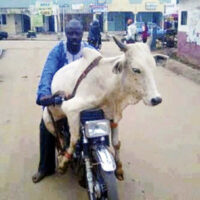
There were reports also of how fresh meat was being loaded into open vans, tricycles, and motorcycles and conveyed to markets across the country.
This, according to findings was against the global food safety rules, which require that meat be kept at 4°C or below from slaughter to sale.
Nigeria has several authorised abattoirs and major slaughter houses in different states, with high concentration in commercial hubs.
In Lagos and Ogun States, Oko-Oba abattoir, Agege and Owolowo, Oluwanishola market, Kara, Isheri, along Lagos-Ibadan Express Way are two of the largest abattoirs and meat processing hubs that serve the two states and even beyond.
Findings revealed that the two abattoirs process more than 10, 000 estimated cows, 5,000 rams, and 10,000 goats daily.
The two abattoirs, it was gathered, also employ more than 30,000 people directly.
These include the butchers, loaders, cleaners, meat sellers, transporters and a handful of young men and women that daily do some legitimate businesses within the premises.
There are confirmed reports that the industry turned over an estimated N80 billion annually.
However, behind the story of this huge economic success are concerns about public health and safety of the meat being distributed across the country.
Recently, a former Senator, Babafemi Ojudu, in a Facebook post, narrated how he watched beef being transported from an abattoir in the boot of a taxi in Ibadan, the Oyo State capital.
According to him, a spare tyre had been placed directly on top of the meat, while a large chunk that could not fit inside protruded from the boot, exposed to dust, exhaust fumes, flies and other contaminants along the road.
Ojudu stated further that the sight was not merely unpleasant, it was a serious public-health risk.
He pointed out that meat handled and transported in such filthy conditions can be contaminated by dust, dirty surfaces, vehicle fluids, flies and disease-causing organisms.
“By the time it reaches the market, the restaurant or the family kitchen, the consumer may have no idea what the meat has passed through. Cooking may destroy many germs, but it cannot excuse a system that permits food meant for human consumption to be treated like construction material.
“When someone eventually eats contaminated food and falls ill, we may attribute the sickness to a spiritual attack or the work of an enemy. Yet the real enemy may be the negligence we witnessed on the road and chose to ignore,” he said.
He urged the government to regulate the activities of the local governments on issues that have to do with public health and safety. He insisted that meat that was meant for public consumption should be transported only in licensed, washable, covered and preferably refrigerated vehicles.
“It should never come in contact with tyres, vehicle floors, passengers or exposed surfaces. Abattoirs, transporters, markets and butcheries should be inspected regularly, while violators should face meaningful penalties. Consumers should also have a simple channel through which such abuses can be photographed and reported.
“In a civilised society, protecting citizens begins with such basic responsibilities. Food safety must not end at the abattoir gate. It must cover the entire journey—from slaughter and transportation to display, sale and consumption. What people eat is a public-health matter, not something government should leave to chance”, he said.
A former President of the Nigerian Veterinary Medical Association, Dr. Gani Enahoro, also expressed concern that many of the abattoirs in the country are like slaughter slabs for not only the cows, but for everybody that consume the meat coming from the abattoirs.
According to him, the underlying challenges affecting the operations and management of the abattoirs – especially the government-owned facilities like that of Oko Oba and Kara, are not only in the amount of revenue they make for the states’ government but also in the fact that there is a need to ensure that the meat being distributed and also consumed by the people is certified to be safe for consumption.
Enahoro, who also provided photo evidence to prove his point, stated further there is a law that regulates the activities of authorised abattoirs in Nigeria, but expressed worry that such law is left in the hands of the local governments.
He explained concern that such a big and sensitive sector is managed and controlled by the local government in Nigeria.
He said the local governments that are in charge of the management of these authorised abattoirs are most times short of qualified veterinary doctors whose job is to certify the cows before they are slaughtered.
He said he is always concerned that some of the meat that come from the abattoirs into the food chain are not safe for human consumption. In his words, they are neither certified at the slaughter house nor preserved well before being distributed to the public.
He highlighted the role of the government, part of which he said is to ensure that qualified veterinary doctors are engaged in ensuring that the cows being slaughtered are safe for consumption.
“It is unfortunate that the same meat that comes from some of the unhygienic places that we call our abattoirs is one both the rich and the poor eat. This is the meat the leaders- the governors and our political leaders eat. And when people got sick, we don’t even look at that direction at all. So, government has a role in ensuring that the abattoirs are automated as it was during the administration of Governor Babatunde Raji Fashola.”
He said a lot of the veterinary doctors in Nigeria have been lured abroad to work in public abattoirs. “We have lost many of our veterinary doctors to those who value them abroad.
“Government must also review the law that regulates the activities of the abattoirs because a lot has changed today. This will enable all the stakeholders in the abattoirs and in the sector to work together by acting within the confines of the law to ensure that the meat that comes to the food chain is safe and edible,” he said.
A concerned Nigerian and first time visitor at Oko Oba abattoir, Agege, Lagos, who prefers not to be named, shared her experience with the reporter.
According to her, the abattoir was a major meat hub with the largest facilities in Nigeria.
She explained that though it is the Lagos State Government that manages the facility, there is need for the state government to address some of the underlying issues that daily face the leadership and the people that visit the abattoir.
Some of the challenges, she highlighted include the various levies charged at each point of activities at the facility, as well as poor handling of meat, which she said raised serious questions about sanitary, hygiene and level of cleanliness at the slaughtering department.
“Oko Oba abattoir is massive. Very nice but my major concern has to do with the various levies being charged at every department of the facility and the way meat is being processed and transported from the abattoir to the final consumers.
“There are chains of activities within the facility and many of the people that attended to us during my visit to the facility told us that the place is being managed by the Lagos State government and those levies charged goes to government’s purse”.
Beyond this, there is a need to restore sanity, particularly when it comes to hygiene and conveyance of meat.
“Government should engage a task force that will see to how the place is being managed so that they could monitor the ensure that all safety procedures are being taken care of because if you see how people carry meat on their heads and shoulders at the abattoir, you will begin to wonder if we are safe with the meat we eat”, she said.
However, leaders and stakeholders at the Kara market that spoke with the reporter, explained that they are doing everything possible to ensure that meat and other consumable products that travel from the abattoir to the market are certified safe for consumption.
Chief Mutairu Agboola, also known as Adedibu Kara, said there are about 36 departments in the market and each of the departments have leaders.
Adedibu, who oversees the activities in the market on behalf of the owners of Oluwanishola market, explained that the slaughter house is well coordinated with different activities in the last 32 years the Kara market has been operating.
According to him, the Ogun State Ministry of Agric has representatives and qualified veterinary doctors that daily certified all the cows before they get to the slaughter house.
He also stated that there had been a synergy between the Ogun State Government and the leadership of the market and also the Lagos State Butchers Associations.
Such synergy, he said, includes ensuring sanity and safety of the meat going out from Kara abattoir to the public.
Adedibu Kara said, as it is with the Oko Oba, Kara abattoir remains the biggest abattoirs in Ogun State, adding that efforts are ongoing by the state government to give the market a new facelift to make it the international modern market across Nigeria.
“ We are working on renovating the slaughter house, with modern facilities. We are also appealing to the Ogun State Government to help renovate the road leading to the abattoirs here in Kara,” he said.
He said the operators of the abattoir are appealing to the Ogun State Government to give the professional approval for the renovation of the market into a modern one.
Meanwhile, Alhaja Abebi Hassan said she has been working at the Kara market for the past 20 years. She said the leadership of the market is doing everything possible to ensure safety of the meat and other consumables produced in the market.
Alhaji Surajudeen Busari, known also as Albankudi, is one of the leaders at the Kara abattoir.
He said the activities at the slaughter facility begin daily by 4 am till 2 or 3pm daily.
Busari explained further that at the Kara abattoir, more than 500 cows are slaughtered daily. He noted that the slaughter house in Owolowo, Oluwanishola market has been equipped with necessary facilities like boreholes for the cleaning of cows and the slaughter house.
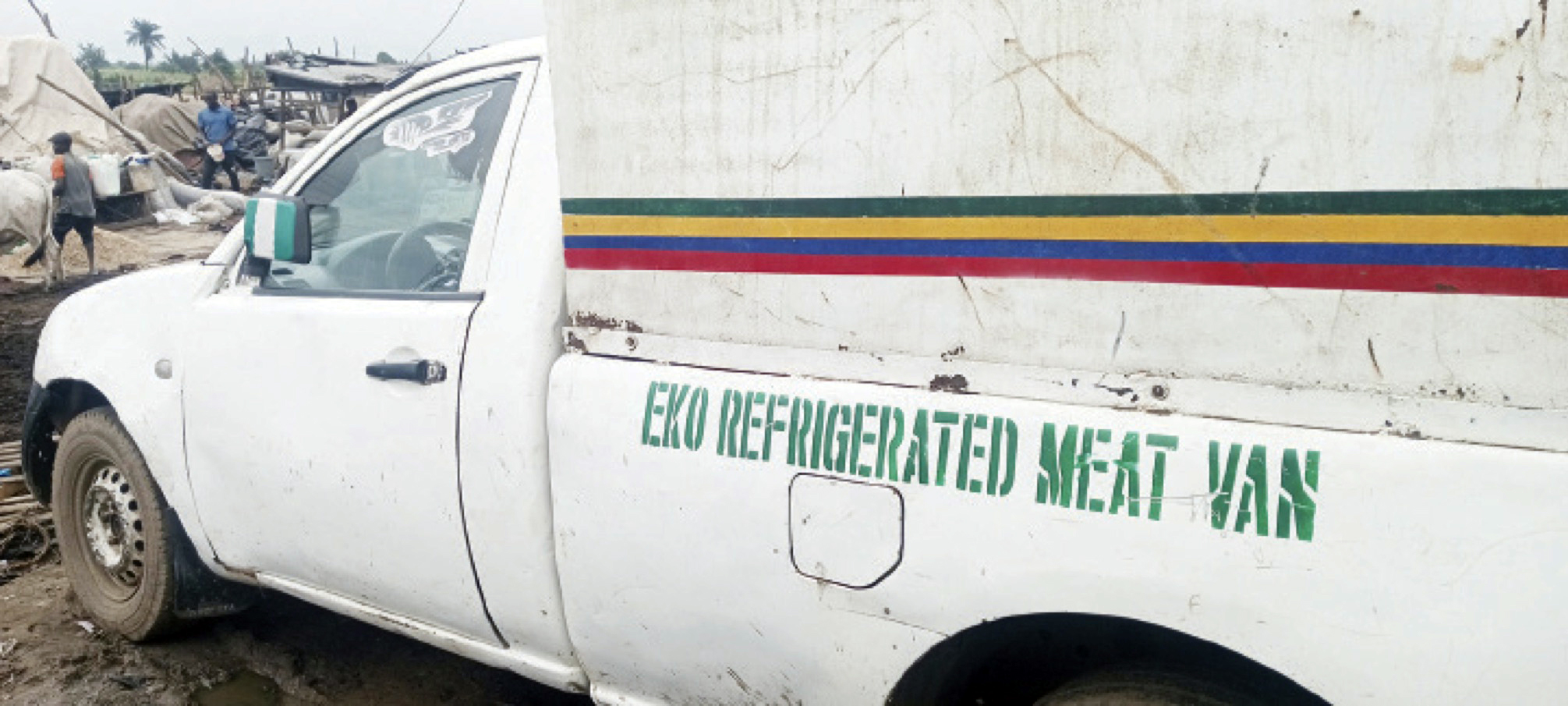
Busari also noted that the meat is being conveyed by EKO Meat Van that takes care of the distribution of the meat across Lagos and Ogun States.
He added that there are four slaughter houses in Kara designated for slaughtering of cows, rams, goats and chickens. All these, he said are certified slaughter houses that are taken care of daily.
He explained also that there are veterinary doctors that usually certify the cows before they could be slaughtered for consumption.
The veterinary doctor in charge of the Kara abattoir that spoke to the reporter said he wasn’t in a position to talk to the reporter
Officials of the Lagos and Ogun states could not be reached by the reporter.