Follow Us on Google
•Opposition leaders brace up for showdown
From Fred Itua, Abuja
Across the country’s political space, members of the opposition are worried that that the pattern of pre-election violence and inflammatory rhetoric that has marked off-cycle polls since the 2023 general election could define the 2027 contest.
The latest flashpoint of the growing concerns came on the 8th of September, 2026, when suspected thugs blocked the convoy of Nigeria Democratic Congress (NDC) presidential candidate, Mr Peter Obi along the Gboko federal highway in Benue State. His convoy was pelted with stones and the motorcade was forced to turn back.
The police later arrested 46 suspects. The Benue State Government denied any involvement and described the allegations against it as being behind the mayhem as unfounded. A faction of the state APC demanded that Governor Hyacinth Alia apologise.
Oyo State Governor Seyi Makinde accused the ruling party of resorting to intimidation, and African Action Congress (AAC) candidate Omoyele Sowore said video evidence pointed to state sponsorship.
Commentators and political pundits have argued since then that the Benue incident is not isolated. They argue that it fits a sequence that began barely nine months after the 2023 presidential election.
In the November 2023 off-cycle governorship polls in Bayelsa, Imo and Kogi, a thug was shot dead by soldiers while attempting to snatch a ballot box in Anyigba, Kogi, with a similar attempt recorded in Ajaokuta.
The Economic and Financial Crimes Commission (EFCC) arrested 14 suspected vote buyers on election day alone. Yiaga Africa’s parallel observation later confirmed 19 separate violent incidents in that single contest.
Ten months later, in the September 2024 Edo governorship election, armed men snatched a ballot box in Owan West, voting was disrupted in Ikoro community in Ovia North East, and a serving police officer was shot dead by thugs later identified by the Inspector-General of Police as loyal to the APC, according to then-governor Godwin Obaseki. Months after the result, thugs invaded the Edo State High Court during tribunal pre-hearing sessions.
In November 2024, Ondo recorded sporadic gunfire in Akure the night before voting. There were attacks on six PDP members in Idanre, and there was also ballot box snatching on election day.
The November 2025 Anambra governorship election took place against what the CLEEN Foundation described as the most violent pre-election climate the state had seen in years. A security threat assessment recorded more than 200 lives lost to politically or ideologically motivated violence in Anambra since 2022, including 14 confirmed political assassinations between 2022 and 2024, with Ihiala accounting for the largest share.
On election day, thugs in Independent National Electoral Commission (INEC) vests disrupted voting in Anaocha and injured an NYSC member and a Yiaga Africa observer in Ihiala.
The 2023 general election itself claimed about 234 lives across different phases, according to available conflict trackers, with 67 deaths before the vote – 153 during voting and collation, and 14 afterwards. Subsequent off-cycle polls have added further casualties and disruptions.
Broader violence figures show Nigeria lost thousands more lives annually to banditry, farmer-herder clashes and other conflicts, creating an environment in which political actors operate with heightened tension.
Political observers have noted that when physical attacks combine with threatening language, the cumulative effect is a climate of fear that discourages free campaigning and voter participation.
Other News
That climate has been intensified by a series of recent public statements from ruling-party figures. In Yobe, APC state chairman Mohammed Gadaka told women at a defection event that if their husbands prevented them from voting for the party they should leave their marriages, adding that he would pay their bride price. He later apologised and withdrew the remark, describing it as traditional banter that had been misunderstood.
In Borno, Commissioner for Youth and Sports Development Saina Buba, speaking at a Tinubu support group event, said whoever showed them a finger would have that finger cut off or broken, and that those who followed the government would enjoy honey while those who refused would be flogged.
He later insisted that the comments were directed at internal party dissenters and were figurative, while maintaining there was effectively no opposition in Borno.
In Ebonyi, Governor Francis Nwifuru ordered newly sworn-in local government chairmen to “deal with opposition parties mercilessly” ahead of 2027, a directive that drew sharp condemnation from the PDP as reckless and inflammatory.
In the Federal Capital Territory, Kuje Area Council Chairman Samuel Danjuma Shekwolo declared that residents must support the APC or leave the council, linking the demand to development projects under President Tinubu and FCT Minister Nyesom Wike.
He later said the remarks were taken out of context and made only to party loyalists, but opposition parties and the National Human Rights Commission called for his arrest and prosecution, describing the statement as a threat of forced displacement.
In Edo, Governor Monday Okpebholo, addressing supporters, declared that there was a new sheriff in town and that Peter Obi could not enter the state without informing him first, warning that Obi’s security could not be guaranteed otherwise and that whatever happened to him would be his own responsibility.
Senior lawyers, including former Nigerian Bar Association National Publicity Secretary Kunle Edun, condemned the remarks as a breach of the governor’s oath of office.
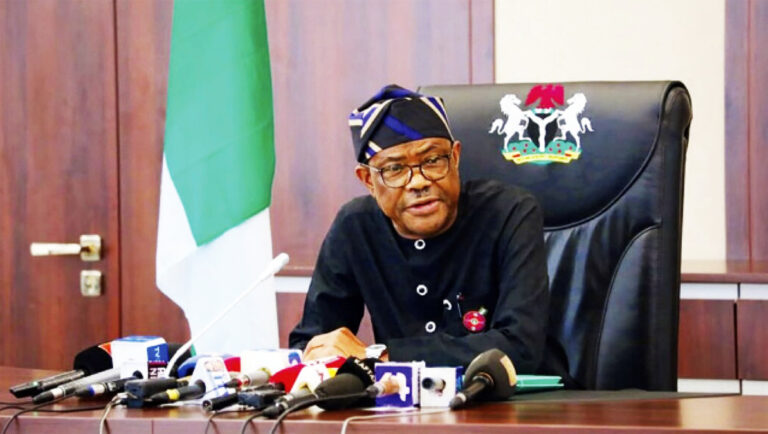
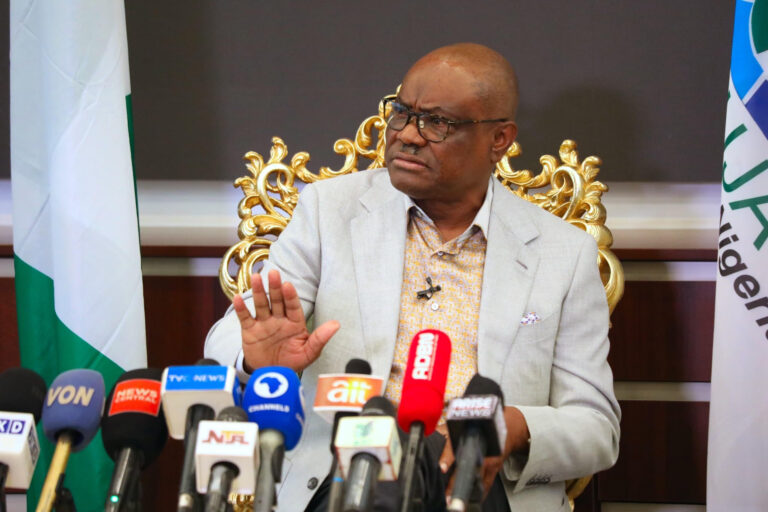
FCT Minister Nyesom Wike has repeatedly described the opposition as crippled and depleted. He insisted that the 2027 contest would be the easiest for President Tinubu, and that if Tinubu lost he would be the first politician hunted by Atiku Abubakar and Peter Obi.
The physical incidents and the verbal escalations have produced a widespread perception that space for opposition activity is shrinking. Northern Elders Forum figures have warned of regional reckoning if grievances are not addressed, while the Coalition of United Political Parties has spoken of democracy under siege. The APC has dismissed such warnings as the product of aggrieved politicians.
Senator Seriake Dickson, National Leader of the NDC, addressed the Benue episode directly in an interview on Wednesday night. He described the blockade as criminal rascality of the highest order and said it sent a dangerous signal at a time when campaigns had officially begun.
No Nigerian, he argued, needs anyone’s permission to visit a state, least of all a presidential candidate on a humanitarian visit. Dickson warned that failure to investigate thoroughly and prosecute those responsible, including any officials found complicit, could normalise the use of armed mobs to keep opposition politicians out of entire states.
He said the Nigerian political class was committing class suicide by refusing to commit fully to free and credible elections. Arrests alone, he insisted, were not enough; the public needed to see the outcome of investigations and the prosecution of sponsors.
Observers have noted that the combination of documented violence in successive elections since 2023 and the recent wave of unguarded statements has created genuine apprehension that 2027 could follow the same pattern unless security agencies, INEC and party leaders act decisively to reverse the trend.