Follow Us on Google
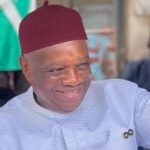
The United States’ airstrike on December 25, 2025, targeting Islamic State (ISIS) camps in Sokoto State, marks a pivotal moment in the fight against terrorists in the northwest region of Nigeria. Conducted by the US Africa Command (AFRICOM) at the request of Nigerian authorities, the operation struck terrorist locations in the Tangaza and Tambuwal local government areas, resulting in the deaths of multiple ISIS militants. This strike not only disrupted terrorist operations but also amplified efforts by Governor Ahmed Aliyu to eradicate insecurity. Since assuming office in May 2023, Governor Aliyu has prioritised security through innovative strategies, community engagement, and resource allocation to security agencies. The US intervention complements these initiatives by providing high-precision military support that enhances Nigeria’s sovereignty while addressing transnational threats.
Sokoto has long been plagued by terrorism and banditry, which is powered by regional conflicts in the Sahel. ISIS-West Africa Province (ISWAP), Lakurawa, and bandit outfits have exploited the porous borders of the state to engage in kidnappings, raids, and attacks that displaced communities and stifled economic activities. These threats have intensified in recent years and also tested Governor Aliyu’s resolve. The terrorists have also undermined Governor Aliyu’s efforts by establishing camps for recruitment and logistics.
No doubt, Governor Aliyu inherited a volatile security landscape upon his inauguration in 2023. Recognizing the interplay between insecurity and underdevelopment, he took proactive measures to address the situation, including the procurement of over 200 vehicles for security agencies to enhance patrols and surveillance. Additionally, on December 25, 2025, the same day as the US strike, Governor Aliyu announced fresh offensives against terrorists in the state. The measures include improved intelligence gathering and treating informants as equivalent to terrorists. These initiatives are yielding results and have led to the elimination of notorious bandit kingpins. They also signal the governor’s determination to reclaim territorial control. However, local resources alone have limitations against well-armed, ideologically driven groups. This makes international partnerships, like the US Strike, essential.
The US strike was a targeted operation using precision-guided munitions to hit ISIS camps in remote areas of Sokoto. Local officials confirmed that the strikes demolished terrorist hideouts, killing multiple militants and destroying logistics hubs. The US Africa Command (AFRICOM) assessment highlighted the elimination of key ISIS figures, disrupting their command structures and preventing planned attacks as key achievements. More importantly, the strike avoided civilian casualties, thus showcasing advanced US intelligence and drone technology that complements Nigeria’s ground operations. Post-strike imagery and reports revealed scorched earth and abandoned equipment. These indicate a significant blow to terrorist morale and capabilities.
The most immediate positive impact of the US strike has been a tangible reduction in terrorist activities in Sokoto. Reports indicate that surviving militants have fled to neighbouring states like Benue and Kebbi, indicating a fragmentation of terrorists’ networks. This positive impact makes the terrorists and bandits more vulnerable to follow-up operations by Nigerian troops. This dispersal has led to potential splintering within ISIS groups. It has also caused a weakening of their cohesion and recruitment efforts. For instance, the destruction of a primary terrorist route in Tangaza has curtailed supply lines and reduced the frequency of bandit raids.
The US strike, in essence, complements Governor Aliyu’s efforts at addressing terrorism and banditry in Sokoto. To a very large extent, too, the strike amplified his new security strategy, which includes enhanced coordination between state and federal forces. Aliyu’s directive to target informants aligns seamlessly with the US’s intelligence-driven approach and creates a synergy that addresses both local banditry and transnational terrorism. The governor has lauded the outgoing General Officer Commanding and Commander Sector 2 of the Joint Task Force Northwest, Operation FANSAN YAMMA, Major General Ibikunle Ademola Ajose, for his collaborative efforts with the state, which aligned with the governor’s emphasis on proactiveness and strategic engagements. The military partnership with the Sokoto government has instilled fear among terrorists. This is evidenced by the reduced attacks in the state since the US strike, which has allowed communities to resume normal activities. The operation has also boosted the morale of Nigerian troops, who have intensified airstrikes in adjacent areas like Lake Chad, which has seen the destruction of terrorist depots and the annihilation of over 100 terrorists.
Other News
Beyond immediate security gains, the strike has created a deterrent effect. Terrorists like Bello Turji, previously emboldened, now face heightened risks. This complements Aliyu’s commitment to making banditry history in Sokoto, as articulated in his recent reaffirmations. By targeting ISIS ideology, which appeals to local extremists, the US action supports Aliyu’s inclusive development agenda and reduces the allure of terrorism through stability. Before December 25, 2025, Farmers in rural areas like Tangaza abandoned their farms due to kidnappings. This was a major reason for food shortages and inflation in the state. However, the US strike has begun reversing this by securing key routes, enabling the safe movement of goods and people. Today, reports from residents of communities impacted by the strike’s outcome indicate a resurgence in market activities as extortion by bandits has reduced.
This is an indication that Governor Aliyu’s efforts, such as distributing vehicles for monitoring and launching offensives, laid the groundwork for this recovery. The US intervention, however, complements them by eliminating terrorist sanctuaries that doubled as extortion hubs. This frees resources for economic projects under the 9-Point Agenda. For example, the strike’s success has encouraged foreign investment in agriculture and mining. These are sectors vital to Sokoto’s GDP and crucial to unlocking Aliyu’s consolidation plans for 2026.
Also, the operation has indirect economic benefits as the displacement of terrorists will translate to reduced attacks on infrastructure. This stability, it is believed, will allow for the rehabilitation of schools and health facilities, previously destroyed by the terrorists and create a more enabling environment to foster human capital development, which is essential for long-term growth.
Governor Aliyu has, over the years, invested state resources in compensating victims of past terrorist strikes. The elimination of terrorists from Sokoto and the reduced attacks mean that such costs will now be reinvested in the provision of infrastructure for the people and improving strategic intelligence gathering. The US strike also enhances Governor Aliyu’s emphasis on inclusivity and eliminating threats to vulnerable groups in the state, as it aligns with his agenda for equitable security for all and inspiring youth to reject extremism and participate in rebuilding efforts.
Looked at differently, the US strike serves as a force multiplier for Governor Aliyu’s anti-terrorism strategy, as while Aliyu focuses on grassroots intelligence and resource provision, the US brings advanced technology and global expertise, creating a hybrid model of counterterrorism. The strike’s success in annihilating high-value targets builds on Aliyu’s recent elimination of bandit leaders and accelerates the path to peace. Moreover, it addresses gaps in local capabilities, such as aerial surveillance, allowing ground forces put in place by Aliyu to consolidate gains. The operation has sparked a sudden awakening in Nigerian military operations, with increased airstrikes complementing state-level initiatives.
The US strike on ISIS bases in Sokoto State represents a watershed in Nigeria’s fight against terrorism, delivering profound positive impacts on security, economy, and society. By eliminating key threats and disrupting networks, it has created a breather for recovery and development. Critically examined, this intervention complements Governor Aliyu’s tireless efforts, rising from vehicle procurements and informant crackdowns to strategic offensives, and forming a unified front against insecurity. As Sokoto moves toward a banditry-free future, this collaboration exemplifies the power of international solidarity in supporting local resilience. With Aliyu’s determined commitment, Sokoto can transform from a hotspot of violence to a beacon of progress that ensures lasting peace for its people.