Follow Us on Google
Some burdens are visible. Others are carried in silence. We see the priest at the altar, but not necessarily the fear that follows him when he leaves the sanctuary. We see the professor in his gown, surrounded by the prestige of a great university, but not necessarily the private weight of an accusation that begins to consume his name. We see the headline, the resignation, the institutional statement, the disciplinary process. We rarely see the human being underneath them.
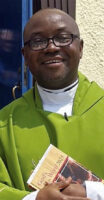
That is the weight we do not see. It is the weight that institutions can overlook because institutions deal in files, rules, procedures and positions while human beings experience fear, humiliation, uncertainty and vulnerability. Two men, in two very different institutional worlds, bring this invisible burden into uncomfortable focus: Madu, the priest, and Jason Arday, the academic. Their circumstances are not identical. Their stories should not be artificially fused. But both compel us to ask a question that institutions too often ask too late: What is happening to the human being beneath the role?
Let us begin nibbling at the question with the priest and the weight of compulsory return. For Madu, the meaning of going home was not merely an instruction. From the outside, it could be reduced to the simplicity of an institutional directive: return. But an instruction written on paper does not carry the same meaning for the person required to obey it. The priest knows the terrain. He knows the circumstances surrounding the place to which he is being sent. He knows the risks, the tensions and the things that cannot easily be captured in an official memorandum. That is the invisible weight.
Rev. Father Benjamin Okwy Madu, 54, died in Lynnfield, Massachusetts, on 2 July 2026. The Archbishop of Boston reportedly told fellow priests that Madu had taken his own life. His death came shortly before his religious-worker visa was due to expire and after his Diocese of Abakaliki had instructed him to return to Nigeria for a new assignment. Madu had spent nearly six years serving in Massachusetts as a hospital chaplain and parish priest. That is long enough for a temporary posting to become a lived experience of belonging.
However, his American status remained temporary. Madu reportedly did not want to return. He had spoken of his fear about security in Nigeria, particularly the risks faced by Catholic clergy. Reports have sometimes muddled the chronology of priestly deaths and kidnappings. The figures from 2015-2025 vary by source and methodology, but they establish a disturbing security environment. Then came the reported panic attack while he was driving to Mass, followed by treatment at an emergency department. These circumstances understandably make the prospect of compulsory return look terrifying. But there is another question, less obvious and perhaps more difficult.
What did Madu himself mean by home? Nigeria was not simply the country to which an immigration decision would send him. It was presumably where his parents, siblings, relatives, friends, fellow priests and other acquaintances lived or had lived. It was where he had been ordained. It was the home of his diocese and the society in which his priestly vocation had begun.
Did he still have close family there? What relationships awaited him? Had years in America altered his sense of belonging? Was he afraid of Nigeria as a whole, or of particular dangers within it? These questions matter because migration is not simply movement from one address to another. It is movement between communities of attachment. Suppose Madu had remained safely in America while everyone he loved in Nigeria continued to face the insecurity he feared. Would safety alone have guaranteed fulfilment? If, in some terrible hypothetical future, every relative and acquaintance he loved were kidnapped or killed while he alone remained secure in America, would he regard himself as having chosen the better human life?
The questions are deliberately unsettling. They do not mean Madu ought to have returned. They do not mean America ought to have kept him. They remind us that physical safety and human fulfilment are not always identical things. A humane immigration system should certainly be capable of recognising exceptional humanitarian circumstances. But humanitarian consideration should not be reduced to the narrow question of whether a person can physically survive somewhere.
Belonging, family, vocation, psychological security and the meaning of home also matter. The Church faces a related question. Priesthood involves obedience, but the priest is not merely an administrative unit to be transferred from one location to another. He has relationships with the people among whom he ministers. He can be dutiful and distressed at the same time. Father Madu’s reported panic attack does not prove what caused his death.
It does, however, raise a question every institution should ask when one of its members shows signs of acute distress: Are we still dealing with a procedure, or has the procedure become a human crisis? The priest who accompanies the suffering may himself need accompaniment. The shepherd may need shepherding. Pitiably, this constitutes an integral part of the weight we do not see.
An institution may see a priest who can be transferred. The priest may see a place to which he is being asked to return with apprehension. The difference between those two perceptions is precisely where institutional wisdom is tested. A superior can issue an order. But an order cannot make fear disappear. A posting can be administrative. But the human consequences of the posting are not.
The Church, more than most institutions, should understand this distinction. Its business is ultimately with human beings, not merely with positions. A priest is not simply an occupant of a pastoral office. He is also a person who can become frightened, overwhelmed and vulnerable.
The question, therefore, is not whether institutions should have authority. They must. It is whether authority can exercise itself without becoming blind to the person upon whom its decision falls. And that question takes us from the priest to the Cambridge professor beneath the headline.
Other News
Jason Arday’s story appears to belong to an entirely different universe. He was a British academic, born and raised in south London to Ghanaian parents. His trajectory was extraordinary: from a working-class background, through formidable personal and educational obstacles, to becoming Cambridge University’s youngest Black professor. His life story carried the symbolism of extraordinary upward mobility. It was also inseparable from the difficulties he had publicly described – autism, developmental challenges and the late acquisition of literacy. His ascent therefore became more than a career achievement. It became a story about possibility.
Then came the allegations. Questions were raised about plagiarism in his doctoral thesis and other academic work, alongside broader questions about aspects of his qualifications and biography. Arday denied plagiarism and maintained that the portrayal of him as a liar or fantasist was unacceptable.
Liverpool John Moores University, which awarded his PhD, had previously investigated complaints and did not uphold plagiarism, describing the problems as likely to have resulted from honest and reasonable error. Cambridge, however, said in August that it had received new information and began its own investigation into his qualifications and honorary appointments, while separate academic-misconduct complaints remained under consideration.
That distinction matters. There was scrutiny. There were questions. There were processes. But there was also something else: a rapidly expanding public narrative in which allegation, suspicion and judgment began to occupy the same space. The story escaped the laboratory of academic verification and entered the theatre of public spectacle. The scrutiny became extraordinarily broad. Reports went beyond the academic allegations into Arday’s life story, achievements, claims and public persona. One analysis counted 249 UK media articles in about 22 days. The number itself is less important than what it reveals about the extraordinary intensity of attention.
And then came the most tragic turn. Arday resigned from Cambridge on August 5. Nine days later, on August 14, he was found dead at his home in south London. His death is not being treated as suspicious by police, but the timing has inevitably intensified questions about the human cost of the public ordeal. I must be careful here. It would be irresponsible to declare that the media scrutiny caused his death.
I do not possess the evidence to make such a causal claim. But it would be equally irresponsible to pretend that the scale and intensity of the scrutiny are irrelevant to the question of human cost. A person’s reputation can be damaged long before an institution reaches a conclusion. That is the weight we do not see. But there was another Cambridge professor. This is where the story acquires a particularly uncomfortable dimension. Jason Arday was not the only Cambridge academic to become embroiled in a plagiarism case.
Consider William O’Reilly. In 2018, O’Reilly, an associate professor of early modern history at Cambridge, published an article containing extensive material copied almost word-for-word from essays written by one of his undergraduate students. The student had been under his supervision. More than twelve pages were reported to have been lifted from two essays. A university tribunal eventually upheld the plagiarism complaint. However, the tribunal concluded that the plagiarism was the product of negligent acts rather than deliberate conduct, and O’Reilly remained in his post.
The journal article was withdrawn. The university process ended. The academic remained a Cambridge professor. And the matter largely remained what an academic disciplinary matter ought to be: a matter dealt with through an institutional process rather than transformed into a prolonged public dismantling of the individual’s entire identity.
Nonetheless, this comparison needs intellectual honesty. The two cases are not identical. O’Reilly’s case involved published material taken from a student’s essays. Arday’s allegations concerned his doctoral thesis and other academic work, while Cambridge also investigated questions about his qualifications and honorary appointments. O’Reilly’s tribunal made a finding of plagiarism but characterised it as negligence rather than deliberate deception; Arday died before Cambridge’s process could reach a conclusion. So, the argument cannot honestly be: O’Reilly did exactly what Arday was accused of doing, therefore Cambridge treated identical cases differently. That would be too far off the mark.
The stronger argument is about proportionality and public treatment. O’Reilly had a plagiarism complaint upheld against him. He kept his job. The media attention was comparatively limited. Arday faced an extraordinary media storm, one later described as a media lynching when it ended on a fatal note. Arday resigned. His entire biography became part of the public examination. And the question therefore presents itself: Why did the same broad category of academic failing carry such dramatically different public weight?
And now the race question. Now we arrive at the uncomfortable question that many would prefer to avoid. O’Reilly is white. Arday was Black. Does that prove racial bias? No. But does the racial difference make the disparity irrelevant? Certainly not. If institutions and media organisations are serious about confronting racial bias, they cannot ask us to believe that race becomes irrelevant whenever a controversy can be described in formally neutral language. Bias does not always announce itself with an explicit racial slur. Sometimes it appears in differential attention.
Sometimes in differential scepticism. Sometimes in who receives the benefit of the doubt. Sometimes in whose mistakes remain mistakes and whose mistakes become evidence of a defective character. Sometimes in whose biography is treated as context and whose biography becomes ammunition. And sometimes in the extraordinary difference between an allegation being treated as an academic matter and an allegation becoming a public campaign. That is why the Arday-O’Reilly comparison matters. Not because it proves racial discrimination. But because it makes racial bias a question that requires an answer. The burden of proof should not become a demand that we ignore obvious disparities until someone discovers a document saying, “We treated him differently because he is Black.” Modern prejudice is rarely so obliging.
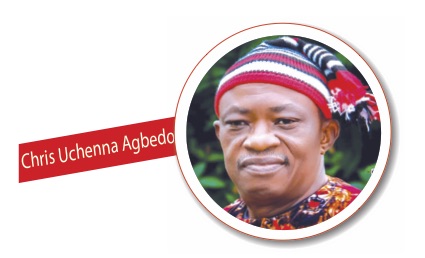
• Prof Agbedo writes from the University of Nigerian, Nsukka.