Follow Us on Google
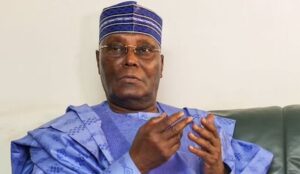
Alhaji Atiku Abubakar, former Vice President and presidential candidate of the African Democratic Congress (ADC) has stirred the hornet’s nest with his rhetoric on fuel subsidy. He is reported as saying that if he gets elected as Nigeria’s President in 2027, he will bring back subsidy on fuel. That means that he would reverse the policy of the Bola Tinubu presidency on the ticklish subject. President Tinubu was very clearheaded about this issue and did not waste any time before declaring, soon after his ascension of the presidency that “subsidy is gone.” Since then there has been rivers of cash flowing into the coffers of the Federal, State and Local Governments. Since this is campaign season, when we expect to get from our politicians an outpouring of a blizzard of policy proposals, realistic and unrealistic, a lot of them, expectedly, will be vote-fetching proposals; some will be simply nit-picking proposals unworthy of serious scrutiny but which are aimed at playing to the gallery. That will be political opportunism but in politics, especially Nigerian politics, anything, almost anything, goes.
However, Atiku’s declaration is worthy of serious attention, not because it is anything new but because it is capable of producing more heat than light. Many uneducated persons are likely to clap for him thinking that they will get to the land of Eldorado if Atiku wins but the issue is more complex than that. Yes, if fuel subsidy is removed Nigerians may get fuel at a discounted rate; their transport and energy costs may be reduced, but take note that we have been at this place before. Throughout the eight years that President Muhammadu Buhari was in power there was fuel subsidy but, amazingly, there was no fuel. We all slept at petrol stations for days waiting for our petrol tanks to be filled. The tanks remained empty except we were willing to buy the stuff at exorbitant rates from black market merchants who sometimes diluted it with some other liquid. Some car engines got damaged in the process.
However, since fuel subsidy was removed Nigeria has been enjoying a financial windfall. The Ministry of Finance & Coordinating, Minister of the Economy, Mr Taiwo Oyedele has informed us that a total of N15.8 trillion naira was paid into the Federation Account between June 2023 and December 2025 as proceeds from fuel subsidy removal. Out of this sum the Federal Government got N5.4 trillion naira while the 36 State Governments and 774 Local Governments got N10.4 trillion naira. Since the United States-Iran war started and the price of crude skyrocketed more money has poured into the coffers of these three tiers of government. That is the impact of fuel subsidy removal which these governments have felt in their pockets. But what is the impact of the removal on the lives of ordinary Nigerians? Transport costs have reached the sky; food prices have skyrocketed; fuel is available but at a cut-throat price and the disposable income of Nigerians has shrunk because the value of the naira has dropped drastically. That is why the workers asked for, and got, a salary review. Now, they are asking for another salary review. In May 2023, the official exchange rate was about N460 per dollar while the parallel market rate was about N770 per dollar. Today, the exchange rate is above N1, 300 per dollar at both markets. That means that the purchasing power of the naira is down eventhough the exchange rate is somehow stable.
Other News
If Atiku wins the election in 2027 and decides to bring back fuel subsidy these will be the consequences (a) The Federal, State and Local Governments will be starved of the humongous revenue they are getting now. And they will find it difficult to meet their basic bills and there will be a development deficit at the Centre and in the States (b) There will probably be cheaper fuel which the smugglers will funnel into neighbouring countries where fuel is costlier than in Nigeria. Nigerians will be the losers because our borders are very, very porous (c) This will discourage private investment in the refining of fuel because the fuel importers will be back in full force to exploit Nigerians as they are accustomed to doing. As it is often said “appetite comes from eating.” (d) We will then have to borrow more money to meet our commitments, recurrent and capital. So the debts will continue to pile into a mountain and Nigeria and Nigerians will be worse off. We are told that there are 140 million Nigerians who are said to be multi-dimensionally poor. That figure will probably balloon because the various governments will not have enough money to invest in job creating ventures that can benefit their people. That will be courting wahala. Nigeria and Nigerians will not be in fine fettle. There will be, instead, a tidal wave of discontent, much more discontent than what we have now and it will be difficult, very difficult, to bring people into the circle of reason.
If Atiku wins the election and wants to bring back fuel subsidy this is what will happen. If the 31 or so APC governors win their own elections then Atiku will be in deep trouble because the Governors who are now enjoying this financial windfall will not accept a return to the State of near impecuniosity. If Atiku then decides to cross carpet to APC he will have to do the bidding of the APC Governors to survive. But these are all iffy issues that may or may not happen next year. Next year is still in the laps of the gods.
But the most important issue that arises from the fuel subsidy debate is “what have the various governments done with the money to improve the lives of Nigerians?” It is a question of accountability, a question that must be answered as the campaigns begin. Nigerians deserve an answer, a clear unambiquous answer. Since the outbreak of the United States-Iran war which has caused a high rise in the price of fuel worldwide because of the increase in the price of crude oil a number of countries, about 60 or so, have mounted support programmes for their citizens. Nigeria has been talking of converting vehicles from petrol consumption items to gas which is far cheaper than petrol. How many States have ventured into this as a way of reducing transportation and other costs for the benefit of their people? How many States have food banks for their people? How many States have helped their young people to get free or highly subsidised education? How many States have free medical treatment for vulnerable persons in their States? How many States have been able to build roads and bridges that people can use in bringing food from the rural areas to the cities? How many States have been able to improve the power situation in their various communities for the benefit of their people? There are many more questions that can be asked because it is obvious that some of the States are not using the money substantially to improve the living conditions of their people. That is probably what made President Bola Tinubu to advise State Governors to desist from building unnecessary flyovers in their States and to channel their funds into productive sectors.
The issue today should not be whether to remove or keep fuel subsidy. Restoring fuel subsidy will not help Nigeria. It will be a very unwise decision. We have to be clear about that. Anyone who insists on restoring fuel subsidy is simply engaging in political opportunism with the intention of fooling some illiterate voters. What we should ask is for the gains of fuel subsidy removal to reach all Nigerians in a clearly accountable fashion. We should also ask for a massive improvement in domestic refining and marketing of our refined products. And if the Federal Government sells the crude to local refiners at a concessionary rate the benefit will trickle down to us ordinary Nigerians. It is foolish for us to live on the banks of a river and wash our hands with spittle. We have gotten our wires crossed for too long. Now is the time to loosen the wires and bring relief to Nigerians.