Follow Us on Google
•Nigeria’s hidden public health emergency
By Doris Obinna
Nigeria is grappling with a growing but largely underreported public health emergency: the lack of access to safe drinking water, sanitation, and hygiene (WASH) services. Rapid urbanisation is placing enormous pressure on infrastructure, far outpacing the country’s capacity to provide essential services. As a result, millions of Nigerians live without clean water, safe toilets, and proper hygiene facilities, exposing communities to preventable diseases and worsening public health outcomes.
According to United Nations Children’s Funds (UNICEF), between 2019 and 2020, households spent an estimated N3.4 trillion approximately $8.5 billion on WASH services, highlighting both the scale of the demand and the gaps in government-provided infrastructure: Despite this massive expenditure, access remains uneven, with rural areas and densely populated urban centers suffering the most. The consequences extend beyond immediate health risks: inadequate sanitation and hygiene hinder economic development, exacerbate poverty, and perpetuate cycles of illness across generations.
Experts warn that unless Nigeria confronts its sanitation and water crisis with urgency, strategic investment, and long-term planning, the repercussions will continue to reverberate for decades. Tackling this challenge will require coordinated action from government agencies, private sector actors, and local communities, as well as sustained investment in infrastructure, education, and technology. Addressing WASH is not just a matter of public health, it is a cornerstone for national development and social equity.
Nigeria’s urban landscape is changing at a breathtaking pace. The country is now one of the fastest-urbanising nations in the world, a trend it shares with the Democratic Republic of Congo (DRC). The transformation is so rapid that by 2050, Nigeria is expected to host several of Africa’s largest cities.
Lagos could swell to 36.9 million residents, Onitsha to 30.2 million, and Kano to more than 12 million, according to projections by the Joint Monitoring Programme (JMP). Cities such as Ibadan, Abuja, Uyo, and others are not far behind in this trajectory of relentless expansion.
Yet, behind this picture of booming urban growth lies a mounting public health threat. Many cities are struggling to provide wastewater systems or expand sanitation infrastructure at a pace that reflects their growing populations. The result is a widening gap between demand and supply, one that leaves millions of residents vulnerable to disease outbreaks and environmental degradation.
Deep inequalities in access to safe drinking water persist across West and Central Africa. The DRC leads the region with 19 million people without basic drinking water services, followed by Nigeria with seven million. In Sierra Leone and the Central African Republic, only about 10 per cent of the population has access to safely managed drinking water, compared with 70 percent in The Gambia. But in Nigeria, the crisis is multifaceted and compounded by population growth, urban planning failures, and institutional weaknesses.
Speaking at a media dialogue, WASH Specialist at UNICEF’s Lagos Field Office, Monday Johnson, described Nigerian cities as buckling under the pressure of urbanisation. According to him, 54.3 per cent of the country’s population, approximately 123.7 million people now reside in urban areas, compared to 29.7 per cent in 1990.
“Urbanisation is outpacing sanitation infrastructure. The growth rate, at 3.51 per cent annually, is accelerating the emergence of overcrowded urban slums where inadequate containment systems and poor access to safely managed sanitation fuel open defecation and environmental health risks.”
Grim reality
Nigeria’s sanitation crisis reflects a broader regional trend. “Across West and Central Africa, urban populations are projected to grow from 52 per cent in 2023 to as high as 68 percent by 2050, Johnson noted. “The statistics paint a grim reality. While 85 per cent of Nigeria’s urban population has access to basic drinking water, only 45 per cent enjoy safely managed services.
“Access to safely managed sanitation is even more concerning, with only 25.4 per cent of urban residents covered. More than 150 million Nigerians still lack basic sanitation services, and fewer than 35 per cent of urban households have basic handwashing facilities. The effect on public health is devastating.
“The sanitation landscape across West and Central Africa mirrors Nigeria’s challenges. Nigeria tops the list of countries with the highest number of people without sanitation an estimated 50 million. The DRC follows with 36 million, Ghana with 13 million and Côte d’Ivoire and Cameroon with seven million each.
“At current rates of progress, none of the 24 countries in the region, including Nigeria, reached 40 percent safely managed sanitation coverage in 2023. For some countries, universal coverage remains centuries away. Benin, experts note, would require 245 years to achieve 100 per cent coverage unless its pace accelerates more than seventeen fold.
“Closer to home, the overall WASH sector in Nigeria remains deeply challenged. Only 10 percent of the population has access to complete basic WASH services, according to global JMP definitions. Rural communities are disproportionately affected, often three times more disadvantaged than their urban counterparts.
“Between 2018 and 2019, access to basic WASH services actually declined, dropping from 21 million people to 18 million even as the population grew by three million. Though there were gains between 2019 and 2021, they were overshadowed by demographic pressures.”
He emphasised that the COVID-19 pandemic and the 2021 cholera outbreak briefly spurred renewed investment in hand hygiene, but their long-term socio-economic impacts slowed wider progress.
“Water quality remains another troubling concern. About 70 per cent of Nigeria’s drinking water both at the source and at the point of consumption is contaminated with E. coli. Rural residents face higher exposure to contaminated water, but urban poor communities also remain significantly at risk.”
Sanitation indicators bleak
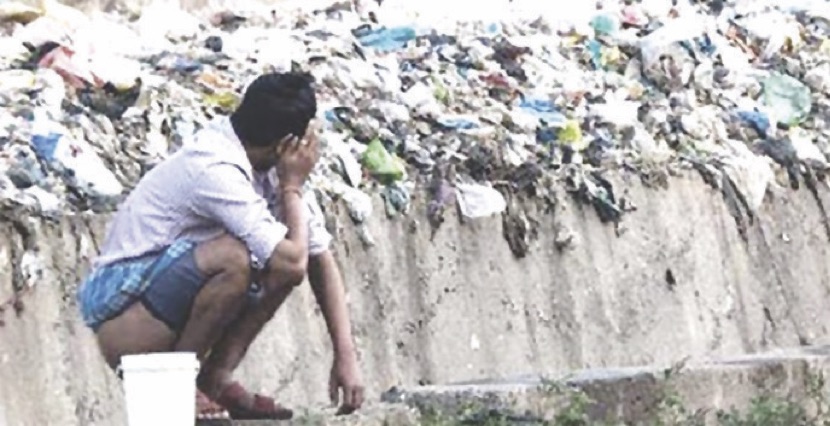
He disclosed that sanitation indicators remain equally bleak. “Only 46 per cent of Nigerians have access to basic sanitation services, and 23 per cent continue to practice open defecation, a behaviour driven less by tradition than by lack of alternatives. Hygiene practices reveal stark inequalities: only 17 percent of households nationwide have basic hygiene services, and states differ dramatically. Residents of Rivers State are 20 times more likely to access hygiene facilities than those in Edo State.
“Despite national campaigns to end open defecation, progress has been slow. Only two states, Jigawa and Katsina have been declared open defecation-free (ODF). Jigawa achieved this in 2022, while Katsina followed suit in 2023. But 34 states and the Federal Capital Territory still fall short of the mark. Even in the southwest, long seen as more progressive in health indicators, only two local governments one in Osun and one in Ogun have attained ODF status.”
Adding, Director of Community Mobilisation and Hygiene Education at the Oyo State Rural Water Supply and Sanitation Agency (OYORUWASSA), Adegoke Ayodele, these are success stories that must be built upon. But he admits that the pace of progress remains far too slow.
“Health facilities, the cornerstone of public health delivery, perform only marginally better. While more than half have basic water supply, just 12 per cent provide sanitation services, and only a third offer hygiene facilities. For persons with disabilities, access is even worse, with just 32 per cent able to use improved water sources and 23 per cent having access to improved sanitation. Waste management systems are also inadequate, with only 37 per cent of facilities separating garbage into labelled bins for safe disposal.
“The human cost of these deficiencies is felt in homes and hospitals across the country. One in every ten households surveyed recently reported a case of diarrhoea in the two weeks preceding the survey. Children under five accounted for a staggering 74 per cent of the cases, and diarrhoea constitutes nearly 35 per cent of illnesses recorded in hospitals. These are illnesses that could be prevented with clean water, functional toilets, and basic hygiene facilities.
“Markets and motor parks vital public spaces used daily by millions are equally underserved. Only four percent have basic water, sanitation, and hygiene services, making them hotspots for disease transmission. Even in urban areas, where one might expect better coverage, only seven percent meet basic WASH standards.”
WASH, fundamental human right
UNICEF’s Communication Officer, Blessing Ejiofor, insists that access to WASH is a fundamental human right and must be treated as such by both government and citizens. She emphasised the need for stronger state-level commitments and tailored sanitation strategies for urban centres, noting that “no one should be left behind.” The media, she added, must continue to highlight sanitation issues to ensure they remain a priority on national and state agendas.
Also, Programme Officer at the Oyo State Ministry of Information, Adeola Adewole, echoed this call, urging journalists to amplify conversations around sanitation and drive public demand for improved policies and services.
“Beyond the statistics and expert opinions lies a human story marked by hardship and resilience. Across Nigeria, families in low-income neighbourhoods wake before dawn to fetch water from unsafe sources. Children miss school due to diarrhoea and other preventable illnesses. Women and girls risk their safety seeking secluded areas to relieve themselves. Communities grapple with the indignity of poor sanitation, the burden of disease, and the economic costs of treating conditions directly linked to inadequate WASH services.
“Nigeria stands at a critical inflection point. With its population projected to grow even further, the choices made today will determine whether future generations inherit cities that support healthy living or environments that continue to expose millions to preventable harm.”
Experts say the path forward requires robust investment, policy reform, stronger institutional coordination, and an unwavering commitment to sanitation as a public good. The urgency is clear: without accelerated action, the country risks deepening a crisis whose consequences are already being felt in homes, markets, schools, and hospitals across the nation.
News