Follow Us on Google
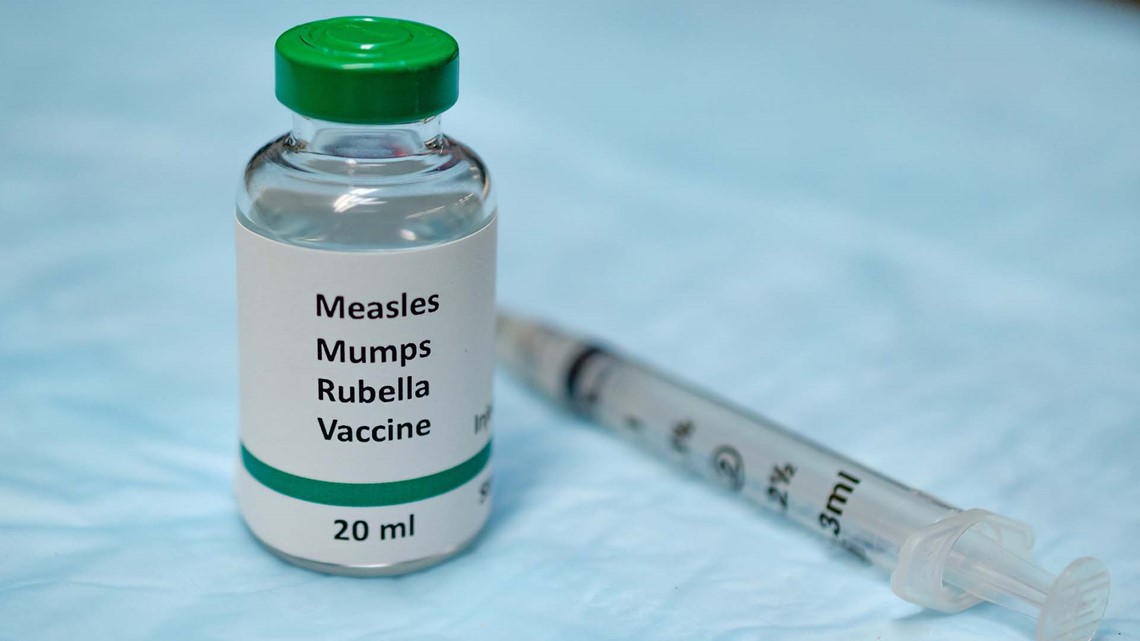
When the Federal University Teaching Hospital, Lafia (FUTH-Lafia), began positioning itself as a centre for vaccine research and development, the ambition was bigger than Nasarawa State.
The vision was to help Nigeria reduce its dependence on imported vaccines, develop home-grown solutions to diseases and strengthen the country’s pharmaceutical and medical research capacity.
But an uncomfortable question is confronting the emerging vaccine ecosystem in the state: If vaccines are available, will people take them?
The question has become increasingly important as health authorities grapple with vaccine uptake in some communities despite the availability of vaccines and repeated awareness campaigns.
The problem is not simply that people do not know vaccines exist. In some cases, vaccines are available, free and proven effective, health workers are ready to administer them, yet some parents still hesitate, postpone vaccination or fail to return for subsequent doses.
Nasarawa, therefore, offers a window into one of Nigeria’s most difficult public health challenges: converting vaccine availability into vaccine acceptance.
The state has recorded significant immunisation successes. In October 2025, more than 1.3 million children were reported vaccinated during the Measles-Rubella campaign. But behind the impressive campaign figures is another reality.
A 2025 study of immunisation in Keffi Local Government Area found vaccine uptake remained suboptimal, identifying knowledge gaps, maternal education, antenatal-care attendance and distance to health facilities among important factors.
A more recent study published in August 2026 on rural communities in Nasarawa similarly identified poor physical access, flooding, inadequately resourced facilities and misconceptions among caregivers as barriers to completing childhood immunisation.
So, the question is not only: Why are people refusing vaccines?
It is also: What is preventing people who want vaccines from getting them?
However, the Human Papillomavirus (HPV) vaccine provides a telling example.
The vaccine protects against HPV infection, which can cause cervical cancer. Yet Nasarawa health authorities raised concerns in 2025 over lower-than-expected uptake despite adequate vaccine availability.
The State Health Educator, Ishaya Amegwa, said the vaccine was available and effective, but uptake was below expectations, prompting intensified outreach.
Mary Ashenanye, Chairperson of the Civil Society Organisations and Local Health Facility Partners Association, also expressed concern over poor uptake and called for stronger awareness campaigns.
One health official, Dr Abdulquadri Idrisu of the Federal University Teaching Hospital, pointed to myths, misconceptions and cultural beliefs as part of the problem. But merely declaring rumours false may not be enough.
“When parents hear claims that vaccines could cause infertility, sickness or other harm, they need trusted voices to engage their fears.”
“Trust cannot be created by a continuous awareness, It is built through conversation, evidence and sustained engagement,” he added.
Dr Stephen Iliya Sasetu, a former Director of Planning, Research and Statistics at the Nasarawa State Primary Health Care Development Agency, recalled the approach used during the COVID-19 vaccination campaign.
According to him, officials engaged Fulani leaders, market leaders, transport workers, motorcycle riders, traditional rulers and other community leaders.
Some leaders received the vaccine themselves and subsequently encouraged their followers to do the same.
The experience demonstrated the importance of trusted community voices.
Traditional rulers, religious leaders, teachers, women’s groups and community health workers cannot be treated as spectators. They are critical to building confidence.
Other News
Not every missed vaccine is refusal
There is another important distinction.
A mother in a remote community may not be rejecting vaccination. She may simply be unable to reach a health facility.
Research involving rural communities in Nasarawa identified physical access as a major challenge, with flooding and environmental damage also affecting health facilities and vaccine delivery.
For such a mother, telling her to “go and vaccinate your child” is not enough.
She may need a mobile vaccination team, transport support, a health worker who speaks her language or reassurance about possible mild reactions.
This means vaccine uptake is both a demand problem and a health-system problem.
The emergence of the Vaccine Research Centre at FUTH-Lafia provides Nasarawa with an opportunity to approach the problem differently.
The hospital launched its vaccine research and development initiative in 2025, while in February 2026 it entered into a collaboration with the National Research Institute for Chemical Technology, Zaria, focusing on vaccine production and research.
The ambition is significant. But the centre should not only ask how to produce vaccines. It should also ask why people accept or reject them.
Researchers can work with communities to determine whether low uptake is driven by misinformation, fear of side effects, religious or cultural beliefs, poor communication, distance from health facilities, social media influence, or a combination of these factors. The answers should be evidence-based rather than assumed.
In building vaccine confidence, Nasarawa State has demonstrated that high vaccination numbers are possible when government, health workers and communities work together.
The challenge is sustaining that confidence beyond campaign periods.
The state needs a broader vaccine-confidence strategy in which health workers are trained to answer difficult questions, traditional and religious leaders are regularly engaged, and community voices are incorporated into vaccination planning.
The media, too, has a responsibility to investigate rumours rather than simply reproduce official announcements.
Most importantly, people should be allowed to ask questions without immediately being labelled ignorant or anti-vaccine.
This is where FUTH-Lafia’s emerging vaccine research capacity can become more than a scientific project.
The state can become a laboratory for understanding vaccine confidence in Nigeria by bringing together scientists, clinicians, epidemiologists, communication experts, community leaders and policymakers to study not only vaccine development but vaccine behaviour.
The ultimate test of a vaccine is not whether it can be produced in a laboratory. It is whether the person for whom it was developed is willing and able to receive it.
A vaccine sitting in a refrigerator cannot protect a child. A vaccine rejected because of misinformation cannot prevent disease. And a vaccine that people cannot physically access is almost as ineffective as one that does not exist.
Nasarawa therefore needs more than vaccines. It needs access. It needs information. It needs community ownership. Above all, it needs trust.
And perhaps the biggest opportunity for FUTH-Lafia’s Vaccine Research Centre is to help build exactly that.