Follow Us on Google
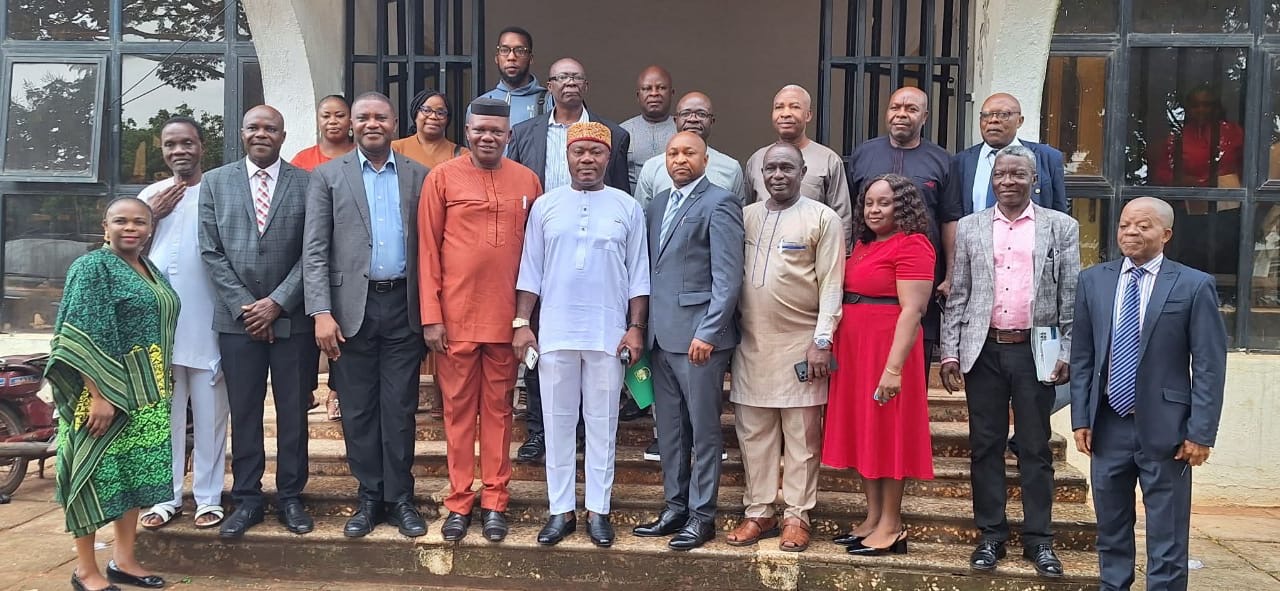
From Felix Ikem, Nsukka
The Vice-Chancellor of the University of Nigeria, Nsukka (UNN), Prof Simon Ortuanya, has charged scholars in the humanities and social sciences to step up as ideological mediators to guide public policy and foster ethical leadership.
Ortuanya gave the charge in Nsukka, yesterday while declaring open the 2026 Hybrid International Conference of the institution’s Faculty of the Social Sciences, with the theme: “Security, Governance, and Sustainable Development in a Fast-Changing World.”
He said that scholars in the humanities and social sciences should bridge the gap between theoretical research and societal realities by helping the public navigate complex social, political, and cultural changes.
“For too long, many of us have been content to observe and generate qualitative and quantitative data about our societies rather than to guide them. We have measured our worth by the number of our publications rather than by the quality of meaning we return to the lives of our people.
“We have allowed others, sometimes, far removed from our realities, to define for us what security means, what good governance looks like, and what counts as development. We have, at times, become consumers of imported frameworks rather than mediators who test those frameworks against the lived truth of our communities. This is a quiet abdication, and our societies have paid for it.
“Humanities and the social sciences scholars’ primary task is to stand between the raw manifestations of reality and the meanings our societies make of them, and to help our people build holistic and honest views of their world.
“No matter how remarkable the innovations our colleagues in the sciences produce, it remains our responsibility to interpret what each innovation means for human agency, for morality, and for our understanding of nature and of the relationships among living beings,” he said.
The VC, represented by Prof Michael Onyia, Deputy Vice-Chancellor, Administration, urged the conferees and conference organisers to reclaim the mediating seat, interrogate every innovation, as well as “measure ourselves by impact, not output”.
In a Lead Paper presentation titled “Unravelling the Triad of Insecurity, Fragile Governance and Poverty,” Prof Damian Odunze said that in a fast-changing world, security, transparent governance and sustainable development are deeply inseparable, adding that to ignore one is completely to undermine the others.
Other News
Odunze, who is from the Department of Criminal Justice and Criminology, Delta State University, emphasised the urgent need for action from the academic community to use their research and policy advocacy to interrogate bad policies and governance.
“Scholars must step out of the ivory tower and transition from passive observers to active participants, using rigorous research and policy advocacy to directly challenge systemic injustice, champion transparent governance, and help build a truly equitable society,” he said.
In a Keynote speech, Prof Christopher Isike, Head, Department of Political Sciences, University of Pretoria, South Africa, said that good security in any country depends on good government anchored on responsibility, accountability, and transparency.
Isike expressed concern over the rising insecurity challenges in Africa, and urged leaders on the continent to join hands together and find a lasting solution to the situation before it gets out of hand.
Earlier, the Dean of the Faculty of Social Science in UNN, Prof Chidi Nzeadibe, said that recent happenings in global geopolitics, governance, security, and human rights, among others, demand interrogation to determine their connection with sustainable or unsustainable development.
“The Faculty of Social Sciences has a long-standing tradition of engaging in the dissection of contemporary issues and challenges in global development. To seek solutions and make prescriptions and policy proposals for effectively dealing with them during our annual conferences.
“This year’s conference sustains that tradition amidst the myriad development challenges bedwelling our country, continent, and world,” he said.
The Dean expressed appreciation to resource persons and participants who participated either physically or virtually in the international conference. He also expressed special appreciation to the VC and the management of UNN for always giving maximum support and attention to the faculty.
Dr Olajumoke Ayan, a Clinical Assistant Professor at New York University, was among other resource persons who presented papers virtually.