Follow Us on Google
From Fred Ezeh, Abuja
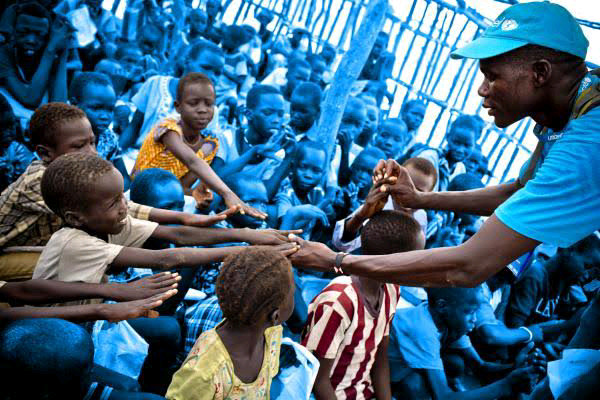
The Country Office of the United Nations Children Fund (UNICEF) has highlighted the achievements of its last five-year strategic programmes/project, 2018–2023, and also set new agenda for the next five years ending 2027.
Highlights of the achievements which were presented to journalists at a two-day media dialogue in Kano, on Monday, indicated that UNICEF had contributed significantly to the strengthening of the basic health care system in Nigeria, especially in areas of nutrition, immunization, birth registration, basic education, as well as Water Sanitation and Hygiene (WASH).
UNICEF Communication Specialist, Dr Geoffrey Njoku, in a presentation, explained that the achievements, as highlighted, were UNICEF’s contributions to different areas and not the total number of achievements made through various government agencies, notably, Primary Health Care Development Agency (NPHCDA), Universal Basic Education Commission (UBEC) and other agencies.
He said the UNICEF’s interventions over the past five years resulted in the vaccination of additional 30 million children in Nigeria against life-threatening diseases through various integrated campaigns, in addition to 58 million children vaccinated against Polio through zero-dose strategy in 100 LGAs and also reached out to undeserved children across 18 states.
He said that UNICEF’s interventions also resulted in administration of Vitamin A to 23 million children, while 7.4 million children under the age of five had their births registered.
Dr. Njoku said UNICEF Country Office was happy that all states of the Federation have successfully domesticated the Child Rights Act, with optimism that they would follow up with actions that would protect the rights and lives of children across Nigeria.
He also confirmed that UNICEF interventions have helped about 2.8 million children living in conflict affected areas to received psychosocial support that assisted them to move on with their lives.
The UN Children Agency, however, confirmed that there are other numerous achievements that were made in the last five years that culminated in the improved health care and education for the children.
“For instance, 1.5 million girls were pulled out of the street back to classes using a new evidence-based approach, while five million children continued learning during COVID-19, using radio, TV and home-based material.
“Additionally, four million Internally Displaced Persons (IDP) and host communities were provided with Primary Health Care (PHC) services, while 600,000 children aged 6–59 months with severe acute malnutrition were admitted for treatment, and 1.3 million children living in conflict affected areas accessed formal and non-formal education,” he said.
Meanwhile, the UN Children Agency said it has set another five years target for itself that would further improve PHC and basic education services in Nigeria.
In a presentation, the UNICEF Communication Specialist, said that UNICEF has designed programmes, apparently, leveraging the successes and “failures” of the last country programme, in order to achieve improved results.
He said the focus of the next five-year Country Programme, 2023-2027, will, expectedly, focus on health, nutrition, education, child protection, WASH and social policy.
The vision, according to UNICEF, is to promote the rights of every child in Nigeria, especially the most excluded, to enable them survive, thrive, learn, be protected and develop to her or his full potential, free from poverty, in a safe and sustainable climate and environment.
UNICEF said its priorities for health care sector is to strengthen the system, provide leadership and governance, affordable health care coverage, expansion of community health workers, reduction of maternal/neonatal mortality, and promote quality of care.
Other target is to increase immunization coverage and reduce inequalities (zero dose children), vaccine logistics management, transformative approaches (3-hubs), eliminate maternal and neonatal tetanus and sustain polio-free status, and also highlight the need for preparedness/rapid response to public health outbreaks.
UNICEF said its expectations is that, by the end of the country programme in 2027, over one million additional children would have been immunized (zero-dose); 15,000 additional community health workers trained, over 1,700 PHC facilities (out of 3,476) in 14 states should meet PHC minimum standards
Other targets are for 50 million children (80% of children aged 6-59 months) to be administered with vitamin A twice a year, 16.5 million children (50% of children aged 6 to 23 months) fed a minimum diverse diet (19 states), 12.5 million women (50% of pregnant women) receive more than 90 iron-folic acid tablets or multiple micronutrient supplements (19 states), and 5 million infants (50% under 6 months) exclusively breastfed (19 states), among other set targets.
On education, UNICEF said it’s targeting 10 million children with formal and non-formal education, 4.8 million children with learning materials, while scale up effort is being made for 21 states on foundational literacy and numeracy. There’s also a target for 12 states to receive improved adequacy, efficiency and equity in education finances.
Several efforts were also highlighted to improve WASH programme, birth registration, social policy and other measures that would, expectedly, improve the health and education fortunes of Nigerian children.