Follow Us on Google
• Residents embrace vaccination
From Olanrewaju Lawal, Birnin Kebbi
When Hajia Nafisa Mohammad, a housewife from Baiti community in Birnin Kebbi Local Government Area of Kebbi State, lost her first child, a baby girl to malaria, she cried uncontrollably. That was several years ago.
Now, a mother of five, when she heard of a media campaign for the vaccination of children against malaria, embarked upon by UNICEF, she reached out to her husband, and soon, they joined several others who saw a great opportunity to save their children from the deadly scourge. The life-saving measure came quite on time for their new born, Bashar Umar who is now one year and two months old.
While narrating her experience, Nafisa, who couldn’t hide her feelings, told newsmen the steps she had taken to save the life of her little child.
“When I heard that UNICEF was embarking on the malaria vaccination for children, I told my husband about it. When I discovered the vaccine, I didn’t hesitate to take my child for vaccination. My son has been given malaria vaccination three times, he is healthy and I am very grateful,” she said.
For Fatimah Umar, mother of three, it was a dream come to reality for her family. She also heard of the vaccination campaign through a radio station. Umar, who also brought her child for vaccination at the Takalau Primary Health Centre, commended the efforts of UNICEF and the state government for making the campaign a reality.
Hajiya Amina Abubakar, a member of the Community Mobilisers of UNICEF, while explaining the efforts being made to carry out the vaccination, told newsmen that they initially encountered resistance from leaders of a particular household before they were convinced to take part in the exercise.
“During our house-to-house mobilisation activities, we listed pregnant women and monitored them throughout their pregnancy period until the time of delivery. We advised them to attend antenatal clinics, and after delivery, we encouraged them to take their children for routine immunisation.
“Sincerely speaking, we often faced challenges from some husbands, as a few of them prevented their wives from going to the hospitals for antenatal or taking their children for vaccination.
“I remember one particular man who threatened to report me to the security agencies, if I ever visited his wife again to advise her on going to the hospital. Despite his threat, I told him I would not stop coming. I did not feel discouraged. I continued to engage with the family until he eventually realised the importance of vaccination. Today, whenever he sees me, we greet each other peacefully,” Abubakar said.
The Chairman of the Ward Development Committee in Takalau area in Birnin Kebbi, Alhaji Idris Umar Mogaji who lauded the efforts of UNICEF, noted that some of them in the committee worked hard, day and night, moving from one house to another, to educate the resistant households leaders to allow their wives and children to partake in the vaccination against malaria.
He said: “We thank God for the vaccination programme as they have started vaccination of our children from five months to 11 months. We are happy because they used to come to our area for this vaccination and this malaria vaccination is back and available at the Primary Health Centre that is closer to my area.
“Malaria vaccine is good, especially during this rainy season because malaria has been attacking children and pregnant women. Since the inception of this vaccine, there has been reduction in malaria cases among children. UNICEF has been supporting us through training and guiding us on how to vaccinate the children. The vaccines are different and because of the awareness, we now know the different vaccines our children should take. If not because of UNICEF’s intervention, we wouldn’t have known the type of vaccine our people should take.
Other News
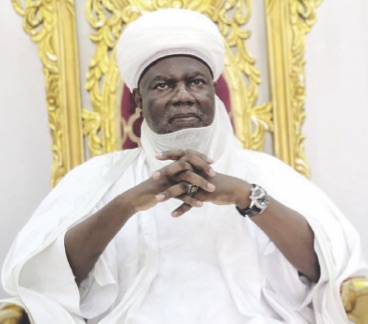
Alhaji Muhammad Samaila Mera, Emir of Argungu, who commended the federal and state governments as well as development partners for making the malaria vaccination available in Nigeria, assured that traditional rulers would do everything to ensure the successful campaign of the vaccination just like the campaign on polio vaccine.
The Emir, who is the chairman of Traditional Rulers Committee on Primary HealthCare/Focal Person on Health, believes that with the aggressive media campaign, sensitisation at homes, schools and markets, Nigerians would be fully aware of the malaria vaccines.
The traditional ruler added that malaria has been around for a long time with other killer diseases, not only in Kebbi but across Nigeria and Africa.
“Unfortunately for us, Kebbi and Ebonyi were adjudged to be the states that are most affected by malaria. But thank God, our governments are carrying out a lot of programmes to mitigate against malaria. I can tell you that our people here have access to the malaria vaccines everywhere in Kebbi.
“The question people asked us when we were campaigning for the polio vaccine was, when is the malaria vaccine coming? The disease has been disturbing us for a long time, but here we are today, the vaccine has arrived.
“As the Emir of Argungu, I have sent messages across the towns and villages after the flag-off of the malaria vaccination. I have spoken with Imam’s and other religious leaders. We need to engage radio and television stations aggressively, produce a lot of jingles and posters to propagate our campaign on this malaria vaccination to nooks and crannies, especially in households.”
He explained that at this period, most of the households are concerned about how to provide food for their families, and cultivate more farms for them, noting that it was a reason there should be more communication on the vaccine to the general public.
“This is so that, whenever our people are going to the farms, markets, schools, they would be seeing our posters and billboards on this malaria vaccination.”
The traditional ruler also expressed the hope that “if we can print out large number of exercise books with the inscription on how to take malaria vaccines which should be distributed in our schools, it will go a long way to help us because if the parents see the books, they would be fully informed and their children would be telling them the dates for the next dose of the vaccine.”
While appealing to the public to take advantage of the opportunity that the vaccination provides, Mera advised that they should know that the vaccine is free, and available at various centres.
“I want to appeal to parents and guardians to take advantage of this programme. They should also know that there are vaccines for many of these killer diseases, including hepatitis which is very dangerous.
“Gone are the days when our people would be blaming their family members for the sudden death of their infants and other children. Therefore, let us take this opportunity seriously, the vaccine is effective.
“You remember, when we started Polio vaccination, we received a lot of criticism. Some people said that the vaccine would hamper the fertility of the children. But we have evidence that proved them wrong. So, let us go out en masse and take this vaccine for our children,” the Emir said.