Follow Us on Google
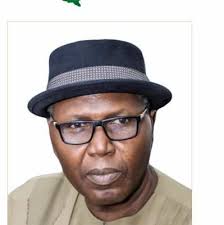

Last week, Governor Yahaya Bello of Kogi State presented Femi Fani-Kayode (FFK) as a prized catch for his party, the All Progressives Congress (APC). After several months of hurling insults at the APC and its national leader (our President, not the other one) from the Peoples Democratic Party (PDP), Bello said the Osun politician slunk into an APC gathering and begged to join the party he has hitherto been rubbishing. Or rather, to rejoin the party, since he was a foundation member of the APC.

Once again, FFK has done a volte-face and easily got away with it.
Many of us think FFK gets away with constantly changing parties because Nigerian political parties are not ideologically divergent. They do have a point; after all, majority of those who ruled Nigeria for 16 years under the PDP are ruling Nigeria today under the APC banner. But this fact does not fully explain the FFK phenomenon. To understand Femi Fani-Kayode’s game, one must consider his sound liberal education, his experience of politics and law under his father’s roof, and the fact of Nigerian politics being ideology- blind.
FFK’s grandfather was a Cambridge-educated lawyer, a thoroughgoing advocate who was eventually promoted to the bench as a judge. His father, Remi Fani-Kayode, was also a Cambridge-trained lawyer.
Fani Power, as he was known, was able to match his own father’s exploits in law, earning for himself the distinction of Queen’s Counsel (equivalent of today’s SAN). He was also a popular grassroots politician who contested and won elections. Although a founding member of Chief Obafemi Awolowo’s Action Group (AG), he first defected to the NCNC to lead the opposition in the Western House of Assembly, then teamed up with a rump of AG dissidents to wrest power from Awo. He was Deputy Premier and staunch member of the rebel group that aligned with the ruling Northern Peoples Congress (NPC) to give Chief Awolowo a run for his money.
Although FFK received the exact same education (Cambridge-trained lawyer) as did his father and grandfather, it is safe to assume that he felt intimidated by the credentials of his forebears. He has not been able to replicate the hard work necessary to lift himself up in the bar or to be uplifted to the bench.
Although he prides himself as a politician, he is clearly a paperweight. His capacity to replicate his father’s popular grassroots magic, by contesting an elective position from where he can actually influence lives, remains doubtful. Thus, at the rate he is going, he will not be able to leave an argument that will be cited in our law courts and does not appear to have the capacity to return to Ile-Ife to contest an election.
However, as we say in Nigeria, “he has tried.” It has taken FFK many years to come into his own, using his liberal education to find a career in politics (like his father) while wearing the tag of a legal mind (like his grandpa). Those who go to Ivy League schools are taught to demonstrate clarity of thought and eloquence.
FFK embodies the best of Ivy League education in that respect. He is in business, armed with three tools of the trade: a caustic tongue, an authoritarian pen, and an Oxbridge diction. Above all, FFK is fully established as a leader of a school of modern Nigerian politics.
Members of this school are not grassroots politicians, those who return to their roots to fight and win elections. This is why their method of jumping ship is neither complicated nor coy. Grassroots politicians go to great lengths to create legal pathways or win public sympathies before they abscond. Many instigate a crisis in their party to allow them to legally decamp. Some jump ship after losing at party primaries. Others mobilize their “people” to “beg” or “persuade” them to leave for greener pastures. Legislators resign to follow a new governor from the opposite camp. President and governors draw away strong opposition with juicy public appointments. They could also destabilize opposition parties, using surrogates to take over opposition party structures and thereafter stay comfy with one leg in power while the other chokes the neck of the opposition.
Compared to grassroots politicians, politicians of the FFK school are a breath of fresh air. They are transparent in their game, authentic, candid, and frank. With them, there is no coyness and none of the art of desperate concealment that grassroots politicians master and deploy to pull wool over our eyes.
I first encountered FFK’s unabashed political maneuvers in July 2003 when he came to the State House, Abuja, to become an attack dog for President Olusegun Obasanjo.
I was a member of the State House Office of Public Communication under the quiet and efficient professional, Mr. Ad’Obe Obe, later succeeded by the public intellectual, Dr. Stanley Macebuh. The Office explained the work of the Obasanjo presidency to a sceptical public. We went about the task by deploying as much fact-based information and data as we could dig out from reticent MDAs, where OBJ’s revolutionary programmes were being implemented. We thoughtfully packaged what we considered as monumental achievements of the Obasanjo presidency and presented them in the brand-new State House website that Obe established, argued them in rational public discourse, and documented them through tremendous back-end research done in a different department by first-class librarian, Nyaknno Osso. In essence, we quietly intervened in public discourse, offering sober alternative but authoritative perspectives and assembling important documentation that explained the background and impact of government’s public policy decision-making, programmes and projects. We usually had the last word because our intervention was packed with the power of information, facts and the truth.
“Challenge thoughtfully and with facts, not noise,” Obe used to admonish. We woke up one morning to find that a regiment of propaganda paratroopers stormed the Villa, ably commanded by the son of Fani Power. I likened it at that time to a band of agberos storming and taking over the quietly efficient operations of Ekene Dili Chukwu Transport, complete with dashing touts lustily blowing their vuvuzelas. Alas, I also see a lot of this in my home state today. But guess what? Our Aso Rock principal must have been more impressed with the noise because, as Obe and Macebuh struggled not to sink in the shark-infested waters of Aso Rock politics, FFK was promoted to full cabinet rank and handed over the Aviation portfolio, after three years of socking it to OBJ’s critics.
In the beginning, FFK created an alternative Office of Public Affairs and took charge. He apparently believed, and many politicians thronging the corridors of power to curry favours agreed with him, that we were too tame, too intellectual, and too objective to effectively shield the principal from his “rabid” critics.
I watched a similar scenario play out during the Goodluck Jonathan presidency when Dr. Doyin Okupe, a medical doctor, arrived to teach my good friend, Dr. Reuben Abati, how to knock sense into the head of government critics. Today, the trio of Lai Mohammed, Femi Adesina and my friend, Malam Garba Shehu, appear to be disciples of this school – they leave no room for vuvuzela guerillas to steal in and share the spoils. Or, as the then Minister of the FCT, Malam Nasir el Rufa’i used to brag, they “take no prisoners.”
There are two takeaways from the FFK game, for politics and for public communication.
At the end of the day, every leader wants to “leave a legacy” that history uses to judge them kindly. It is a matter of irony that, if you were to search for evidence of what the Obasanjo administration was about, you would come face to face with conclusions drawn from the dedicated front and back-end work of Obe, Macebuh, and Nyaknno Osso. The Obasanjo Presidential Library, for instance, is today a goldmine for researchers. Contrariwise, you will also find absolutely nothing from the noise that was handsomely rewarded during the same period.
Secondly, it is also beginning to look as if grassroots politicians who favour noise over professionalism end up losing sleep after their tenure. They must hire spokespersons for life to continuously explain what they could have thoughtfully packaged with public funds to answer the hard questions when history calls – assuming that they were good governors in the first place.
One of the most pathetic news clips I watched recently was of President Jonathan at a book launch asking his ministers how many new universities were established during his administration and none of them could give the right number.
Vuvuzela Political Game, the kind that FFK has popularized, is not a smoking gun in public communications. It is a smokescreen.