Follow Us on Google
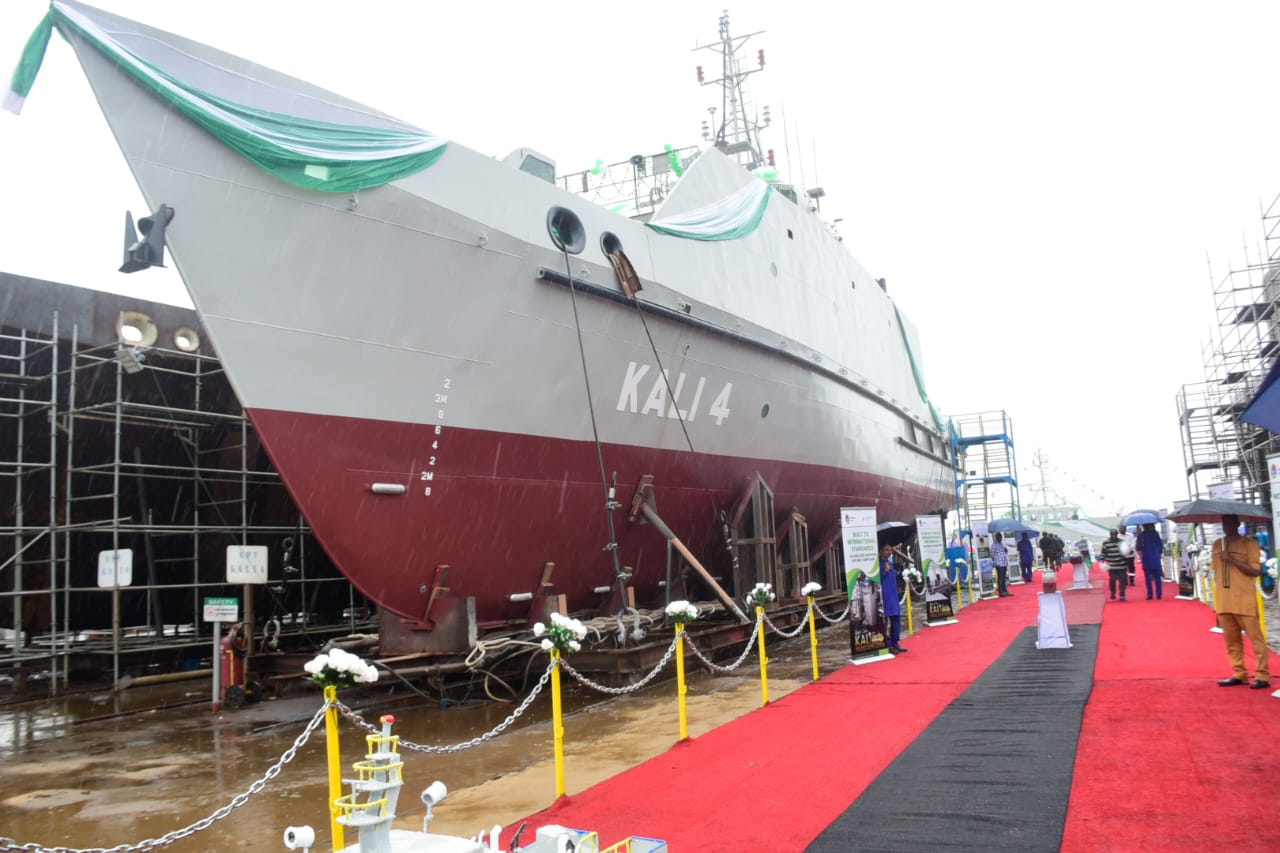
The Nigerian Navy has taken a major step in strengthening its maritime defence capabilities with the unveiling of the state-of-the-art SSV-KALI 3 vessel, built locally in Delta State.
The indigenous security support vessel represents a major milestone in Nigeria’s efforts to secure its waterways, protect vital energy assets, and combat maritime crimes such as oil theft and illegal bunkering.
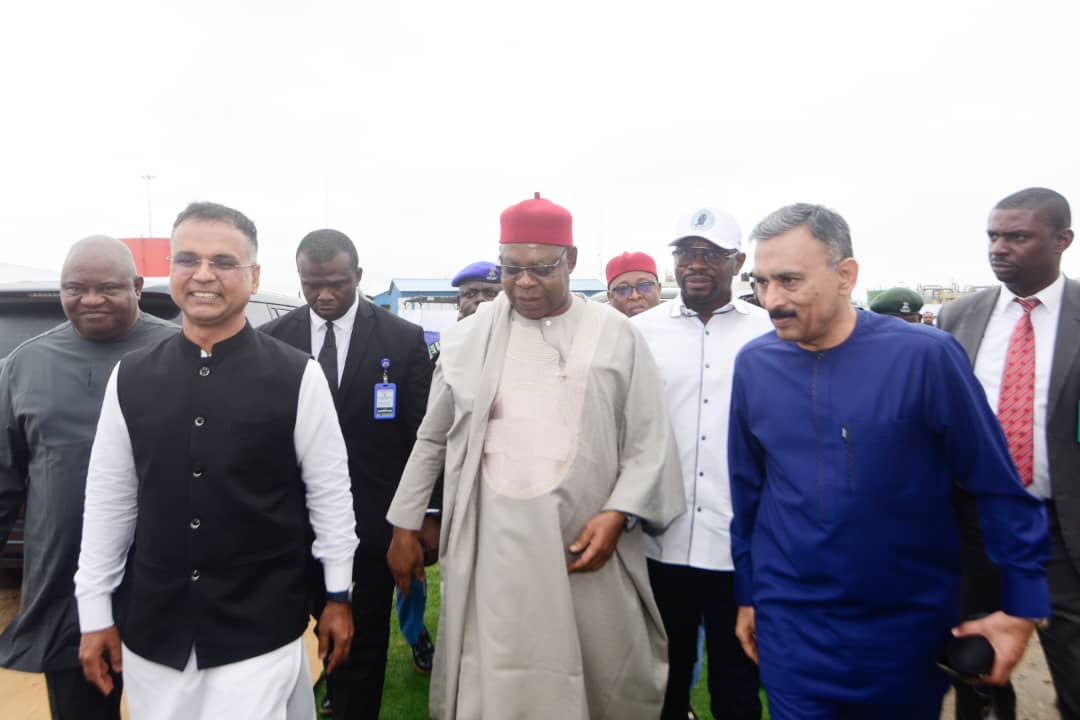
Chief of Naval Staff, Vice Admiral Idi Abbas, yesterday inducted the first of 10 multi-million-naira SSV-KALI 3 vessels to be built under a Memorandum of Agreement between the Nigerian Navy and Sterling Oil Exploration and Energy Production Company Limited (SEEPCO).
The vessel, built by SEEPCO in collaboration with the Nigerian Navy, was deployed to Nigerian waterways at Yade Barge, on the Niger River bank at Asemoku Jetty, Okpai, in Ndokwa East Local Government Area of Delta State.
Inducting the state-of-the-art vessel into the fleet of the Nigerian Navy, Vice Admiral Abbas said the occasion was a concrete expression of how the strategic partnership between the Nigerian Navy and the private sector could secure maritime business, protect peace and energy assets, and support increased crude oil production.
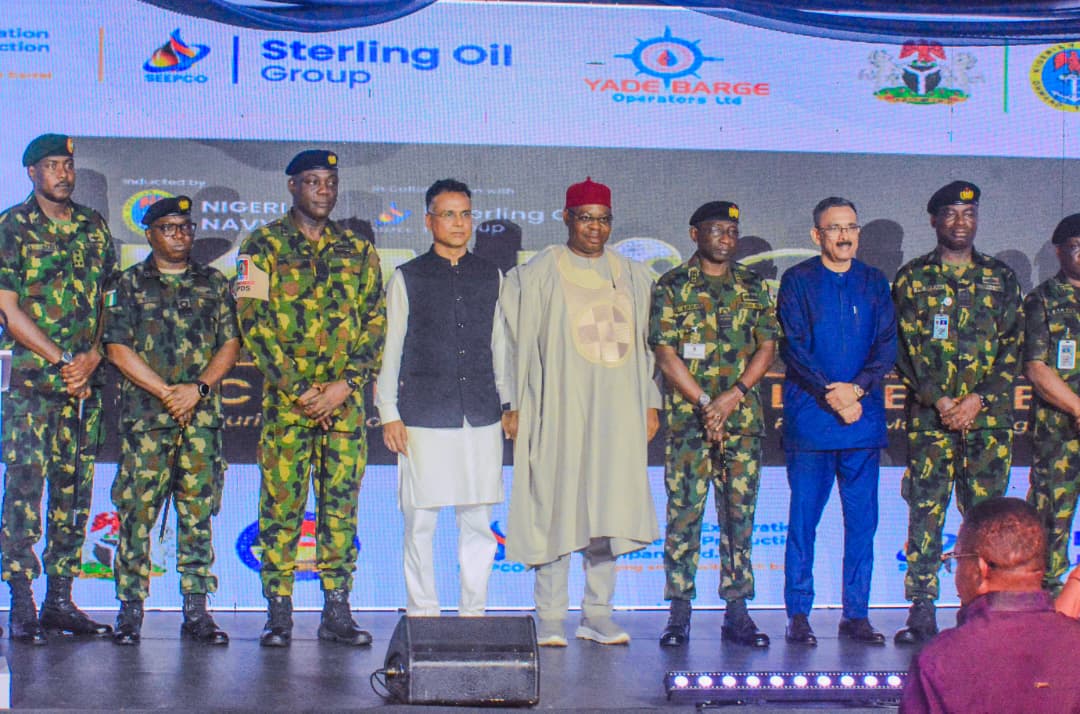
“The partnership is governed by a Memorandum of Agreement under which Sterling Oil Exploration and Energy Production Company Limited (SEEPCO) will provide 10 private maritime logistics vessels while the Nigerian Navy will deploy personnel aboard them for maritime security purposes.
“As the first of 10 planned vessels, KALI 3 is expected to drive the translation of the partnership from strategic intent into operational capability.
“The significance of this partnership must be understood within the wider context of Nigeria’s national security and economic priorities.
“The scale and complexity of today’s maritime environment demand a coordinated effort that combines public authority with private-sector capacity.
“Private investment cannot flourish without security, regulatory certainty and freedom from criminal interference.
“Thus, strategic collaboration of this nature allows both sectors to combine their comparative strengths without compromising statutory authority or corporate responsibility.
“This is particularly important because our offshore domain contains critical energy infrastructure and other strategic assets vital to our economic prosperity.
“Therefore, any disruption to crude oil production affects far more than an individual operator; it weakens government revenue, undermines investor confidence and constrains national development.
“Protecting offshore assets is therefore not merely a commercial requirement, but an essential component of Nigeria’s economic security and a prerequisite for the sustainable growth of the Blue Economy.
“The commissioning of KALI 3 comes at a particularly consequential moment. Since the launch of Operation DELTA SENTINEL in January 2026, the Nigerian Navy has intensified intelligence-led surveillance, patrols, interdiction operations and inter-agency coordination against crude oil theft and associated crimes across the Niger Delta and its maritime approaches.
“These sustained operations have restricted the freedom of action of criminal networks, improved confidence in production corridors and helped create a more secure environment for legitimate oil and gas activities,” the naval chief said.
According to current official statistics, Nigeria recorded an average crude oil and condensate production of approximately 1.735 million barrels per day in June 2026, the highest level in 74 months.
Crude oil production alone reached 1.56 million barrels per day, equivalent to 104 per cent of Nigeria’s OPEC quota.
Other News
The CNS said the positive trajectory reflected the combined impact of government policy, industry investment, and sustained Nigerian Navy operations.
He expressed delight that the Nigerian Navy’s operational successes had contributed to the conditions necessary for improved national revenue and renewed investor confidence.
Vice Admiral Abbas said KALI 3 must therefore be seen as part of a broader effort to consolidate these gains and sustain the upward momentum.
He commended the management of SEEPCO for its foresight, confidence, and sustained investment in maritime security and local capacity development.
“Your willingness to partner with the Nigerian Navy reflects an understanding that maritime security is a shared national responsibility requiring structured cooperation between government institutions and responsible corporate organizations,” he said.
He encouraged other operators and maritime stakeholders to draw appropriate lessons from this initiative and invest responsibly in arrangements that strengthen collective security and protect legitimate production.
He assured stakeholders that the Nigerian Navy was ever ready to collaborate with willing partners to deepen maritime security, protect Nigeria’s maritime interests, and secure critical assets on which the national economy depends.
In his remarks, Delta State Governor, Rt Hon. Sheriff Oborevwori, expressed pride in the fact that the gigantic vessel was designed and fabricated in Okpai, Delta State, saying that the development validated his administration’s commitment to creating an enabling environment for businesses to thrive.
Governor Oborevwori, who was represented by his deputy, Sir Monday Onyeme, said the SSV-KALI 3 would add value to the state’s human capital, technical expertise, and industrial capacity to produce sophisticated assets for strategic sectors of the economy.
“It will strengthen maritime security, help protect oil and gas assets, and support the fight against oil theft, illegal bunkering and other maritime crimes.
“Let the SSV-KALI 3 stand as a symbol of what we can achieve when government, indigenous enterprise and our security institutions work together in the national interest,” the governor said.
He urged the operators of the vessel to maintain the highest standards of professionalism, discipline, and safety.
While congratulating the management of SEEPCO and the Nigerian Navy on the remarkable achievement, Oborevwori reiterated the government’s commitment to ensuring a secure operating environment essential for investment, production, and economic growth.
He, however, said that the state remained open for business and that “we will continue to work with investors, security agencies and other stakeholders to sustain the peace and security required for businesses to thrive”.
Speaking separately in a welcome address, SEEPCO Vice President, Mr Sandeep Singh, and Mr Raj Bhargava gave a historical background of how the company began oil exploration in the state in 2010, when it depended on third-party barges for crude oil exportation.
The duo said the vessels were being delivered in collaboration with the Nigerian Navy to bolster maritime safety and protect personnel guarding the country’s waterways.
According to them, the solid partnership with the Nigerian Navy paid off in 2011 when the process began; hence, “we decided to give back to the Navy that have given us almost support and maritime security for our oil exploration operations.”