Follow Us on Google
From Okwe Obi, Abuja
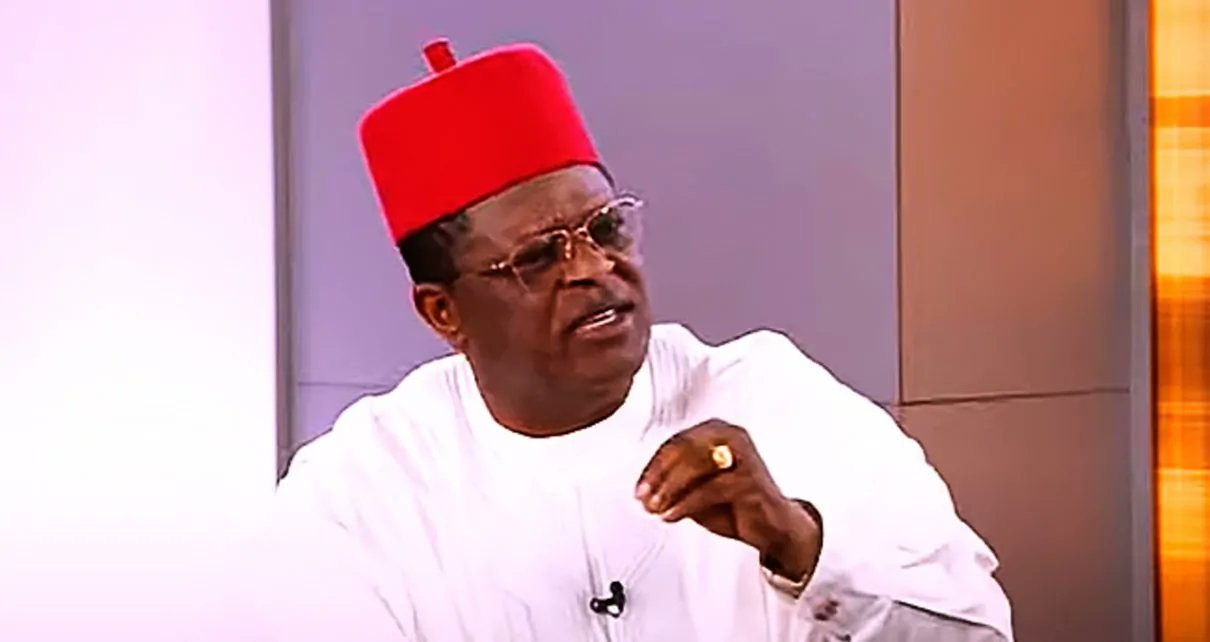
Women Advocates for Responsible Governance (WARG), Women for Justice and Institutional Integrity (WJII), Coalition of Patriotic Nigerian Women (CPNW), and National Women Alliance for Rule of Law (NWARL), have told Tracy Ohiri, to provide evidence contractual agreement in a ₦24.5 million deal involving the Minister of Works, Dave Umahi.
Also, at a joint press conference yesterday in Abuja, they called for a strict adherence to due process over allegations circulating against the the former governor of Ebonyi State.
This is even as they described Ohiri’s accusations as lacking documentary backing and urged Nigerians to allow the courts determine the facts.
WARG National President, Amina Yusuf, said the organisations were compelled to speak out because of what she described as an attempt to weaponise unverified claims.
Yusuf said: “We are outraged not because a woman spoke, but because reckless allegations are being amplified to destabilise governance without proof.
“Nearly ten years later, there is no contract, no invoice trail, no formal demand letter, no court filing. Instead, we are presented with emotional videos. Governance is not theatre.”
She questioned why, if the claim was genuine, there had been no documented effort at civil recovery or legal action in the immediate years following the alleged transaction.
“Public discourse must not replace legal procedure,” she added.
Echoing that position, WJII Executive Director, Halimat Bello, stressed that institutional credibility rests on proof and process.
Other News
“The minimum threshold of commercial credibility has not been met. A transaction of ₦24.5 million cannot exist without documentation.
“If such supply truly occurred, where is the acknowledgment? Where is the procurement structure? Where is the civil recovery suit?,” she questioned.
Bello warned that emotional narratives should not overshadow legal standards, noting that sensational approaches risk eroding public trust in legitimate grievances.
From a national interest perspective, CPNW Boss, Folake Adeyemi, described the allegation as inconsistent with established commercial practice.
“It is implausible that a multi-million naira supply would proceed without written agreement, advance payment, arbitration, legal notice, or litigation for nearly a decade,” she said. “If this were purely about debt recovery, the appropriate legal remedies would have been pursued long ago.”
Adeyemi cautioned that distractions rooted in unproven claims could undermine focus at a time when critical infrastructure projects are ongoing under the supervision of the Works Ministry.
On her part, Dr Grace Onuoha of NWARL drew attention to the constitutional implications of trying allegations in the court of public opinion.
“Public officials are accountable, but accountability must follow lawful procedure,” Onuoha said. “File a claim. Submit documentation. Present evidence. Allow judicial determination. Nigeria cannot operate on viral verdicts.”
The four organisations maintained that their intervention was guided by principle rather than personality. They reaffirmed the presumption of innocence and called on Nigerians to resist what they termed “trial by ambush” or reputational warfare conducted outside established legal channels.