Follow Us on Google
By Adebare Oluwaseun
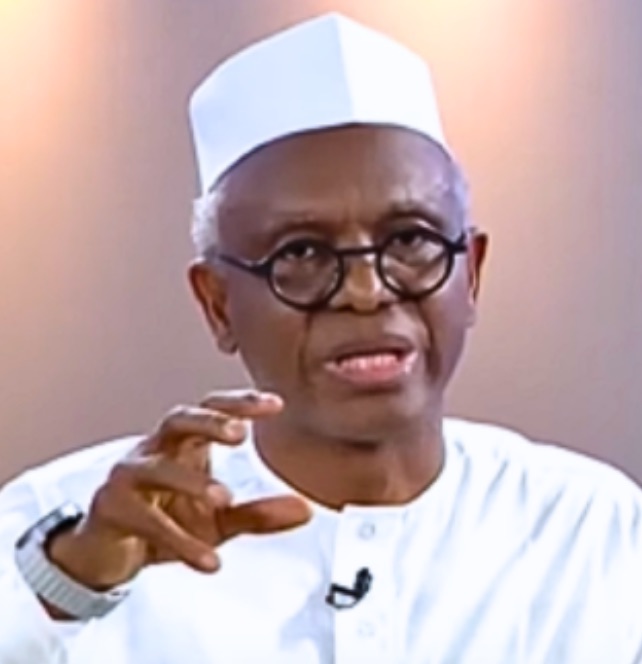
In the theatre of Nigerian politics, few spectacles are more distasteful than the desperate scramble of yesterday’s men to claim credit for the achievements of today’s leaders. This unfortunate habit reared its head again when former Governor of Kaduna State, Mallam Nasir El-Rufai, in his usual chest-thumping style, declared on national television that Governor Uba Sani is his “protégé” and one of the people he “mentored to greatness.”
The claim, made during an interview on Channels Television’s Sunday Politics, is as laughable as it is dishonest. Governor Uba Sani, in his characteristically calm and level-headed manner, refused to be dragged into El-Rufai’s self-serving narrative. Instead, he reminded Nigerians of the leaders who truly shaped his political consciousness: President Bola Ahmed Tinubu and the late Chief Gani Fawehinmi.
This dignified response not only exposed El-Rufai’s baseless claim but also revealed the former governor’s insatiable appetite for relevance. By attempting to appropriate Uba Sani’s rising profile and political credibility, El-Rufai has shown once again why many Nigerians view him as a political opportunist who thrives on bluster and self-promotion rather than substance.
El-Rufai would have us believe that he is a master-builder of men, a magnanimous leader who grooms young talent for greatness. But Nigerians know better. If there is one thing El-Rufai has mastered, it is the art of tearing people down, not building them up. His tenure as governor of Kaduna State was marred by divisive rhetoric, authoritarian tendencies, and policies that deepened mistrust among the state’s diverse ethnic and religious communities. Rather than mentor, he bullied. Rather than uplift, he alienated.
Governor Uba Sani, by contrast, has built his reputation on humility, inclusiveness, and bridge-building. His calm disposition stands in stark contrast to El-Rufai’s combative style. Where El-Rufai sowed seeds of discord, Uba Sani is painstakingly stitching together the fragile fabric of Kaduna’s multi-ethnic society.
It is insulting, therefore, for El-Rufai to casually claim ownership of a man whose political journey was shaped long before El-Rufai stumbled into the Kaduna Government House.
For the record, Governor Uba Sani’s political journey has its roots in Nigeria’s pro-democracy struggles of the 1990s. As a fiery activist and human rights advocate, he worked alongside icons of resistance against military dictatorship. He was not in El-Rufai’s orbit then; instead, he was learning at the feet of genuine leaders of conscience.
Governor Sani himself reminded Nigerians of this history when he pointed to two towering figures as his mentors: Chief Gani Fawehinmi, the legendary human rights lawyer, under whose roof Uba Sani lived during the dark days of military repression. It was in Gani’s house that he imbibed the values of justice, fairness, and courage in speaking truth to power.
President Bola Ahmed Tinubu, whom he first met in 1994 at the home of Dr. Beko Ransome-Kuti, another titan of the pro-democracy movement. From Tinubu, Sani learned the art of progressive politics, coalition-building, and the courage to challenge oppressive structures. These are the men who shaped Uba Sani. Not El-Rufai. Not the man who now shamelessly seeks the appropriate glory he never earned.
Ordinarily, one might dismiss El-Rufai’s claim as the empty boasting of a man desperate to remain relevant. But the danger lies in the narrative he is trying to construct. By branding Uba Sani his “mentee,” El-Rufai is attempting to saddle the governor with his own toxic legacy.
Other News
This is deeply unfair. The Kaduna of Uba Sani is not the Kaduna of El-Rufai. Under Sani’s watch, Kaduna is gradually emerging from the shadows of fear and distrust that El-Rufai left behind. His inclusive style of governance, outreach to all ethnic and religious groups, and prioritisation of education, healthcare, agriculture, and security have brought renewed hope to the people.
To suggest that this progressive agenda is the product of El-Rufai’s mentorship is to rewrite history in the most fraudulent way.
Unlike El-Rufai, Bola Tinubu and Gani Fawehinmi never paraded themselves as omnipotent mentors demanding loyalty from those they helped. They built institutions, inspired movements, and supported ideas bigger than themselves.
That is the tradition Governor Uba Sani represents today. His humility in naming these men as his mentors speaks volumes about his respect for history and his recognition of true leadership. It also highlights the hollowness of El-Rufai’s claim.
If indeed El-Rufai “mentored” Uba Sani, why is there no trace of his divisive tendencies in the governor’s politics? Why does Uba Sani reflect Tinubu’s inclusiveness and Fawehinmi’s activism rather than El-Rufai’s arrogance and disdain for dissent? The answer is simple: because El-Rufai had nothing to do with his political formation.
One cannot ignore the context of El-Rufai’s recent outbursts. Since leaving office, he has embarked on a reckless campaign of self-promotion, often at the expense of his successor and the federal government. From disparaging President Tinubu’s economic reforms to predicting doom for the APC in 2027, El-Rufai has become a loose cannon whose utterances betray frustration and bitterness.
His attempt to brand Uba Sani as his “boy” fits into this pattern. Unable to accept his fading relevance, he clings to the achievements of others, hoping to bask in their light. But Nigerians are not fooled. They know the difference between a genuine leader and a self-advertised one.
Governor Uba Sani does not need El-Rufai’s false badge of mentorship. He stands tall on his own record as a human rights activist, legislator, and now governor. His calmness in responding to El-Rufai’s provocation shows maturity. His refusal to be distracted from his duty to the people of Kaduna demonstrates statesmanship.
El-Rufai, on the other hand, has only succeeded in reminding Nigerians why his era is better forgotten. By trying to chain Sani to his toxic legacy, he has exposed his desperation. But the people of Kaduna know better. They know Sani is nobody’s protégé but his own man, shaped by the enduring legacies of Tinubu and Fawehinmi, not the arrogance of El-Rufai.
History will record El-Rufai as a man who divided. Uba Sani will be remembered as the man who united. And that is the ultimate repudiation of El-Rufai’s hollow claim.
• Oluwaseun writes from Abuja