Follow Us on Google
…Tells govts to fix services, not only salaries
From Bimbola Oyesola,
The Trade Union Congress (TUC) has called on the government to prioritise improvements in public infrastructure and social services as a lasting solution to rising wage pressure among Nigerian workers.
The union said that while salary increases remain important, the real strain on workers’ incomes stems largely from the high cost of accessing basic services that should ordinarily be publicly provided.
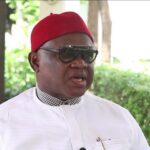
Speaking in an interview with Daily Sun Workforce, TUC Deputy President, Olusoji Oluwole, stressed that sustainable economic relief for workers would depend more on functional systems than periodic wage adjustments.
He explained that investments in key sectors such as security, electricity, healthcare, education, and transportation would significantly ease financial pressure on households.
“If the government can genuinely address the challenges of infrastructure and social services, that alone solves 50 percent of the problem of workers,” Oluwole said.
He added that the conversation around workers’ welfare must go beyond salary increments to include quality of life and access to essential services.
“We should not just look at increasing the pay, we should look at improving the services and the facilities that are available for people to function and enjoy the pay that they have,” he stated.
Oluwole pointed out that many Nigerian workers are forced to spend a large portion of their income on services that should be covered by public systems.
“Why do I need to pay for security, alternative power, private health care or private education for my child?” he asked.
He urged policymakers to consider the cumulative financial burden placed on workers, noting that eliminating these extra costs would significantly increase disposable income.
“Take those expenses out of my monthly pay and imagine how much is going to be left,” he added.
Other News
According to him, the erosion of workers’ purchasing power is driven not only by inflation and exchange rate instability but also by the growing necessity to privately fund basic amenities.
Oluwole maintained that wage increases alone cannot guarantee improved living standards if systemic challenges remain unresolved.
“Today, pay the average Nigerian worker N300,000 naira, it is still not going to be sufficient to live a quality life if those things are not taken care of,” he said.
He emphasised the need for citizens to see tangible value from taxes paid, arguing that improved service delivery would restore public confidence.
On the issue of minimum wage, the TUC leader confirmed that organised labour is advocating for a fresh review in light of current economic realities.
He noted that recent economic developments, including fluctuations in exchange rates and rising living costs, have weakened the real value of wages.
“We need to look at inflation, we need to look at exchange rates, we need to look at current cost of living. There are a lot of metrics that can be used,” Oluwole said.
Beyond wage concerns, he criticised the government for what he described as inadequate consultation with labour unions in policy formulation.
“Most times they don’t. Even after negotiations and agreements have been made in some cases, the government violates them,” he said.
Oluwole warned that the lack of engagement often forces unions into reactive positions, leading to avoidable disputes.
He, however, acknowledged that there have been pockets of progress within some government agencies.
He also expressed cautious optimism about ongoing tax reforms, describing them as potentially beneficial if properly implemented.
“For once, if that policy is allowed to function, I believe it’s one of the best things that has happened in this country,” he said.
Oluwole concluded by stressing that rebuilding public trust would depend on transparency, accountability, and consistent policy execution.