Follow Us on Google
By Abia Onyike
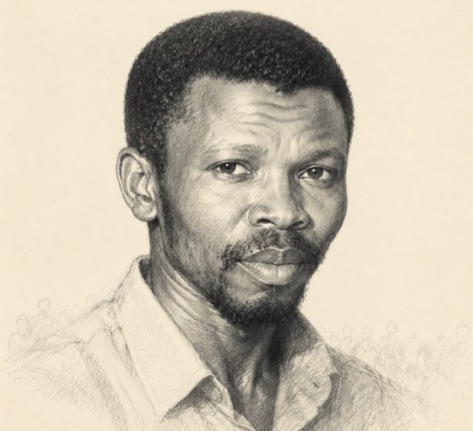
George Okoro Nwachukwu, alias George Shabazz, who passed on recently at the ripe age of 88, was a veteran Journalist and one of the pioneers of modern Nigerian journalism. He was trained by the British in newspaper editing, newspaper production and media aesthetics. He was born in 1934 to the family of Mr. and Mrs. Elijah Okeiyi Okoro of Mbaisara, Amawom Oboro in Ikwuano Local Government Area of Abia state. In the early days, George lived mostly in Port-Harcourt with his parents who originally came from Arochukwu in Abia state. He had his primary education at the Baptist Day Primary School in Port-Harcourt. After his First School Leaving Certificate, George gained admission to Baptist High School also in Port-Harcourt for his secondary education.
He obtained his School Certificate and a Certificate of proficiency in English Language in 1956. George had a high level of brilliance and was granted a scholarship in the British Baptist High School with which he obtained the Advanced General Certificate in History conducted by University of London in 1956. Inspired by his father who was already a Marxist intellectual, George left Port-Harcourt for Lagos in 1957. He worked briefly with Nigerian Customs Service but did not stay long there, because according to him, there were already some early signs of corruption in the service. Secondly, he felt he was not cut out for the civil service. But the most important reason was that George’s father actually told him to look for Nigeria’s great labour leader, Michael Imoudu. He joined Imoudu in the trade union movement and by 1958 was elected the General Secretary of the Pan-African Movement. Then he was employed by the Daily Times Newspapers in 1960. His career in journalism began in the Sunday Times under the editorship of his celebrated mentor, Peter Enahoro aka Peter Pan. He was later sent to London for professional training in Journalism. Within the period, George wrote an article in a British newspaper, the Daily Mirror that attracted the attention of the British establishment about Nigeria. The article was published on the front page of the British paper-the first of its kind from a Nigerian. George was a multi-talented journalist. Back to Nigeria after his training in Britain, he continued with the Daily Times. He was a Roving Reporter, Sub-Editor, Features Editor, Production Editor and Assistant Editor in the Daily Times. He would later on work as Editor, Editor-in-Chief, Managing Editor and Technical Consultant to many newspapers such as Punch, Daily Star, Nigerian Statesman, Abuja Mirror, Leadership, Daily Trust etc.
He was also acknowledged as a highly reputable Editorial Writer and seasoned Columnist, who wrote with the pen-name George Shabbaz. He was pre-eminent as an expert in newspaper design, production and typography. He was popularly referred to as the “King of Layout” by fellow veterans. A foremost veteran journalist, Ray Ekpu described him as the “Newsmans Newsman”. George Okoro was arguably one of the most accomplished trainers of journalists in Nigeria as he had trained a lot of new comers on-the- job, including famous journalists like Tony Momoh, Segun Osoba, Onyema Ugochukwu, Femi Kusa Martin Iroabuchi, Emma Agu, Comfort Obi, Tunde Thompson, Ademola Osinubi, Lade Bonuola, Nduka Onum, Jasper Okoro etc. Apart from training fellow journalists on the job, George taught students of Journalism as Lecturer at the Nigerian Institute of Journalism(NIJ) in Lagos, Times Journalism Institute, Lagos and the International Institute of Journalism(IIJ) in Abuja from 1998 to 2012. At the outbreak of the Nigerian-Biafran war, George was appointed a Foreign Correspondent to the New China News Agency in Beijing. This position led to some complications which landed him in detention on the orders of Gen. Chukwuemeka Odumegwu Ojukwu, the Biafran Head of State. Before the war, George had made a mark as a leading socialist ideologue. George was of the opinion that Biafra should seek an international and diplomatic alliance/sanctuary with the Eastern Super Powers, namely the Soviet Union and China, if they were to see a breakthrough in the war. But Ojukwu maintained that “Biafra would be secured for the free world”.
He was one of those who founded the first Communist Party in Nigeria, according to his own account. He told this writer how he used to go to the University of Ibadan to bring Uche Chukwumerije and his fellow students to organize protests and demonstrations in Lagos. He was made the Speech Writer to the great Labour Leader, Michael Imoudu in 1964. George was one of those who organized the 1964 general strike under the auspices of the Labour Party.
The strike lasted for 14 working days. George Okoro also recalled how he visited Chief Obafemi Awolowo in Calabar prison and managed to smuggle some radical books to him after he was jailed for treasonable felony by the Tafawa Balewa government in 1963. George was in love with socialist dialectics and always maintained that anybody who had not read the three volumes of Karl Marx’s Das Capital and his Theory of Surplus Value cannot claim to being a Marxist.
He was part of the radical forces committed to building an egalitarian society in Nigeria. Those with him in the movement in the 1960s led by Imoudu were Tunji Otegbeye, Uche Chukwumerije, Uche Omo, Ola Oni, Baba Omojola, Eskor Toyo, Sidi Kayan, Emmanuel Ifeajuna, Amaefule Ikoro, Nduka Eze, Emmanuel Ije, Alex Ukut, Olusegun Adebayo, Paul Nwokedi, Jonas Abam, amongst others. It was this group that organized the opposition against the proposed British-Nigeria defence pact in 1961.
After the civil war, George resumed his journalism practice. He was appointed Editor of Daily Star newspapers in Enugu. After some years in the Daily Star, George left Enugu for Owerri. He became the Editor of Nigerian Statesman. The newspaper also had Nduka Onum(the first Political Editor of Punch newspaper as Editor-in-Chief) while Martin Iroabuchi was the General Manager. The Nigerian Statesman was the highest selling newspaper in Nigeria after the Daily Times at that point in time. But in 1987, something dramatic happened. The Military Government headed by Gen. Ike Nwachukwu came up with the idea of selling the Spartans Football Club to business morgul, Chief Emmanuel Iwuanyanwu, who would later rename the club, Iwuanyanwu Nationale.
The move did not go down well with sections of the populace as the Spartans were already making waves in football in the East in the foot steps of the sensational Rangers International Football Club of Enugu. The first part of an Editorial by the Nigerian Statesman on the vexed issue angered the government and pressure was piled to stop the publication of the second part of the editorial.
This was a time when journalists battled the authorities for editorial independence and press freedom. George was ordered not to publish the second editorial but he refused to shift ground just as Onum supported him. They kept their plans to themselves. George went ahead to publish the editorial the following morning and submitted his resignation immediately. He gathered his bags and went back to Lagos. He felt that the government officials were not the only readers of the newspaper and should not dictate the contents to the editorial team. Commenting on the episode, Mr. Obike Uko, a veteran journalist and retired staff of News Agency of Nigeria(NAN), who was at the Nigerian Statesman at the time stated that “George was a courageous man. He stood out tall among his contemporaries. They agreed on the editorial -himself and Onum. They were men of principle. No one sacrificed the other”.
In the late 1990s, I met George again at Abuja. He had just left the Abuja Mirror, then published by Abidina Coomasie. He later worked as Editor-in-Chief with Leadership newspaper published by Sam Nda Isaiah. The last newspaper he worked in was the Daily Trust where he worked as Editor-in-Chief. From there he retired in 2012 and went back home before his death. George was an intellectual encyclopaedia and his death is just like setting ablaze an irreplaceable and strategic library. George is survived by his
wife and five children(three sons and two daughters) and many grand children. May his soul rest in perfect peace.
Abia Onyike.