Follow Us on Google

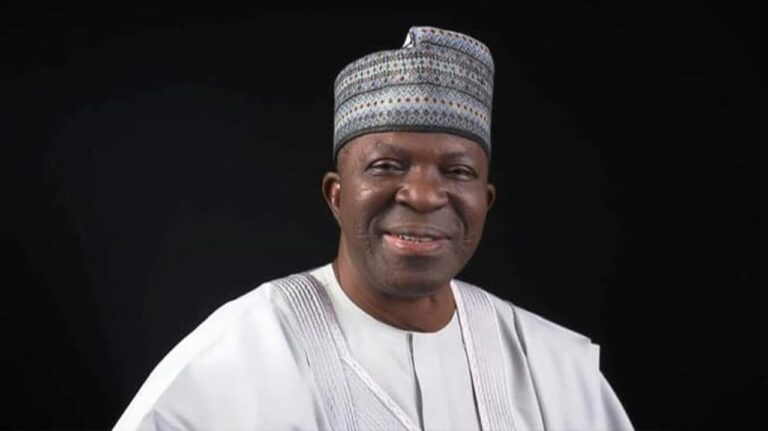
The Minister for Industry, Trade and Investment, Dr. Doris Uzoka-Anite, is seeking improved enforcement of the United Nations Guiding principles on business and human rights, which provides a global standard for addressing and preventing human rights impacts associated with business activity.
Dr. Uzoka-Anite, who made the assertion at the a High- Level forum on Business and Human Rights in the United Kingdom, noted that the ministry’s duty of upholding the standard as established by the UN is demonstrated in the supervisory and enforcement of established work rules and regulations by various regulatory agencies across sectors.
The UN Guiding Principles on business and human rights, is an instrument consisting of 31 principles implementing the UN “Protect, Respect and Remedy” framework on the issue of human rights, transnational corporations and other business enterprises. The minister lamented that the agenda has been left to segmented approach largely by the organized private sector or the general business community and to some extent by the regulators and government at large.
Calling on relevant agencies to ensure that business activities are conducted in manners that would reflect positively in the lives of the working population which is a directive from the president, she explained that the human element in the business value chain is the most important and the most critical. “And so Labour stands out as the most cardinal, especially in todays world.
To this end, “we are presented with the responsibility of ensuring that rights, welfare and sustenance of that most critical element in the business value chain is constantly interrogated with the aim of ensuring that the dignity of the persons who populate the workforce across all sectors, are protected and preserved.”
She applauded the the U.N Guiding Principles, which operate on a three-pillar framework, known as the Protect, Respect, Remedy, noting that
each of the pillars defines concrete, actionable steps for governments and companies to meet their respective duties and responsibilities to prevent human rights abuses in company operations and provide remedies if such abuses take place.
“Governments have a duty to protect everyone within their jurisdiction from environmental and social impacts caused by business practice;
“Businesses have a responsibility to avoid environmental and social impacts wherever they operate and whatever their size or industry, and address any impact that does occur;
“When environmental and/or social impacts occur, both governments and businesses have a duty/responsibility to support victims to access effective remedies through judicial and non-judicial grievance mechanisms.”
According to her, within the manufacturing and production sectors, the entire supervision and enforcement of health, safety and environment (HSE) by the respective MDA’s of government (such as SON; NAFDAC; NUPRIC and Industrial Inspectors) are centered around the protection and preservation of the workforce and his environment from degradation from economic activities.
“The rules protecting and preserving the dignity of the workforce are there in our law books. Maybe not adequate or requiring improvement.”
She also emphasised that the obligations of businesses to ensure that workers are provided with the guarantees to healthcare, insurance, pension and adequate compensation in the event of accident are all in our rule books.”
She however called on improvement in the extent of dutiful compliance by business people and the extent of supervision and enforcement.
Pointing out that scarcity of jobs could encourage human rights abuse in the work place as people may be desperate to keep their jobs even in the face of a workplace abuse, the minister said with more jobs, come freedom of choice and the freedom of expression in the face of abuse. Both of which are cardinals of human rights.
She disclosed that the president Bola Tinubu at his inauguration, highlighted economic growth and job creation as part of his eight-point agenda, adding that Mr. President has since followed that pronouncement with the commencement of the “Industrial Revitalisation” programs.
“The aim of this program is to stimulate economic growth through industrialization by the encouragement and implementation of programs and interventions that can positively drive growth in industrial activities and ultimately to create jobs.
“There are schemes and programs in the works aimed at boosting the capacity of local manufacturers, the establishment of new industries and the encouragement of FDI. All these efforts would be robust and well targeted and are geared towards job creation and wealth creation that can positively impact on the welfare of the common people.
“We are optimistic that these programs will boost productivity and production and when they do, we are hopeful and would demand that the rights of every workforce that would make that happen are adequately protected, preserved and advanced through better pay and welfare,” she said