Follow Us on Google
The Nigerian Institution of Estate Surveyors and Valuers (NIESV) has called for greater fiscal intelligence among property professionals, warning that taxation, inflation, interest rates, regulation and other government policies are increasingly shaping the value and performance of real estate assets across Nigeria.
The Chairman of the National Mandatory Continuing Professional Development (MCPD) Committee of NIESV, ESV (Sir) Charles Oghenero Ebiai, FNIVS, RWA, gave the warning at the 2026 MCPD Seminar of the Kaduna State Branch of the institution.
The seminar, which focused on “Fiscal Intelligence and Risk Integration: The Essential Frontier in Valuation Practice for Nigeria’s Institutional Real Estate,” examined the changing demands on valuation professionals amid growing economic and fiscal uncertainties.
Ebiai said the traditional approach to valuation was no longer sufficient because property markets were increasingly influenced by wider economic and government policies.
“A valuation that ignores these factors may be mathematically correct but commercially incomplete,” he said, stressing that estate surveyors and valuers must understand the fiscal and economic environment in which the property market operates.
According to him, taxation, government expenditure, public infrastructure investment, land policies, development charges and property-related levies can have significant implications for the performance and value of real estate assets.
He said the impact of taxation on the economy could ultimately be transmitted to the property market through changes in investors’ behaviour, development costs, rental values, investment returns and demand for real estate.
“The Estate Surveyor and Valuer must therefore understand not only the property market but also the economic and fiscal environment within which that market operates,” Ebiai said.
He urged practitioners to become better readers of economic indicators and develop the capacity to interpret government fiscal policies, market data, inflation, interest rates and other factors that influence property yields and capital values.
The NIESV official said the profession must move beyond simply determining the worth of properties to providing strategic intelligence capable of supporting investment and institutional decision-making.
He said the modern valuer should be asking questions such as: “What drives this value? What could erode this value? What risks are embedded in the asset? How resilient is the asset under different economic scenarios?”
Ebiai added that professionals must also assess “what fiscal and regulatory variables could materially alter its performance” and determine what information investors, lenders, governments and institutions require to make sound decisions.
“This is the frontier to which our profession must advance,” he declared.
He maintained that institutional investors were increasingly interested not only in returns but also in risk-adjusted returns, making risk assessment an integral part of contemporary valuation practice.
According to him, risks arising from economic shocks, regulatory changes, climate events, technological disruption, tenant concentration, liquidity constraints and market volatility must be properly reflected in professional advice.
“Risk should not be treated as an appendix to a valuation report. Risk must become part of the valuation conversation,” he said.
Ebiai also challenged estate surveyors and valuers to embrace emerging technologies, including artificial intelligence, big data, geographic information systems, automated valuation models, digital property platforms, remote sensing and blockchain applications.
He warned that while technology would not necessarily replace professional valuers, practitioners who refused to understand and use emerging technologies could eventually become irrelevant.
“The machine may process data. But the professional must understand the context, interrogate the assumptions, evaluate the risks and exercise judgement,” he said.
He identified professional judgement, ethics, local market knowledge and sound valuation methodology as areas where practitioners could maintain their competitive advantage in an increasingly technology-driven industry.
The MCPD chairman further urged the profession to position itself to attract greater domestic and international institutional investment into Nigeria’s real estate sector.
Other News
He said investors require confidence, transparency and reliable information before committing capital, adding that the quality of professional valuation advice would play an important role in determining the attractiveness of Nigeria’s property market.
“Our ambition, therefore, must be to build a valuation profession whose reports, methodologies, ethical standards and professional judgements can command respect not only within Nigeria but across Africa and the global investment community,” he said.
Ebiai called for stronger professional education, deeper research, improved access to reliable property data, greater adoption of technology and stronger ethical standards.
He also urged practitioners to improve their capacity to analyse fiscal and economic trends and integrate risk into professional advice to government, financial institutions, pension funds, corporations and investors.
Ebiai said continuous professional development should not be viewed merely as a regulatory obligation or a means of accumulating professional points.
“MCPD is an investment in the future relevance of our profession,” he said.
He urged participants to use the seminar to acquire new competencies and perspectives that would improve the quality of their professional advice.
He called for a fundamental transformation of valuation practice, saying: “Let us move from valuation reports to valuation intelligence. From routine practice to strategic advisory. From traditional methods to technology-enabled professionalism. From compliance to competence. And from competence to global professional excellence.”
According to him, the future of the profession would depend not merely on the size of Nigeria’s property market, but on the quality of professionals capable of interpreting it.
“The future of our profession is not something we should wait to discover. It is something we must deliberately design,” Ebiai said.
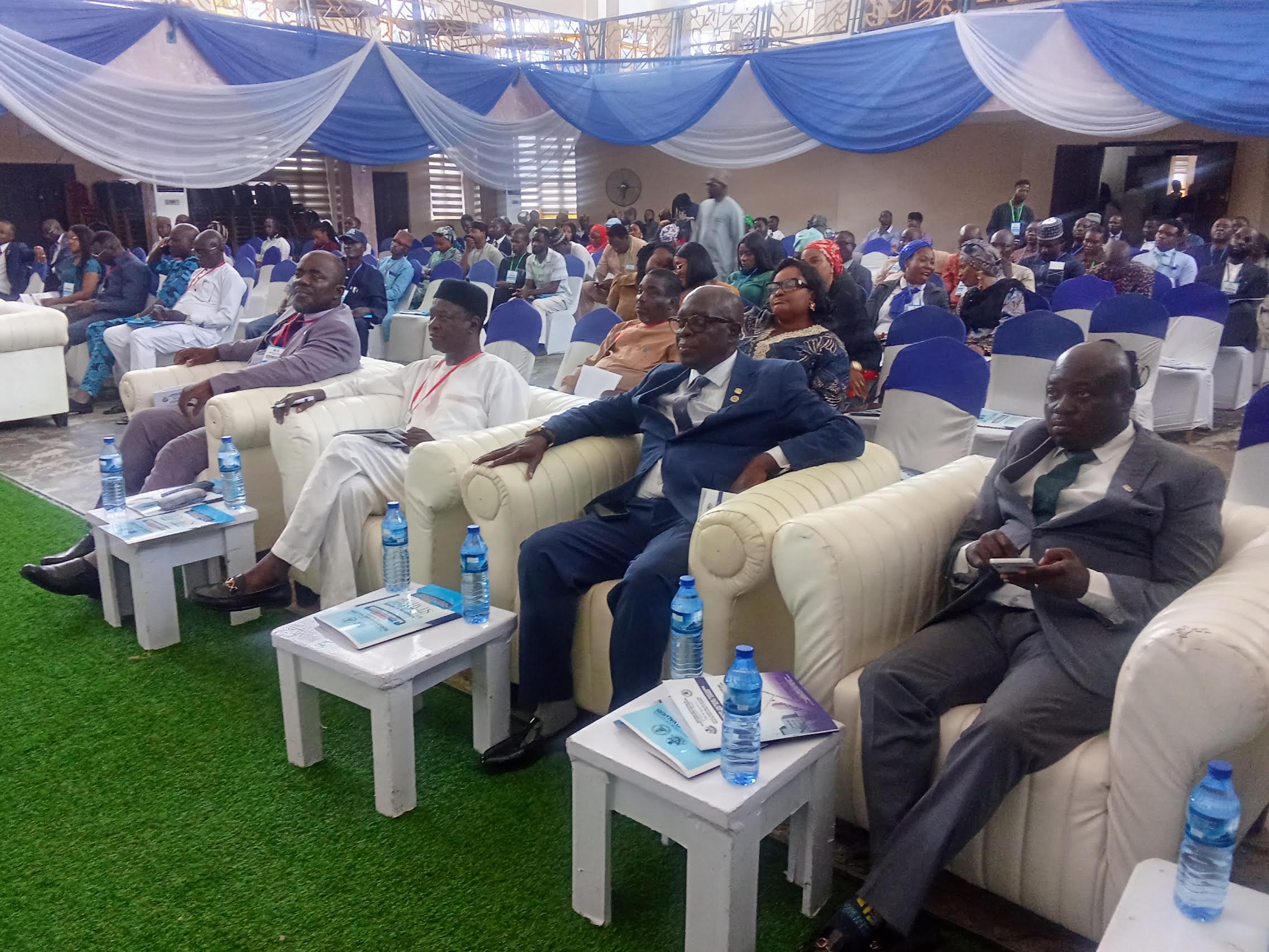
The 2026 MCPD seminar brought together NIESV officials, estate surveyors and valuers, resource persons, business stakeholders and other professionals to examine the changing fiscal, economic, technological and risk landscape confronting institutional real estate in Nigeria.
Earlier in his address, the Chairman of the NIESV Kaduna State Branch, Ishaq Ayodele Bello, said the economic environment demanded that estate surveyors and valuers expand their roles beyond conventional technical evaluation.
“In an economically fluid environment like Nigeria, contemporary practice demands that an Estate Surveyor and Valuer be more than just a technical evaluator. We must serve as strategic fiscal advisors,” Bello said.
He said institutional investors required professionals capable of combining risk analytics, market intelligence and forward-looking economic forecasting.
Bello also emphasised the importance of professional standards in attracting investment into Nigeria’s real estate sector.
“Capital seeks confidence. Investors seek transparency. Institutions seek consistency. Markets seek reliable information. And all of these depend in part on the quality and credibility of professional advice,” he said.
He urged Nigerian practitioners to benchmark themselves against international best practices while remaining grounded in the realities of the Nigerian market.
“The future Nigerian estate surveyor and valuer must be locally knowledgeable, nationally relevant, continentally competitive, and globally credible,” Bello declared.
The chairman commended the NIESV President and Chairman of Council, Bature Ali Muhammad, the National Council, branch elders, past chairmen, members of the Kaduna State Branch Executive Committee and the MCPD planning team for their contributions to the success of the seminar.
He also urged members to participate actively in the branch’s Annual General Meeting and contribute constructively to discussions on the branch’s financial position, social responsibility activities and operational plans for the coming year.
The 2026 MCPD seminar provided a platform for Fellows, Corporate Members, Probationers and Students to deepen their understanding of fiscal policy, taxation, investment risk, technology and other emerging issues shaping Nigeria’s built environment.