Follow Us on Google
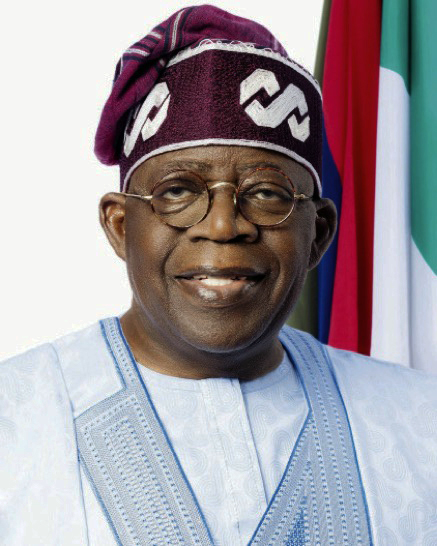
President Bola Tinubu and his Kenyan counterpart, William Ruto, have called for a reform of the African Union (AU) and ensure its financial autonomy. The duo made the call in Nairobi, Kenya, during the organisation’s 5th mid-year coordination meeting, which aimed among other things, to address critical issues of African integration and division of labour. The focus of the meeting was on the AU theme of the year “Acceleration of the African Continental Free Trade Area (AfCFTA) Implementation.”
While Ruto spoke for financial solvency of the Union, Tinubu opposed the seeming scramble for Africa for the second time. “The pan-African movement has always been about sovereignty and agency. First and foremost, chronic dependence, even on well-meaning partners, is inconsistent with the aspiration of independence, sovereignty and agency. And I therefore believe that we must take seriously the recommendations that have been made towards making our organisation one that stands on its feet, and an organisation that is funded by us,” Ruto stated.
No doubt, this is the right time for the AU to stand firmly. Dependence on other continents has been the bane of African unity and development for so many years. At 60 the AU, which succeeded the Organisation of African Unity (OAU), has come of age and should be able to shoulder its responsibilities. The OAU was a bold attempt by the relatively newly independent states in Africa to assume total control of their socio-economic affairs. Its objectives were: to rid the continent of the remaining vestiges of colonisation and apartheid; to promote unity and solidarity among African states; to coordinate and intensify cooperation for development; to safeguard the sovereignty and territorial integrity of member states and to promote international cooperation within the framework of the United Nations.
By 1999, the organisation had almost accomplished its mission of independence for the countries in the region, hence the decision to evolve into a full political union, with an agenda to shift from focusing on liberation movements to creating a politically and economically unified African bloc. That gave rise to the formation of the African Union, which was officially launched in 2002.
Therefore, the AU should build on the feats achieved by the OAU. However, there are factors weighing down the body, including the challenge of good governance, democracy, human rights, economic emancipation and repositioning Africa to keep pace with other parts of the world. A United Nations (UN) report equally indicated that African nations are disadvantaged borrowers compared to the wealthiest European nations.
Some member states also do not keep to their responsibilities to the AU. The Union has a budget of $157.2 million for its operations; $216.9 for programmes and $273.1 million to finance peace support operations. Unfortunately, less than 40 per cent of member states pay their yearly contributions to the continental body. The Union cannot achieve much under a state of financial inadequacy. There is need for member states to take the affairs of the AU seriously. The continent should not depend on the US, UK and other developed nations for its sustenance. AU should be the platform for tackling African problems.
Africa and its leaders have not provided enough templates for good governance and development. The continent is littered with rulers who have overstayed their prescribed term limits and have altered the constitutions of their countries to remain in power perpetually. It is high time the AU put its house in order. Sit-tight culture among some of the leaders on the continent must be discouraged. African leaders should be responsible and exemplary. Let them institute true democracy in their domains and insist on outright rejection of military intervention in any state in Africa. We enjoin African people to always rise and defend their rights whenever they are trampled upon by uncaring and rapacious leaders.
With a population of about 1,433,706,775, based on the latest United Nations estimates, Africa’s population is equivalent to 16.72 per cent of the world’s population. The continent is rich in human and material resources and has no reason to be poor or dependent on other continents. There is need for Africa to overcome its challenges and work towards a prosperous future, focusing on inclusive growth, good governance, and leveraging on the opportunities provided by AfCFTA.
We agree with President Tinubu that the fullness of the integration Africa seeks for prosperity will continue to elude it as long as several of its nation states stand in the midst of violence and war. AU must rise to the challenges faced by the continent, including terrorism and anti-constitutional changes in government. Let the AU leadership pay attention to the instability and conflict in some parts of Africa.