Follow Us on Google

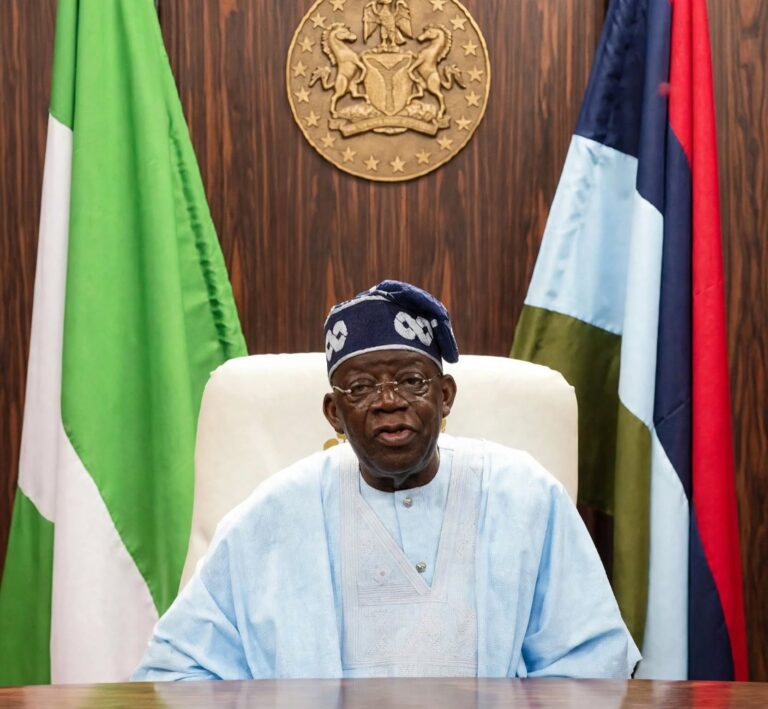
When President Bola Tinubu assumed office on May 29, 2023, expectations were high. He promised to renew the hope of Nigerians in many areas of life. Though his government has made some modest achievements in the past two years, it is still struggling to renew this promised hope.
Some of the success stories of the present administration include the local government financial autonomy, road infrastructure renewal and creation of regional development commissions, which will fast-track socio-economic development across the country. The government has also invested in student loan scheme and poverty alleviation. All these are good efforts, but there is need for strict implementation and more impetus.
In the area of security, there is every need to do more. Within two years, bandits, terrorists and sundry criminals have taken over many parts of Nigeria. The North-East and North-Central are the worst hit. Boko Haram and Islamic State West Africa Province now occupy greater parts of Borno State. They have become more sophisticated.
The terrorists now use drones and improvised explosive devices in their attacks against the people. These attacks have become almost a daily affair. Recently, the Borno State Governor, Babagana Zulum, lamented this state of affairs in his state.
In the North-Central states of Plateau and Benue, it is the same lamentation. Last month alone, some terrorists suspected to be Fulani herdsmen attacked different communities in Plateau State. They killed over 100 people and rendered over 1,800 people homeless.
In the other parts of the country, incidents of kidnapping have not abated. Rather, they appear to have worsened. Many innocent Nigerians have fallen victims. The lucky ones were released after paying huge ransom. Many others did not survive the ordeal.
Between May 2023 and April 2024, the National Bureau of Statistics reported that 614,937 people were killed in Nigeria. Between January and March 2025 alone, at least 2,000 Nigerians were killed in violent incidents, according to SBM Intelligence.
The economy has not fared better. Despite denials and reports to the contrary, Nigeria’s economy has been undergoing some haemorrhage. Although Nigerians believe that petroleum subsidy should be removed, its sudden removal without adequate palliatives to ameliorate its impact led to economic hardship and astronomical rise in the cost of goods and services.
Before Tinubu assumed office in May 2023, the price of fuel was about N185 a litre. Today, it is between N875 and over N1,000 a litre. The prices of essential Nigerian staples like rice, yam, garri, beans and many others have tripled.
The harmonization of foreign exchange was good, but badly implemented. This has led to the depreciation of the value of the naira. The exchange rate which used to be below N500 a dollar before Tinubu assumed office now goes for about N1,600 a dollar.
Other News
The cost of energy also went up. Many companies and institutions pay huge sums of money every month on electricity tariff even when power is not constant. The Federal Government had jacked up electricity tariff for Band A customers from N68 per kilowatt-hour to N209.5kWh in April 2024.
Consequently, many multinationals have shut down operations in the country. In 2023 alone, over 10 of these companies left Nigeria.
This has left many families in disarray as a lot of breadwinners lost their jobs. Hunger and starvation have become the undoing of many citizens. Nigeria is among the 22 countries classified as hunger hot spots in the world. The Food and Agriculture Organisation (FAO) predicts that over 31.1 million Nigerians will face acute food insecurity between June and August 2025.
Last year, there were protests against hunger in different parts of the country. Some people died during stampedes to collect food palliatives. These are all signs that all is not well with the economy.
Rather than sympathise with the suffering citizens, security agents clamped down on them. They killed some hunger protesters last year. Some of these protesters, including minors, were detained and prosecuted. They also used cybersecurity law as an alibi to arrest and detain many people, including journalists.
Under President Tinubu, corruption has not abated. Instead, public officials flaunt ill-gotten wealth with impunity. Profligacy has remained a major problem as scarce resources are wasted on non-essential things. In a season of acute poverty, the government found it more expedient to spend billions of naira on luxury vehicles and houses for some public office-holders and presidential aircraft.
The President has two years to complete his first term in office. He still has enough time to redeem the bad situation and move Nigeria forward. He should prioritize prudent spending and ensure that he reforms the education and health sectors. The budgetary allocations to these two important sectors should be increased.
Restructuring the country and instituting electoral, security, economic and political reforms are germane. The suffering of the masses needs to be ameliorated.
Tinubu should address the lopsided appointments which seem to have tilted so much in favour of his ethnic group. He should also assess his cabinet and remove those not performing well. He should strive to bequeath legacies that will outlive him.