Follow Us on Google

Uunder President Bola Ahmed Tinubu and the ruling All Progressive Congress (APC), Nigerians have experienced an abhorrent failure of governance. Eight years of Muhammadu Buhari was a disaster. In its aftermath, and four years of President Tinubu’s presidency, nationalism, governance, unity, peace and security have foundered progressively. Patriotism is all but dead.
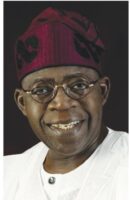
APC’s leadership in the three arms of government – has behaved so capriciously that rule of law and our entire democracy are at stake. Tinubu’s administration has mortgaged the future of Nigerian children, including the unborn. Our lives and our governance modalities are broken. That is sufficient ground to vote them out in 2027.
Under Tinubu’s watch Nigeria has borrowed itself into a huge debt trap; so much so that our national economy and fiscal profile are unsustainable. Presently, Nigeria owes a whopping N160 trillion in debt. Meanwhile, the government has squandered N9.3 trillion saved from fuel subsidy on salaries and other non-capital and non-generative expenses. The government now wants to raid the N270 billion in dormant accounts and unclaimed dividends belonging to private citizens.
As a nation, Nigeria has never been this weak and this exposed. This ex- plains why the government is running national budgets from three fiscal cycles concurrently. Budget padding has become the norm. Due process, savings or the sovereign wealth fund are not their priority. APC has been so fiscally profligate that there is neither a firewall nor a safety net for the national population. And there are no proper guardrails against official malfeasance. Nigeria is now a crime scene. The evidence abound.
Then there is the blatant failure in delivering basic education and primary healthcare, resulting in 20 million out-of-school children and a globally high rate of infant and maternal mortality. Pervasive insecurity nationwide, threatens communities, livelihood, food security, manufacturing and has resulted in 350,000 civilian deaths and over 900,000 internally displaced persons (IDPs).
Overall, the government has failed in its primary responsibility to protect Nigerians. Hunger and poverty stand weaponized. Ungoverned spaces are expanding. Cost of governance and cost of living have spiraled sky-high.
Tinubu’s government is audaciously undemocratic. Constitutional violations abound in its actions. Budget padding and whimsical alteration of legislative bills is now the norm. A case in point, the Presidency altered provisions of the 2025 tax reform bill passed by the National Assembly. The Presidency, by subterfuge, arrogated to itself authoritarian powers like seizing and selling of taxpayers’ as- sets without court orders. This is not just criminality; it is authoritarianism writ large.
All our national development indices now point southwards; 180 million Nigerians are strapped in multidimensional poverty. We have 20 million out-of-school children, the highest globally. A bulk of our national youth population falls within the NEET cadre – Not in Education, Employment or Training.
Tinubu’s Nigeria represents the classical case of leadership hubris and arrogance. Tinubu’s leadership is so fraught with hubris that our national psyche is egregiously damaged. The President’s personal and leadership credentials continue to demarket Nigeria. Bigotry, nepotism and tribalism in governance, appointments, projects and resources distribution has worsened our deep-seated challenges in ways hitherto unimaginable.
Other News
Disconcertingly, the present cadre of leaders does not only display extreme false pride but also a false sense of superiority. Their groupthink deludes them into believing that they know best; they refuse expert advice and often contend that the rule of law is not applicable to them. It’s hardly surprising that the government’s top hierarchy as well as the APC presidential campaign team is replete with public officials with pending criminal cases.
Tinubu’s government has wittingly become fascist. The present administration is driven by precepts rather than best practices. Government’s purpose and possessiveness are tribe-driven. So, despite visible and indisputable infrastructural blight and palpable broad disenfranchisement, such gross domestic disapproval has been muted by bigotry and tribalism.
Tinubu and the ruling APC are the very antithesis of clean governance. What is most troubling is that the leadership seems insensitive or clueless as to how bad things are in Nigeria. They also seem oblivious that price hikes of over 20% on commodities like medicine, food and fuel induce adverse shock on the society.
For most Nigerians, there is no aspirational quality to national life. Indeed, life under Tinubu is short, brutish and cheap. Bloodletting and death becomes us. Things are so bad that, if APC were a manufactured product, it would have been pulled off the shelves and banned for being detrimental to human existence.
Clearly, Tinubu’s governance modality is off-kilter and his administration is so undisciplined that the government has no compassion or moral compass. Misaligned policies elicit toxic legacies. As such, a patent glaring distrust and distance now exists between the Presidency and the national population. This is the result of a perversely broken system, broken lives and Tinubu’s toxic legacy. This is a disaster for Nigeria. The status quo cannot stand. It cannot continue, not when Nigeria faces an existential threat.
Year 2027 will serve as Nigeria’s meeting moment. Presently, most political discourse in Nigeria revolves on bad governance, excessive borrowings and excessive cost of governance; the parlous economy, pervasive insecurity, impunity, blinkered corruption and diametric state capture. These are undemocratic dividends under Tinubu that must end.
Already, public criticisms of Tinubu’s government and open dissent are on the rise. Public anger is also simmering, especially amongst Gen Z youths. Some scrimmages have occurred publicly. The situation seems fragile and ready to snap at which point the anger might spill
into the streets. As things stand, Nigeria runs the risk that an electoral incident, a faux electoral outcome or a mere happenstance, might be catalytic to such an uprising. Those who deem that possibility unlikely are living in a fool’s paradise. They should be thinking of how to avoid or react to the type of violent Gen Z uprising that occurred in Bangladesh in 2024 and Nepal in 2025.
Despite presumed sectional gains and coveted advantages, Tinubu has done enormous political damage to his tribe in the context of Nigeria. Nonetheless, only Nigerians can redress their national plight. As such, Nigeria’s political opposition must rally to the common cause of voting out Tinubu and the APC. Another four years of Tinubu and the APC means that we won’t have a nation called Nigeria; 2027 might be Nigeria’s tipping point.
• Obaze is MD/CEO, Selonnes Consult, a policy, governance and management con- sulting rm in Awka.