Follow Us on Google

From Paul Orude, Bauchi
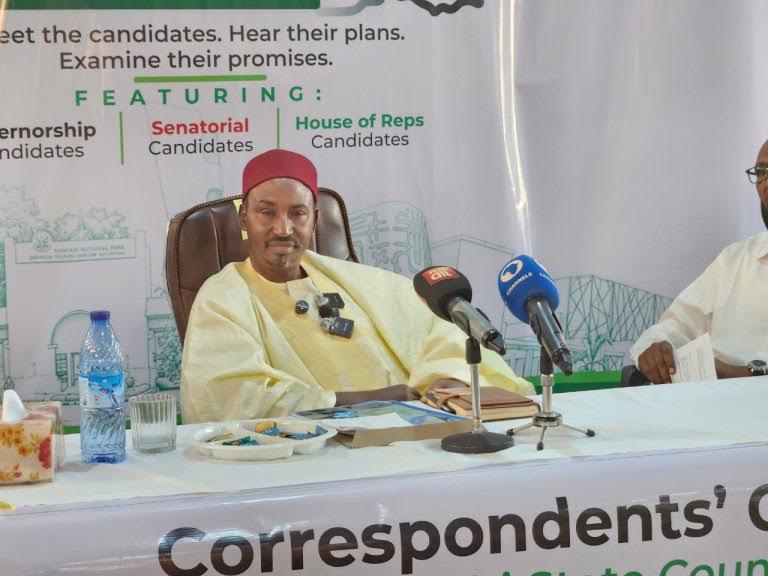
The National Democratic Party (NDC) candidate for the House of Representatives, Bauchi Federal Constituency, Hon Sodangi Adam Chindo, has lamented the high number of out-of-school children in the area, saying it is unacceptable.
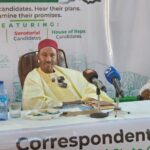
Chindo, who was a guest at the Bauchi State 2027 Interview Series on Tuesday, described the high number of out-of-school children in the constituency as a major concern he would address if elected into the House of Representatives.
He noted that many schools outside Bauchi metropolis were operating without adequate teachers and essential learning facilities.
He proposed collaborating with community structures to identify unemployed graduates who could be engaged as temporary teachers to support schools in their communities, with the beneficiaries receiving stipends for their services.
He said he would sponsor bills that would prioritise reducing the number of out-of-school children while improving the quality of education available to those already enrolled.
Chindo unveiled a five-point development agenda focusing on healthcare, education, agricultural transformation, effective representation and sustainable empowerment of women and youths.
He assured that his proposed legislative agenda was designed to address critical development challenges confronting his constituency.
He lamented the poor state of education, pressure on healthcare facilities, agricultural constraints and unemployment in Bauchi Federal Constituency.
On healthcare, he proposed strengthening secondary healthcare facilities to reduce the increasing pressure on teaching hospitals, which he observed were overwhelmed by patients seeking medical attention.
According to him, improving the capacity of secondary healthcare institutions would enable teaching hospitals to concentrate on specialised treatment and referral services.
On agricultural transformation, the aspirant promised to work with relevant ministries and stakeholders to facilitate soft loans, timely fertiliser support and improved agricultural extension services for farmers.
He expressed concern that agricultural extension services were not reaching farmers adequately, attributing the situation partly to possible funding and implementation challenges.
He pledged to use legislative oversight to ensure that budgetary provisions for agricultural extension services were implemented and that farmers received the necessary support ahead of the rainy season.
On effective representation, the aspirant said his experience in civil society advocacy had equipped him with the knowledge and capacity to contribute meaningfully to national legislation and attract development opportunities to his constituency.
He cited his previous leadership of the Civil Society Legislative Advocacy Centre (CISLAC) and his involvement in legislative advocacy, including proposals seeking an extension of paid maternity leave from three to six months and legislation on mandatory vitamin A fortification of cooking oil.
The aspirant also outlined an ambitious youth empowerment programme under which he plans to train 1,250 young graduates annually in technology-related skills, including artificial intelligence, digital marketing, data analytics and cybersecurity.
He said the programme would provide six months of training to equip beneficiaries with practical skills that could enable them to become self-employed rather than depend entirely on government employment.
For youths without formal education or university qualifications, he promised vocational training in areas such as carpentry, mechanics and welding.
On women’s empowerment, he proposed supporting two women’s groups in each ward, targeting 40 groups, through sustainable economic empowerment initiatives.
He cited the experience of women’s groups previously supported under the Breakthrough ACTION project in Bauchi, which, according to him, had continued their economic activities and community interventions several years after the project’s closure.
He said the women had reportedly mobilised more than ₦100 million among themselves over five years, demonstrating the potential of collective economic empowerment.
The aspirant maintained that his proposed empowerment model would focus on building sustainable economic capacity among women rather than distributing temporary financial assistance that leaves beneficiaries dependent on politicians.
He said the five-point agenda had been documented into a roadmap that would guide its implementation if he secured the mandate of the electorate in 2027.