Follow Us on Google

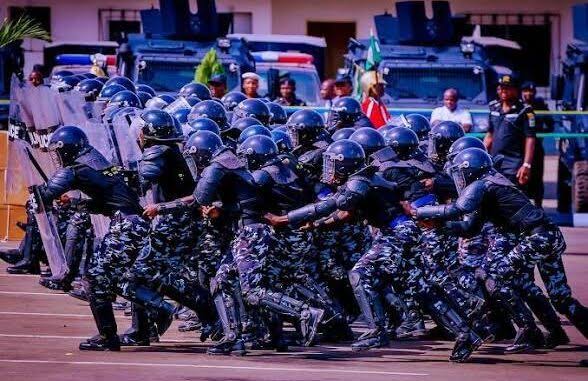
The proposed constitutional amendment allowing states to establish their own police services is only the beginning of Nigeria’s plan to decentralise policing, as a separate National Policing Bill will determine how the system will operate, security policy expert Dr Charles Omole has said.
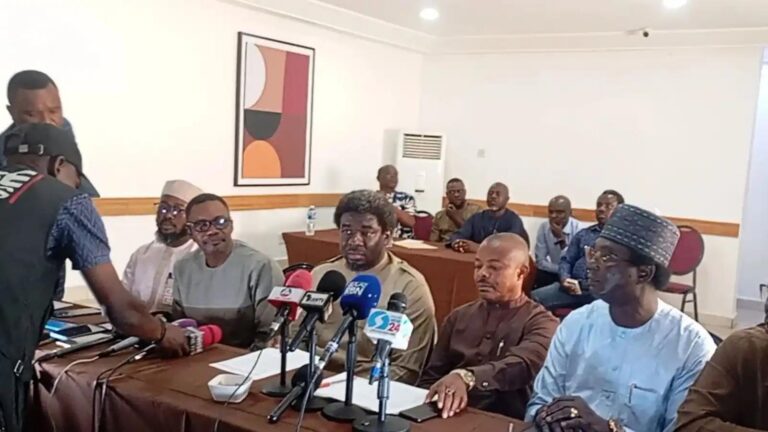
Omole, a lawyer and Director-General of the Institute for Police and Security Policy Research (IPSPR), made the clarification on Channels Television’s Politics Today while reacting to the transmission of the state police bill to President Bola Tinubu for assent.
He is involved in research and advocacy on policing and security sector reforms, with particular attention to the legal, institutional and operational requirements for improving law enforcement in Nigeria. He also previously served as National Security Adviser to the Speaker of the House of Representatives during the Ninth National Assembly.
Explaining the distinction between the two proposed laws, Omole said the constitutional amendment would only provide the legal foundation for states to establish their own police services. The separate National Policing Bill, he added, would contain the details needed to guide their operations.
“This constitutional amendment is not really the, it’s not really the, it’s a big, it’s a big issue, but it’s not really the meats and bones of state policing,” he said.
“This is just allowing state police to exist,” he added.
According to him, the National Policing Bill would define the responsibilities of the different levels of government and establish the limits of their respective powers.
“The National Policing Bill, which is a separate legal entity, that is where all the things will be spelled out in terms of who does what and what states can do, what they cannot do,” Omole said.
He explained that the proposed National Policing Bill could not be considered until the constitutional amendment had been completed.
“So that National Policing Bill cannot be considered until the state police, until the constitutional amendment has gone through,” he said.
Omole also played down the volume of the constitutional amendment, explaining that its primary purpose was to modify the relevant sections of the Constitution to accommodate the proposed policing structure.
“So really, it’s a very small, you know, bill. It’s not voluminous at all,” he said.
“Like I said, it’s simply allowing, you know, changing the appropriate, altering the appropriate sections of the constitution,” he added.
He further explained that the amendment would provide for the recognition of federal and state police services in the country’s constitutional framework.
“It’s not a reference to Nigeria Police Force, would not be a reference in Nigeria Federal Police Service and state police services,” Omole said.
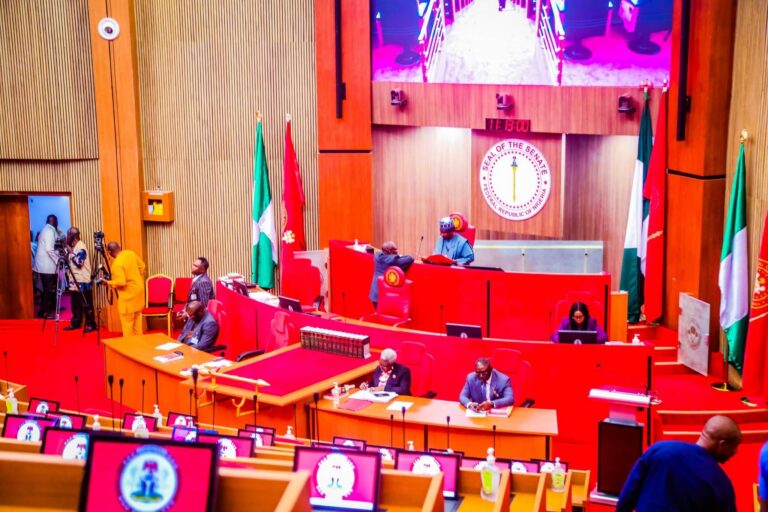
The comments followed the transmission of the Constitution Alteration Bill to Tinubu after all 36 State Houses of Assembly approved the proposal. The approval exceeded the constitutional requirement of at least 24 state assemblies under Section 9(2) of the 1999 Constitution.
Tinubu is expected to consult the Attorney-General of the Federation before deciding whether to assent to the bill.
Meanwhile, the Presidential Working Group on State Police, chaired by the President’s Chief of Staff, Femi Gbajabiamila, has concluded stakeholder engagements and nationwide consultations towards preparing the National Policing Bill.
The draft legislation has been submitted to the Federal Ministry of Justice for legislative drafting validation. It will be reviewed by the working group before being presented to the President alongside its report.