Follow Us on Google
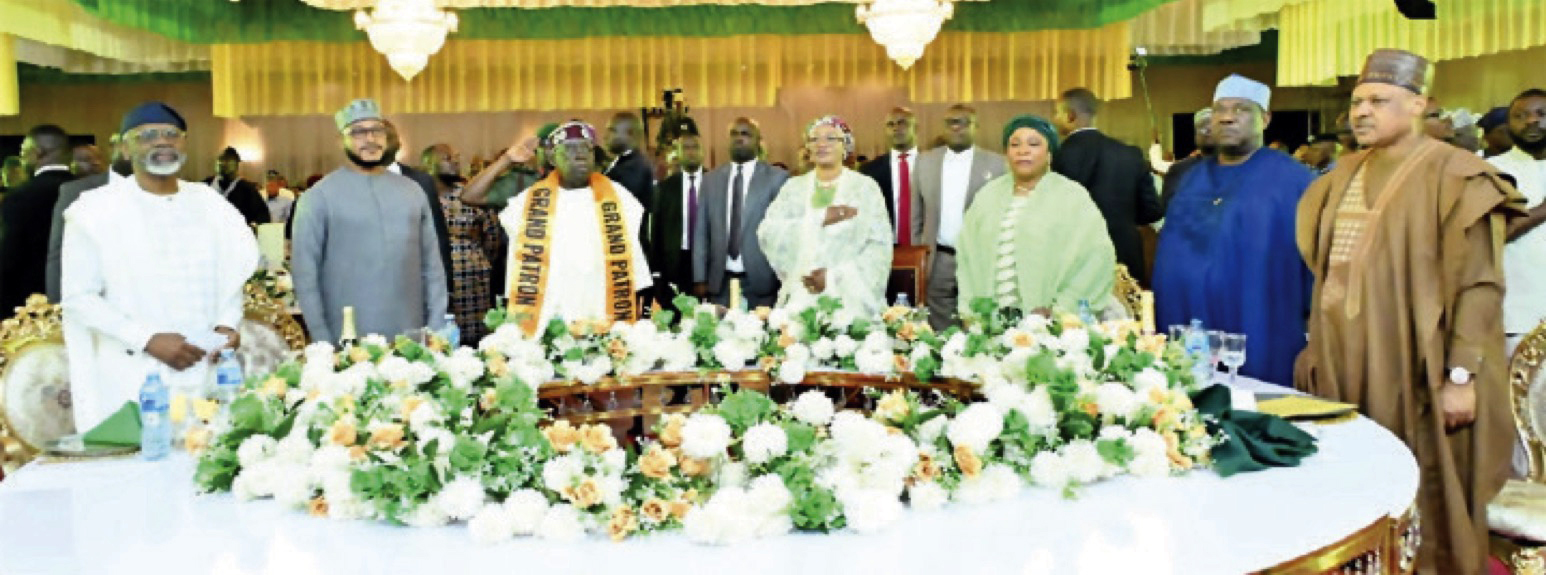
•Presidential ‘Iya Alakara’ moment at State House Press Corps inaugural dinner
By Juliana Taiwo-Obalonye
There was a clear ambition behind that Thursday night’s inaugural State House Press Corps Dinner in Abuja: to borrow the spirit of the White House Correspondents’ Dinner and give Nigeria its own laid-back, media-friendly evening where power, press and personality meet at one table. Like the Washington gala it echoes, the dinner mixed political conversation, light teasing, public accountability and a celebration of journalism, but with an unmistakably Nigerian rhythm — part statecraft, part social gathering, part newsroom family reunion.
The White House Correspondents’ Dinner is a Washington, D.C., gala hosted by the White House Correspondents’ Association that celebrates a free press and the First Amendment, drawing the President, First Lady, journalists, officials and often celebrities, with comic roasting and journalism awards as key features.
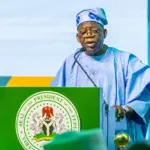
President Bola Tinubu, in that spirit, moved easily between humour and hard policy. His playful address to the First Lady as “Iya Alakara” drew laughter from the room and gave the evening a touch of warmth, but his central message remained serious: “Take the terrorists off our headlines,” he urged. “The media must resist the temptation of becoming megaphones for terrorists and kidnappers. We must protect our nation.”

The line landed in a room full of journalists who understood the balancing act between public interest and public safety, between reporting danger and inadvertently amplifying it.
Tinubu also framed the event as a partnership with the press rather than a confrontation. “Tonight, we gather not as adversaries but as partners in the service of our democracy and our people,” he said. He defended press freedom while insisting that freedom brings responsibility, warning that “freedom of expression is not freedom to defame” and public trust depends on “fairness, accuracy and responsibility.” In tone and setup, the evening resembled the White House Correspondents’ Dinner’s long-standing formula: a head of state speaking directly to journalists in a lighter, less guarded atmosphere, yet still using the occasion to shape the national conversation.
But Tinubu also leaned into the friction that has always defined politics and the press. “This partnership and rivalry will not disappear as long as governments exist,” he said, suggesting that the relationship between power and the media is both enduring and necessary.
“For the record, I am both a lover and a long-time supporter of the Nigerian press. My courtship with the media began more than three decades ago and has not waned. The only difference is that I now find myself on the receiving end of the headlines.” The remark drew knowing laughter because it captured the contradiction at the heart of political journalism: admiration and suspicion, access and scrutiny, friendship and friction.
He did not stop there. “Sometimes I genuinely wonder whether the media likes or hates me,” the President said, before pointing to the whiplash that often defines newspaper coverage. One day, he said, a headline reads: “Tinubu Scores Big As Nigeria’s Economy Expands.” The next day, another says: “Nigeria’s Economy Falters As Tinubu Loses Grip.” “Both stories may come from the same media ecosystem,” he added. “Between those two headlines, a lot must have happened. The question is: did the media do its homework? Did it provide citizens with the context, analysis and insight required to understand what changed? Or are we increasingly drifting towards the old newsroom creed: ‘If it bleeds, it leads’?”
That line was more than a joke. It was a direct challenge to the habits of modern journalism, especially in a digital age where speed often outruns context. In one breath, Tinubu praised scrutiny and in the next he demanded deeper reporting that explains, interprets and connects the dots for citizens. It was the kind of speech that could only work at a dinner where the audience comprises the very people being addressed.
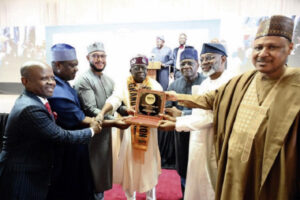
The night’s sparkle came not only from banter but from the roll call of awardees and honourees whose names gave the dinner a sense of prestige and memory. The State House Press Corps used the occasion to celebrate figures whose work spans politics, business, public service and journalism. Among those honoured were FCT Minister, Nyesom Wike; industrialist Aliko Dangote; businessman Tony Elumelu; Nigeria Revenue Service Executive Chairman, Zacch Adedeji; Budget and Economic Planning Minister, Atiku Bagudu, and Interior Minister, Olubunmi Tunji-Ojo. Their recognition turned the dinner into something more than a media parley; it became a public salute to people seen as shaping the country’s direction in different ways.
The media family also had its own applause moment. Segun Adeniyi, former presidential adviser on media and publicity, was honoured as the first special adviser to serve as presidential spokesman, a symbolic nod to the long and evolving relationship between the presidency and official communication. Felix Onuah, the retired Reuters correspondent and longest-serving State House correspondent, received recognition for years of service that helped define press coverage of the Villa. Nicholas Okechukwu was honoured for distinguished service as a non-linear editor, while the late Baba Ladan Abubakar was remembered with a posthumous award. Emmanuel Anule received the Outstanding State House Press Corps Chairmanship Award, underscoring the event’s desire to celebrate not only the famous names but also the behind-the-scenes people who keep the machinery of news moving.
That honour roll mattered because the White House Correspondents’ Dinner, in its original setting, is not just about celebrity. It is also about journalism as an institution — its awards, its scholarships and its culture of public service. The Abuja dinner drew from that template by making recognition central to the night’s symbolism. It acknowledged that a free press is not merely a critic of power but a profession with standards, hierarchies, memory and internal traditions worth celebrating. In that sense, the awardees were not decorative; they were the evening’s civic evidence.
The Washington model also helps explain why the dinner felt unusually open. The White House Correspondents’ Dinner is famous for its mix of VIP attendees, comedy, and the rare occasion where the President becomes part of the entertainment rather than just the subject of it. Abuja’s inaugural version aimed for a similar tone. Tinubu was not only speaking to the press; he was performing with them in the room, teasing, responding and acknowledging the social chemistry of a shared space.
The Chief of Staff to the President, Femi Gbajabiamila, leaned into that tone too, joking that the chairman of the press corps deserved a “third-term agenda” if it were to be in his power, while the SGF and Information Minister kept the evening anchored to governance and media responsibility. One of the most talked-about comic moments came when Gbajabiamila recalled how he mistook Anule for Adams Oshiomhole because of his “towering height,” a slip that drew hearty laughter across the room. Akume then kept the joke alive by referring to Anule as the tallest man in the room, turning the chairman’s stature into the evening’s running punchline.
Gbajabiamila also urged the journalists to take the joke a step further, encouraging them to step on stage, crack jokes using government officials, move freely even up to the President and give him a hi-five. The line drew fresh laughter, but the master of ceremonies, Andy Gabriel, quickly warned the journalists not to push their luck that far — a prompt that only made the room laugh harder. The exchange added to the relaxed, slightly mischievous atmosphere the organisers seemed determined to create.
Still, one part of the White House formula was noticeably underpowered. Unlike the Washington correspondents’ gala, where the comedian’s set is expected to bite, bruise and steal the room, Seyi Law’s roasting at the State House Press Corps dinner was mild, even though it got people reeling with laughter. The jokes landed, but the heat was gentler than the sharp-edged comic teasing that has become the hallmark of the White House event. That difference mattered because the roast is not merely decoration in the Washington model; it is the pressure-release valve that lets power be laughed at before it is praised. Abuja borrowed the format, but the comic sting was softer, more courtesy than cut.
The chairman of the press corps, Emmanuel Anule, gave the dinner its institutional spine. He urged that the gathering become annual, arguing that regular, informal engagement would reduce misunderstanding and build trust between the Presidency and the journalists who “translate, scrutinise and explain policies for Nigerians and international audiences.” He described the press corps as a bridge between government and citizens, one that informs markets, shapes public debate and helps people make decisions. That framing echoed the WHCA dinner’s deeper purpose: using a glamorous occasion to underline the democratic value of a free, professional press.
Tinubu’s own defence of his administration’s record added weight to the evening. He said the economy was stabilising, revenues were strengthening, reserves had risen above $50 billion and the oil and gas sector was drawing new investment. On security, he pointed to intensified military operations, improved intelligence and the rescue of hostages and recovery of communities. Whether one agrees fully with the claims or not, the setting gave him the space to make them directly to the journalists who would interpret them for the public — another hallmark of the White House-style dinner, where policy messaging is softened but not removed.
The lightheartedness of the night was not accidental; it was functional. Dinners of this sort work because they allow leaders to appear human, journalists to feel recognised and the public to see politics with the edges slightly rounded. The “Iya Alakara ” moment did that in one stroke. So did the applause that followed the honours, the smiles during the jokes and the repeated calls for the dinner to become a tradition. In American terms, this is the part where the gala earns its relevance beyond glamour: the room is full, the cameras are on, and the conversation is doing democratic work.
Still, the State House Press Corps event was unmistakably its own thing. Where the White House Correspondents’ Dinner is heavily associated with Hollywood celebrity and public spectacle, the State House version leaned more on institutional respect, civic tone and the personalities of Nigerian public life. Its star power came less from entertainers than from political heavyweights, business leaders and veteran journalists. Its entertainment came from speeches, banter and cultural humour rather than a stand-up comedian. And its moral centre was not awards season glamour but the fragile relationship between information, security and nation-building.
That distinction matters. Nigeria’s version, if it becomes annual, may develop its own identity — less glitzy than Washington, perhaps, but no less important. The inaugural dinner showed that the State House can host journalists without stiffness, and that the press can respond with both good humour and professional seriousness. It also showed that award nights can do double duty: celebrate excellence and remind the public that journalism, business, governance and service all depend on trust.
By the time the evening closed, the strongest impression was not of a formal banquet but of a political family meeting that had found its voice. The President had joked, the First Lady had smiled, the press had been honoured, and the awardees had given the night a sense of substance beyond ceremony. If the goal was to model a Nigerian analogue of the White House Correspondents’ Dinner, then State House Press Corps got the essential ingredients right: an open room, a recognisable power centre, a free-press message, a touch of comedy and a list of honourees that made the evening feel both public and personal.