Follow Us on Google
From Jude Chinedu, Enugu
The Minister of Information and National Orientation, Mohammed Idris, has said the Renewed Hope Agenda of President Bola Tinubu was already yielding visible benefits in the South East, despite initial hardships triggered by economic reforms.
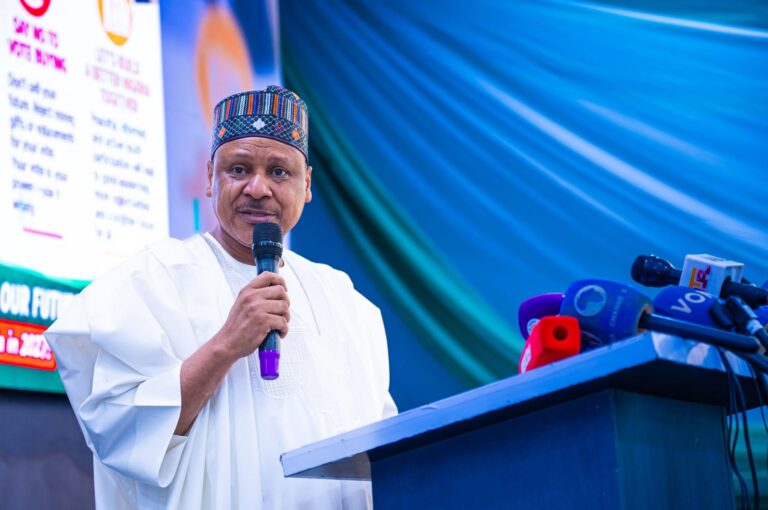
Speaking at a town hall meeting in Enugu, he said increased federal allocations have been enabling states and local governments in the region to embark on major projects, alongside federal interventions.
“In the South-East, these funds are delivering tangible impact, such as the laudable infrastructure projects. By all means, Governor Peter Mbah is defining the sort of harmony required by the centre and the states for national development,” he said.
The minister noted that the Eastern Railway Corridor from Port Harcourt through Aba and Enugu to Maiduguri had been made a presidential priority, with $3billion recently sought for its modernisation.
The administration, according to him, has rehabilitated over 1, 000 primary healthcare centres nationwide, inclusive of the South East, and the commissioning of a world-class oncology and cancer centre in Enugu some weeks ago.
Other News
On industrial growth, Idris said the Federal Government had launched three key business funds worth ₦200 billion to support small businesses, manufacturers, and entrepreneurs, urging the region to take advantage.
“We have created the Presidential Conditional Grant Scheme (PCGS), the FGN MSME Intervention Fund, and the FGN Manufacturing Sector Fund. I want to call on entrepreneurs to take advantage of these funds and embrace the ‘Nigeria First’ policy that promotes patronage of locally made products,” he said.
The minister hailed Enugu and Imo states for securing regulatory autonomy to manage their electricity markets under the new Electricity Act.
He added: “We expect other states of the region to key into this policy as soon as possible.”
Idris acknowledged that the removal of fuel subsidy and unification of exchange rates had brought hardship, but stressed that interventions such as wage awards, higher minimum wage, cash transfers, food security programmes, and cheaper compressed natural gas for transport have been easing the burden.
“Economic stability is returning; food prices are easing, forex markets are stabilising, and global rating agencies are optimistic about our trajectory towards a $1trillion economy by 2030,” he assured.