Follow Us on Google

At their inauguration in Abuja recently, the 45 ministers were urged to shun ethnic and other primordial politics. As President Bola Tinubu told them, “You are not a minister of a particular state, colony, region, or ethnic nationality. You are a minister of the Federal Republic of Nigeria.” He urged them to serve with integrity and dignity, and that many Nigerians were highly expectant of excellence in service delivery, accountability and transparency from them. The President’s admonition is appropriate.
Oftentimes, some office holders at that level look at their jobs from the narrow prism of ethnicity and religion. They take certain decisions based on some primordial sentiments which run counter to the unity of the country. This time, the ministers have their jobs cut out for them. Their mandate is to help the President in realising his eight-point agenda as contained in his manifesto. The agenda include security, economy, agriculture, education, health care, power, oil and gas and transportation. The ministers know that in every sector, Nigeria is facing an unusual time. Every sector needs revamping.
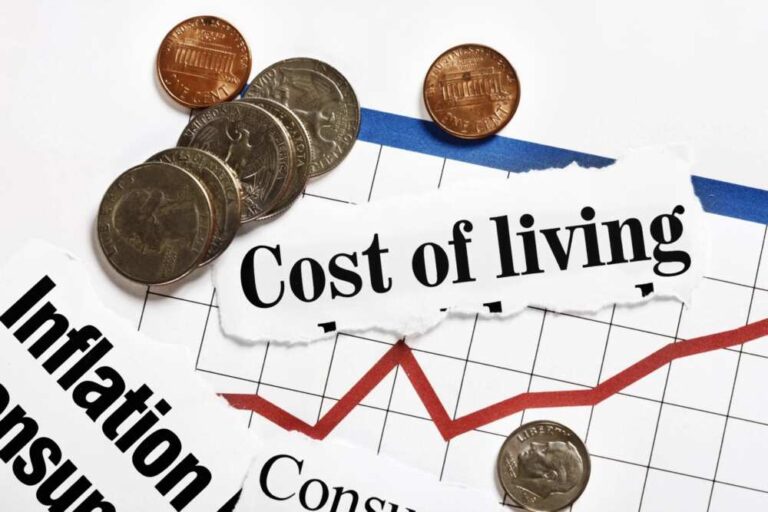
The country’s economy, for instance, is in dire straits. Inflation is soaring. At 24.08 percent, the current rate of inflation is highest in 18 years. Food inflation is even higher. It is 26.98 per cent. Debt servicing gulps over 90 per cent of revenue generated. The value of naira has gone down more than ever before. Poverty and hunger are dealing with many Nigerians, with 133 million people living in multi-dimensional poverty. The rate of unemployment is also on a very high side. We have not had it this bad.
But there must be a solution. First of all, the President must cut down on the cost of governance. Prudent management of resources is what is required at this time. Strangely, we are not seeing that prudence with the current administration. The number of Tinubu’s ministers is the largest since the advent of this fourth republic in 1999. The President nominated 48 ministers. Forty-five have been sworn in. Three are pending because they were not immediately cleared by the Senate. By the time the three slots are filled, we will have 48 ministers. This is outside special advisers, senior special assistants and special assistants that the President will likely appoint later. Even the ministers will have their own special advisers and assistants. Already, the Senate President, Godswill Akpabio, and the Speaker of the House of Representatives, Tajudeen Abass, have appointed scores of aides. All these will only weigh down the economy.
As a country, Nigeria needs to focus on production and exports rather than consumption and imports. We urge the President’s economic team to be creative. Good enough, the Minister of Labour and Employment, Mr. Simon Lalong, said his ministry would fulfill its mandate of ensuring decent work for all Nigerians and that the youth and women in particular would get the opportunity to showcase their energy, creativity and talents to the development of the country. Let this not be a mere talk.
To achieve these lofty goals, insecurity, which remains a huge problem, must be tackled. In the North, Islamic insurgency has continued to pose a serious challenge to the country. Bandits and terrorists are ever on the prowl, looking for whom to devour. The latest in their orgy of terror was the ambush and resultant killing of 36 soldiers in Shiroro local government area of Niger State. The Nigerian Air Force helicopter that went to evacuate the victims crashed, leading to more casualties. The new Minister of Defence should put his eyes on the ball. He should map out strategies on how to tame this high spate of insecurity in the country. He must ensure that soldiers are well equipped and motivated to rout the terrorists wherever they are. To achieve this, he should work harmoniously with the service chiefs and the National Security Adviser (NSA).
Government should not gloss over the importance of education and health sectors. The ministers in charge of these two ministries must buckle up for the challenges ahead. The two sectors witness frequent strikes by their professional unions. If the National Association of Resident Doctors (NARD) is not on strike, the Academic Staff Union of Universities (ASUU) will be. Government must look into their agitations for better welfare and better facilities in schools and hospitals. Adequate funding of these sectors will go a long way in fixing the problems. It will also go a long way to curb education and medical tourism of our citizens to foreign countries.
Generally, the ministers should hit the ground running because there is a lot of catching up to do. There should be timelines for achieving their targets. They should work as a team devoid of ethnic, religious or other parochial agenda. Nigeria is in a very deep mess and everything that needs to be done to put it back on track must be done. As President Tinubu advised them, “Your highest obligation is to restore public faith in government so that our people can once again believe that government can be a positive force for transformation and a vehicle for collective progress of all citizens of this great country.”