Follow Us on Google
•Nigeria’s youth ready to defend votes, but must reject money politics
By Christy Anyanwu in London
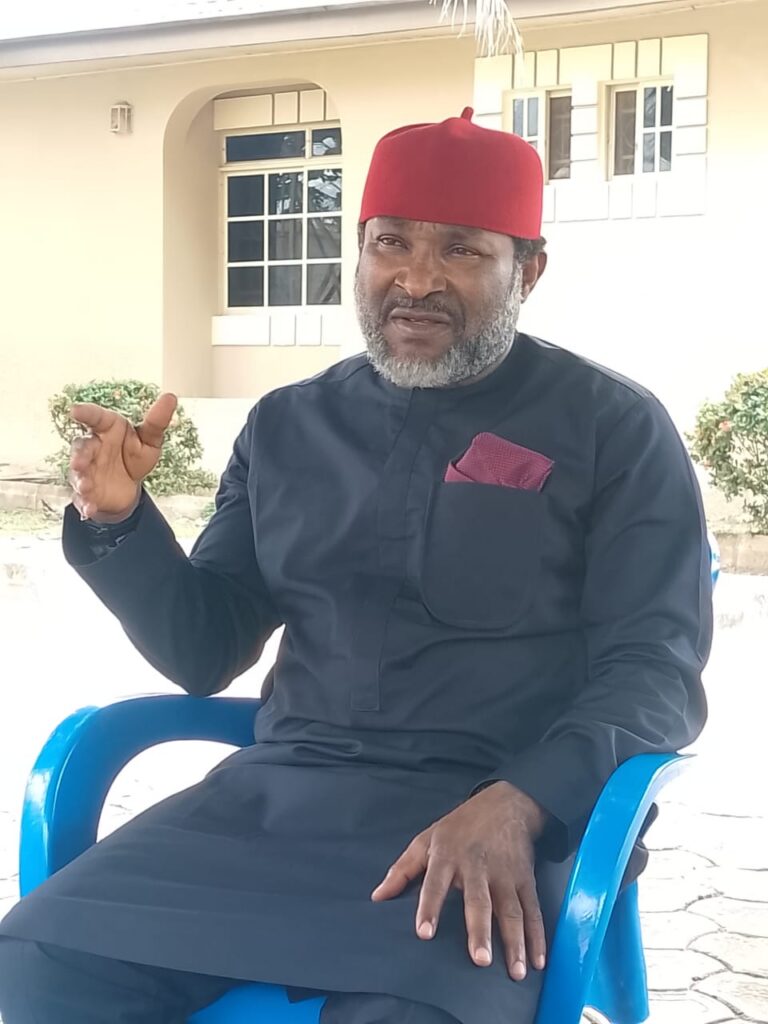
Adedamola Aminu is a Nigerian politician based in the United Kingdom, an academic and Principal Partner of AA Management Training & Consultancy Ltd. He is a former Chairman of the Association of British Nigerian Councillors and President of the Association of Nigerian Academics UK.
Aminu, who is also the author of the book, Nigerian-British Politicians in the United Kingdom and Republic of Ireland, has followed Nigeria’s political and socio-economic development closely.
In this interview with Sunday Sun, he offers a neutral assessment of the major contenders in the 2027 presidential election, examines the performance of successive administrations, and speaks on Nigeria’s chances of achieving the Sustainable Development Goals (SDGs). He also discusses power sector reforms, SMEs, vote-buying, youth participation in politics and the prospects of economic transformation.
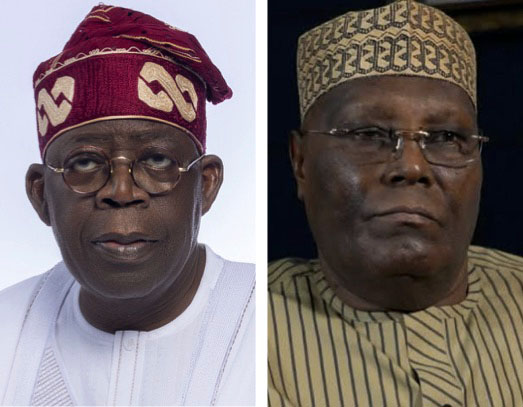
The 2027 presidential election campaigns have started. What are your general impressions of the three leading candidates – President Bola Tinubu of the APC, former Vice-President Atiku Abubakar of the ADC and former Anambra State Governor, Peter Obi of the NDC?
President Bola Tinubu of the APC is seeking re-election in 2027, while former Vice-President Atiku Abubakar and former Anambra State Governor Peter Obi are among the major opposition figures associated with the presidential contest.
Each of the three candidates brings a different background and record to the race. Tinubu is the incumbent President and a former Governor of Lagos State with decades of political experience. Atiku is a former Vice-President with extensive experience in government and the private sector, while Obi is a former Governor of Anambra State and former banker who was the Labour Party’s presidential candidate in 2023.
The major strength of Tinubu administration is its willingness to take difficult structural decisions early. These include fuel subsidy removal, foreign exchange unification, the Electricity Act 2023 and tax reforms. He appears willing to take the political cost of reforms that previous administrations avoided. The administration has also maintained a strong focus on infrastructure. However, the short-term consequences of some of these reforms have been difficult. Inflation rose sharply, the naira depreciated significantly and interest rates became very high, putting considerable pressure on households and small and medium-sized enterprises.
The perception among many Nigerians is that the reforms have not yet translated into a reduction in the cost of living. Therefore, the 2027 argument from the administration is likely to be that the reforms are painful but necessary, and that Nigerians should give the government enough time to complete them.
Regarding former Vice-President Atiku Abubakar, he has extensive experience in government and the private sector. He has a strong political network, particularly in Northern Nigeria and within the business community. He has consistently advocated privatisation, restructuring and private-sector-led economic growth.
However, he continues to face questions from opponents and some members of the electorate regarding his record during his years in government, including issues surrounding customs and the privatisation era. There are also questions about his electability after several presidential attempts.
His political prospects are also affected by the internal challenges within the PDP and the ongoing coalition discussions.
Peter Obi, the former Governor of Anambra State and former banker, was the Labour Party’s presidential candidate in 2023. He has a strong appeal among young Nigerians, the urban middle class and many first-time voters. My assessment is that he is generally perceived as a prudent fiscal manager, with supporters pointing to his record of savings and financial management in Anambra State. His major challenge is whether he can expand his support base beyond the South-East and major urban centres to build a sufficiently broad national coalition.
Nigeria is now only three years away from the 2030 deadline for achieving the Sustainable Development Goals. As someone invested in national growth, how do you feel when you look at Nigeria’s socio-economic situation?
When I look at Nigeria with only three years remaining before the 2030 deadline, I feel two things simultaneously: concern about how far we are from many of the targets, and a sense of urgency because we still have important levers we can pull.
The number of Nigerians living in poverty has increased significantly, while food inflation has pushed more households into food insecurity. An SME-driven economy cannot grow sustainably when consumers do not have sufficient purchasing power. Concerning the targets on quality education and decent work, Nigeria continues to face serious challenges. We have millions of out-of-school children, while the labour market remains dominated by informal and low-productivity employment.
This is particularly important because Nigeria has a large young population. We have a demographic dividend on paper, but it could become a demographic risk if young people are not properly educated, skilled and employed. On affordable and clean energy as well as our target on Industry, Innovation and Infrastructure, power remains one of our biggest bottlenecks. Nigeria’s electricity supply is completely inadequate for a population of more than 200 million people. We cannot industrialise or build globally competitive SMEs without reliable and affordable electricity.
That is why comparisons with some of the Asian economies are relevant. They invested heavily in infrastructure, particularly electricity, as part of their industrialisation strategy.
We also have serious challenges in health, water and sanitation. Maternal mortality remains high, while Nigerians continue to bear a large proportion of healthcare costs directly from their pockets.
I am not hopeless about Nigeria. In fact, some important legal foundations have been put in place. The Electricity Act 2023, for instance, provides opportunities for states to develop electricity markets. Fuel subsidy removal has also freed significant public resources, while tax reforms are intended to simplify the tax system and reduce some of the burdens on businesses.
My concern is that between 2015 and 2023, government spent considerable time managing crises without sufficiently addressing some of the structural problems. Therefore, we are entering the final three years to 2030 weaker than we should have been.
But there is still an opportunity. If, over the next three years, we focus on electrifying major SME and industrial clusters, provide reliable power for extended hours and give viable businesses access to affordable credit, we may not achieve every target by 2030 – no country is likely to achieve all of them – but we can make significant progress in the areas of creating jobs and economic opportunities needed to make progress on the other goals possible over the following decade.
The question for Nigeria is no longer whether we have policy documents. We do. The question is whether we can implement those policies ruthlessly and consistently, particularly at the level of economic and industrial clusters.
In 2014, the APC described the 16-year PDP administration as a woeful failure in facilitating SME growth and tackling youth unemployment. What is your assessment of the APC’s years of socio-economic management from 2015 till date?
My personal assessment is that the APC administrations have made some progress, but the progress has been slower than necessary.
During the APC years, Nigeria’s dependence on oil has reduced on paper, but part of this was because oil production itself declined significantly due to theft and other challenges. It was not necessarily because the non-oil economy grew fast enough to replace lost oil output.
Social investment programmes also expanded significantly compared with previous years, but they did not create industrial-scale employment at the level required.
There was also significant investment in infrastructure, including roads, rail projects, bridges and other major projects.
However, the fundamental enablers of SME growth — reliable electricity, affordable credit, macroeconomic stability and ease of doing business — did not improve sufficiently to trigger the kind of transformation witnessed in some Asian economies.
I would broadly divide the period into two phases.
From 2015 to 2023, the government was largely engaged in defensive economic management, dealing with oil shocks, COVID-19 and the challenge of maintaining subsidies.
From 2023 onwards, the approach has been more corrective, with subsidy removal, foreign exchange reforms, implementation of the Electricity Act and proposed tax reforms.
These reforms are painful in the short term, but they are intended to create the foundation for stronger SME growth in the long term.
President Tinubu has said his administration’s goal is to build a $1 trillion Nigerian economy. Does that ambition correspond with the current situation in the power generation, transmission and distribution sectors?
In the short term, no. The ambition does not correspond with Nigeria’s current power situation.
However, I believe it can become achievable if the power reforms under the Electricity Act 2023 are implemented at the speed and scale required.
Three things need to happen simultaneously over the next 36 months.
First, we need to fully implement the Electricity Act 2023. States such as Lagos, Ogun, Oyo, Kano and Anambra should be able to develop their own electricity markets and grids where economically viable.
The federal grid alone cannot provide all the electricity Nigeria needs for industrialisation.
Second, we must move the conversation from megawatts to hours of reliable electricity.
For an SME, the issue is not simply how many megawatts Nigeria generates nationally. What matters is whether a factory can operate for 15 or 20 hours a day at an affordable tariff.
If industrial clusters such as Aba, Onitsha, Nnewi, Ota and Kano can receive reliable and affordable electricity, their production capacity can increase substantially and economic growth can occur from the bottom up.
Third, we need much greater private-sector investment in transmission infrastructure.
Government funding alone may not be sufficient to close the transmission infrastructure gap. We should explore carefully structured private investment and concession models, while maintaining effective regulation and public-interest safeguards.
The $1 trillion ambition is a valid direction because it tells investors where the government wants the economy to go. But with the current power structure, achieving that target by 2030 would be extremely difficult.
With aggressive investment in distributed power, industrial clusters and infrastructure, however, Nigeria can build towards a $1 trillion economy in the early-to-mid 2030s.
What fundamental reforms should happen in the power sector to enable massive SME growth, as happened in China and other Asian economies?
For Nigeria to experience the kind of SME-driven transformation that occurred in China and some Asian economies, power reform must achieve one fundamental objective: reliable and affordable electricity must become cheaper than self-generation.
Many Nigerian SMEs currently spend a substantial proportion of their operating costs on diesel and other forms of self-generation. You cannot build globally competitive businesses under such circumstances.
This is therefore not simply about putting more megawatts on paper. It is about fundamental structural reform.
We need to move away from the idea that electricity must operate through one centrally controlled structure.
The Electricity Act provides an opportunity for states to develop their own electricity markets. The important thing now is implementation and political will.
States should be able to support independent generation and distribution for industrial clusters where appropriate, rather than forcing every unit of electricity through the limitations of the national grid.
Government should also encourage households and businesses to adopt solar and other distributed energy solutions. This can reduce pressure on the national grid while also supporting Nigeria’s environmental objectives.
Considering the outcome of the Osun governorship election, where voters reportedly stood their ground from the polling units to the collation centres, do you think Nigerian adults and youths are ready to defend their votes in the next election?
Yes, I believe Nigerian adults and youths are increasingly ready to defend their votes.
But voting alone is not enough. They must also reject the culture of collecting money from politicians in exchange for their votes and stop worshipping political leaders.
Voters should ask politicians what infrastructure, development and opportunities they have actually delivered to their constituencies.
Young people, in particular, need to become more active politically and organise themselves at the grassroots.
They should not only campaign for people at the national level. They should identify credible people within their local communities and encourage them to contest elections.
If citizens organise at the local level and support candidates they know personally, it becomes more difficult for political outsiders to manipulate the process.
What do you make of vote-buying and vote-selling, which have become recurring features of Nigerian elections? What does this say about the political class and the electorate?
Vote-buying and vote-selling have been recurring problems in Nigerian elections since the return to democratic rule in 1999. Election observers have repeatedly raised concerns about the practice.
It is not unique to Nigeria, but its scale here is closely connected to our socio-economic conditions.
Regarding the political class, it demonstrates the weakness of political ideology and the excessive emphasis on personalities and money.
When elections are centred on individuals rather than clear programmes and policies, voters have little basis on which to evaluate candidates.
The high cost of politics is another factor. When candidates spend enormous amounts to obtain party nominations and finance campaigns, there is often pressure to recover those investments.
Some politicians also believe that long-term development projects may not guarantee electoral victory because their opponents could simply buy votes on election day.
Regarding the electorate, I think it is too simplistic to blame voters. Poverty creates vulnerability.
If someone is living in extreme economic hardship and is offered a significant amount of money on election day, that money can represent several days of income.
For such a person, accepting the money may be viewed as survival rather than simply a lack of political principle.
This is where the problems of poverty and unemployment intersect with electoral behaviour.
There is also a lack of trust in institutions. If voters believe their votes may not ultimately determine the outcome because of problems with results transmission, security or the judicial process, some may conclude that they should at least collect whatever they can during the election.
How best can vote-buying and vote-selling be curbed in Nigeria’s electoral process?
To curb vote-buying, government has to make it both more difficult and less attractive.
Moral campaigns alone will not solve the problem.
First, we need to make the ballot genuinely secret and untraceable. Vote-buying works partly because the buyer wants evidence that the voter complied with the agreement. If there is no way for the voter to prove how he or she voted, the incentive for the buyer is reduced.
The integrity of the polling environment therefore matters.
Second, results transmission should be as transparent and immediate as possible. If results are securely transmitted from polling units and the records are available for verification, it becomes much harder to manipulate figures later.
Third, enforcement must focus heavily on the buyers, not just the sellers.
The law already criminalises vote-buying and vote-selling, but enforcement needs to be much more effective.
We also need stronger institutions for investigating and prosecuting electoral offences. A specialised electoral offences mechanism could help ensure that cases are handled quickly and independently rather than becoming lost within the broader criminal justice system.
Finally, we have to address the high cost of politics.
When political nominations and election campaigns require enormous financial resources, we should not be surprised when politics becomes an investment that some people expect to recover.
Campaign finance reform, stronger disclosure requirements, spending limits and transparent enforcement should therefore be part of the solution.
Ultimately, Nigeria cannot build a strong democracy without addressing the economic conditions that make citizens vulnerable to political inducement.
Electoral reform and economic reform must therefore go hand in hand.