Follow Us on Google
-
Promises to address press freedom, welfare
-
NUJ President calls for tax relief, bailout framework to support media institutions
From Juliana Taiwo-Obalonye, Abuja
Vice-President Kashim Shettima has reaffirmed that the current administration’s commitment to protecting journalists’ rights and supporting the media profession, describing President Bola Tinubu as a long-standing ally of Nigerian journalism.
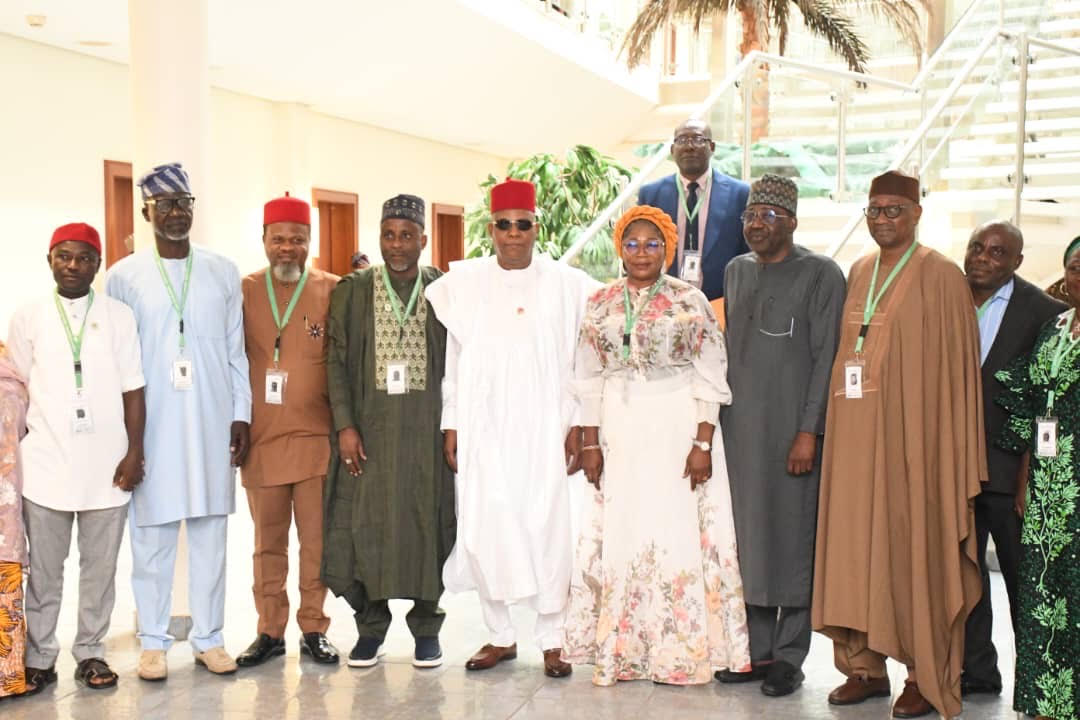
According to a statement issued by his media aide, Stanley Nkwocha, speaking on Wednesday during a meeting with the Nigeria Union of Journalists (NUJ) leadership at the Presidential Villa, Shettima pledged to present the NUJ’s demands to President Tinubu, including calls for protection of media workers, review of libel laws, and improved welfare for journalists.
“In President Bola Ahmed Tinubu, you have a friend, an ally, and a proprietor who has been kind to the Nigerian media over the years,” Shettima told the delegation. “I want to assure you that this administration will do its best to promote, project, and preserve the interests of the journalism profession. You are the life wire of the nation — we can’t afford to muzzle you.”
The Vice-President highlighted the crucial role of the media as the conscience of the nation and likened the profession to the judiciary in its responsibility to hold public officials accountable. “Authorities cannot afford to intimidate journalists, as they are indispensable to the survival of democracy in the country,” he stressed.
Recalling Nigeria’s history of journalist-leaders such as Herbert Macaulay, Nnamdi Azikiwe, and Obafemi Awolowo, Shettima acknowledged the financial struggles some media organisations face in paying salaries but appealed for optimism, promising continuous presidential support.
“Be rest assured that the President will render his support to your organisation. We cannot afford to allow the journalism profession to die,” he affirmed.
Shettima also addressed national economic issues, defending the removal of fuel subsidies as a necessary measure in the national interest and reaffirmed the government’s dedication to reviving the Nigerian economy.
In response, NUJ National President Alhassan Abdullahi presented several urgent concerns to the Vice-President. He urged the government to adopt a firm stance on defending press freedom and to ensure that journalists are protected from punishment for fulfilling their constitutional duty.
Other News
Abdullahi called for a “comprehensive review of colonial-era laws such as sections of the Criminal and Penal Codes that continue to criminalise journalism,” stressing that “libel should be decriminalised.”
Additional demands included the creation of a national safety protocol for journalists in partnership with security agencies to guarantee their protection during reportage.
Abdullahi also proposed government collaboration with the media on training grants, soft loans, tax relief, and a bailout framework to support vital media institutions.
The NUJ president further requested cooperation with TETFUND, universities, and international media bodies to raise professional training standards and advocated for the establishment of a Permanent Government-Media Liaison Platform under the Vice-President’s office to foster ongoing dialogue and reduce misinformation.
Abdullahi pledged unwavering support for President Tinubu’s development agenda while emphasising the media’s role to “speak truth to power for the survival of democracy.”
“We are institutional partners and would not be drowned in the false narratives that the media must be antagonistic to government. The same way we call out government when we feel that certain issues are not clearly given the needed consideration, we also would be ready to applaud government when things have been done right,” he said.
He commended the Tinubu administration’s bold reforms and tangible progress in stabilising Nigeria’s economy despite global challenges.
The meeting concluded with mutual commitments toward enhancing the media sector’s welfare, press freedom, and strengthening media-government relations.