Follow Us on Google
From Noah Ebije, Kaduna
President Bola Tinubu has reaffirmed the Federal Government’s commitment to a stable academic calendar, improved staff welfare, and reforms aimed at strengthening Nigeria’s tertiary education system.
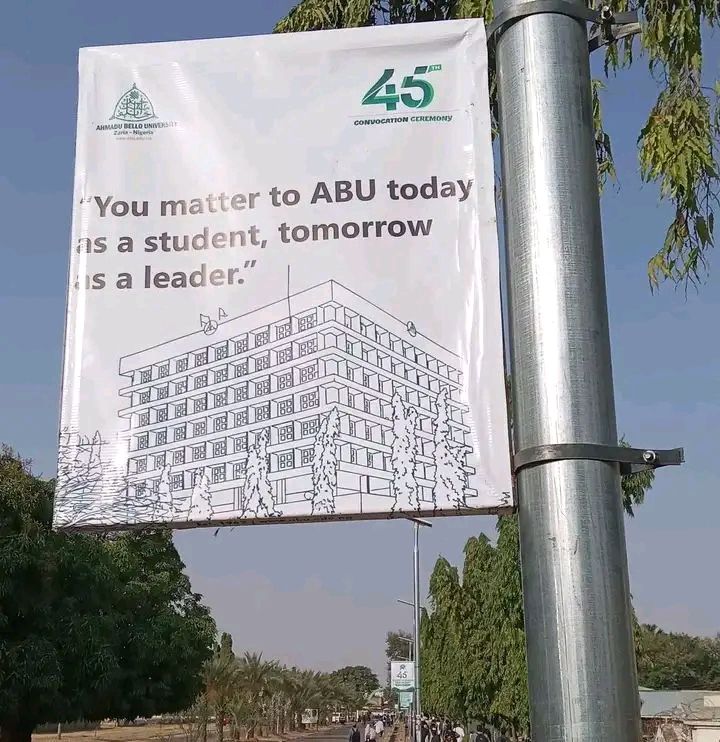
The President, who was represented by the Minister of State for Education, Prof Suwaiba Ahmad, stated this on Saturday at the 45th Convocation Ceremony of Ahmadu Bello University (ABU), Zaria, where he was represented as Visitor to the university.
Congratulating the university’s management, staff, graduands, parents, and the entire academic community, Tinubu described the convocation as a testament to ABU’s sustained commitment to teaching, research, and community service.
He commended the institution for aligning with the Federal Government’s Tertiary Institutions Governance and Transparency Programme, noting that the initiative was designed to enhance accountability, transparency, and data-driven governance in line with his administration’s Renewed Hope Agenda.
The President stressed that the growth of academic institutions depends largely on uninterrupted academic calendars, assuring that his administration would continue to keep tertiary institutions open and free from avoidable disruptions.
He disclosed that the government had adopted a unified negotiation framework through the Tertiary Institutions Expanded Negotiation Committee, led by Alhaji Mahmud Yayale Ahmed, to improve efficiency in negotiations with university unions.
He commended the committee for facilitating agreements with the Academic Staff Union of Universities (ASUU) and assured other unions that comprehensive agreements would be concluded in due course.
On staff welfare, Tinubu announced the implementation of a Staff Loan Scheme for academic and non-academic staff in tertiary institutions.
Under the scheme, zero-interest loans of between ₦1 million and ₦10 million are being provided through the Bank of Industry, with the Federal Ministry of Education bearing the full interest cost.
He revealed that ₦40 billion has been earmarked for disbursement in the current year, with beneficiaries repaying over five years, including a one-year moratorium.
The President also praised ABU’s management for reducing electricity costs through energy conservation and urged the university to develop a comprehensive energy policy.
He further disclosed that ABU would benefit from Phase IV of the Energising Education Programme, which aims to provide 24-hour electricity supply to federal tertiary institutions.
He noted that earlier phases of the programme had delivered over 100 megawatts of clean energy to 24 federal universities and teaching hospitals.
Addressing the graduands, Tinubu encouraged them to apply their knowledge productively and embrace entrepreneurship rather than job-seeking.
He lauded the university’s Students Enterprise Competition, organised by the International Centre of Excellence for Rural Finance and Entrepreneurship, which attracted over 300 student-led teams.
He also urged students nationwide to leverage the Students’ Innovation Venture Capital Grant, which provides up to ₦50 million in non-equity seed funding for innovative ventures, alongside mentorship and incubation support.
The President drew attention to the National Implementation Guidelines on Drug and Substance Use in Nigerian Institutions, describing it as a key policy under the Renewed Hope Agenda to curb drug abuse among students.
He said the policy, implemented in collaboration with the National Drug Law Enforcement Agency (NDLEA), focuses on curriculum updates, awareness campaigns, teacher training, and drug-testing measures.
Tinubu further commended ABU for emerging as the Overall Winner of the 5th National Tertiary Admissions Performance Merit Awards, earning a ₦500 million mega award from the Joint Admissions and Matriculation Board (JAMB).
He said the recognition reflected the government’s reforms to expand access to tertiary education through revised admission guidelines, which could add up to 300,000 students annually.
He disclosed that ABU would also benefit from a ₦4 billion allocation under the High Impact Intervention Projects and highlighted reforms to the national scholarship programme targeting students in critical health-related disciplines.
In his closing remarks, the President urged Nigerians to remain security conscious and report suspicious activities, stressing that insecurity continued to divert resources meant for national development.
He congratulated the graduates and wished them success, describing graduation as only the beginning of greater possibilities.