Follow Us on Google
From Okwe Obi, Abuja
Bureau of Public Procurement (BPP) has said it would digitize all government expenditures to curb corruption and strengthens the naira through with the electronic government procurement (e-GP) system.
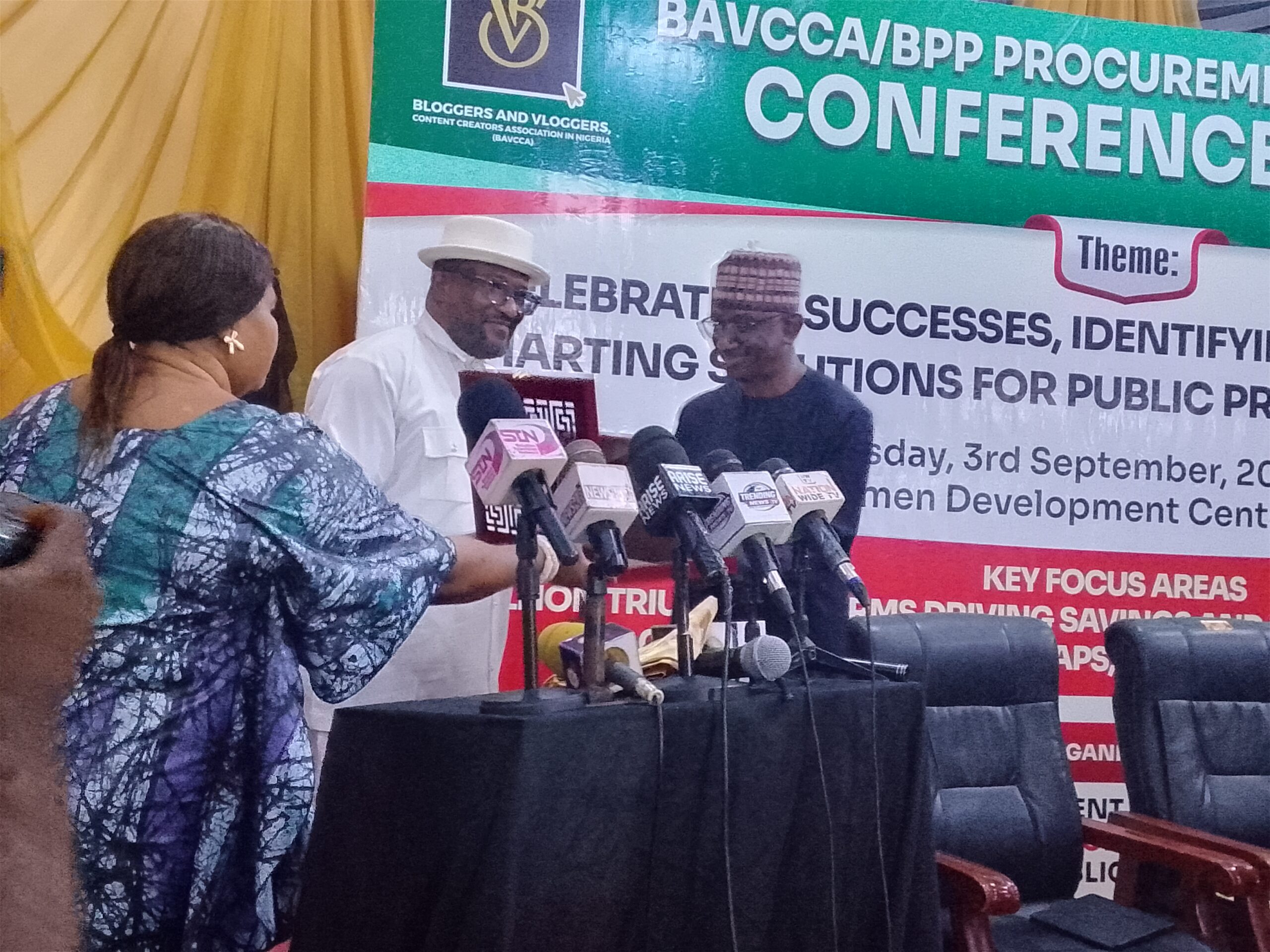
BPP Director General, Adebowale Adedokun, disclosed this yesterday at its reform conference in partnership with the Bloggers and Vloggers, Content Creators Association of Nigeria (BAVCCA), in Abuja.
Adedokun described the initiative as “one of the most ambitious procurement modernisation programmes in Nigeria’s history”, as it would make public procurement more transparent, efficient and responsive to national development needs.
According to him, the future of procurement is digital, adding that the e-GP system would strengthen audit trails, improve transparency, facilitate real-time monitoring and generate reliable procurement data for evidence-based decision-making.
Represented by the Director of Civil Infrastructure, Nasir Bello, he said: “This is not simply digitalisation; it is a transformation.”
The BPP boss said the reform would also be supported by the National Online Compliance and Oversight Platform (NOKOPO), designed to strengthen compliance tracking and ensure that procurement rules are implemented rather than merely documented.
“The objective is straightforward: to ensure that government rules are not merely written but implemented; to move from compliance on paper to compliance in practice; and to ensure that public resources consistently deliver measurable value to citizens,” Adedokun said.
He said the Bureau was also using its Nigerian First Policy to make public procurement a driver of local production, job creation and industrial growth, while expanding affirmative procurement initiatives for MSMEs, women-owned businesses, youth-led enterprises and other underrepresented groups.
“Government spending must not merely purchase products and services. It must create opportunities. It must strengthen indigenous industries. It must retain value within our economy,” he said.
He urged bloggers, vloggers and other content creators to use their platforms to deepen public understanding and scrutiny of government procurement.
“You are no longer mere observers; you are drivers of public discourse. You are amplifiers of information. You are partners in accountability,” he said.
He urged the media community to help Nigerians understand “not only what government spends, but why it spends, how it spends and what value those expenditures generate.”
Backing the reforms, BAVCCA President, Ikechukwu Chukwunyere, said stronger citizen monitoring and responsible digital-media engagement could help ensure that procurement reforms translate into greater public confidence.
Chukwunyere said content creators had a responsibility to provide accurate and balanced information while helping citizens understand how public resources were being deployed.
“As bloggers, vloggers and content creators, we recognise the enormous influence of digital media in shaping public understanding.
“Our responsibility is not simply to publish information, but to ensure that information is accurate, balanced and responsibly presented,” he said.
He called for stronger collaboration among the BPP, media, civil society organisations and digital content creators to promote procurement education, public awareness and responsible monitoring.
While commending Adedokun for what he described as “remarkable achievements” within a short period, Chukwunyere identified capacity gaps, resistance to change, bid manipulation, data challenges and weak enforcement as issues that must be addressed for the reforms to deliver sustainable results.
“Our objective should therefore be simple: to move from reform to implementation, from implementation to measurable results, and from results to public confidence,” he said.
He added that public procurement should be viewed beyond contracts and procedures because the management of public resources directly affects infrastructure, healthcare, education, security and other areas of national development.