Follow Us on Google

Every of Nigeria’s quadrennial presidential election since the advent of the 4th Democratic Republic in 1999, has been variously described as being the ‘’most consequential’’ and ‘’make or mar’’ by pundits and other interested stakeholders in Africa’s largest democracy. This is because each presidential election is usually characterised by tension soaked and fierce geo-political contestation of power, which unravels Nigeria’s ethno-geographic and religious fault lines in ways that often threaten the continuous corporate existence of the Nigerian state.
Although described as a ‘’do or die’’ election by then President Olusegun Obasanjo, the 2007 presidential election was more of a contestation of cross regional, ethnic and religious alliances that were mostly devoid of primordial sentiments as the leading candidates at the time; Umar Musa Yar’Adua of the then ruling PDP, then Vice President Atiku Abubakar of the newly formed AC party and General Muhammadu Buhari of the ANPP, were all Hausa speaking Muslims from northern Nigeria. So, the 2007 presidential election was characterised by issues based campaigns around economic reforms and corruption. Notwithstanding the widespread electoral malpractices of the time, that era can be considered the golden age of Nigeria’s 4th Democratic Republic.
Four years earlier in 2003, there was a strong challenge to President Obasanjo’s continued stay in office, when General Muhammadu Buhari was supported by the conservative political establishment in Hausa Speaking Muslim north of Nigeria entered the contest riding on the wave of ethno-geographic and religious populism, in a move that would have truncated Nigeria’s North/South power rotation arrangement, which is aimed at ensuring inclusion, justice, peace and unity of a multi-ethnic and religious country such as Nigeria. But fortunately for Nigeria, President Obasanjo proved to be pan Nigerian statesman who truly ‘’belonged to everybody and to nobody’’ in particular, he was able to rally southern Nigeria, the middle belt and liberal elements of the Hausa speaking Muslim north to defeat, what was then believed to be Buhari’s reactionary and disruptive political ambition that posed a danger to the unity of the Nigerian state.
This manner of reactionary disruption in Nigeria’s cycle of democratic transition was believed to have become a thing of the past following President Obasanjo’s forthright and earnest upholding of the principle of power rotation, when he went up north to seek a worthy successor in Umar Musa Yar’Adua; a move that ensured a smooth and rancour free civilian to civilian transition of power. But this respite will be short lived following the death of President Yar’Adua in 2010, paving the way for deputy, Goodluck Jonathan from southern Nigeria to become president in a tenure that was considered the turn of the north. To compound the already complicated matter, President Goodluck Jonathan insisted on running for the presidency in 2011, leaving the north feeling short changed and justifiably so. This feeling resulted into a northern political revolt against President Jonathan and the PDP, in support for General Muhammadu Buhari of the CPC, in a manner that pitted the north against the south. The victory of President Jonathan deepened resentment in the north, with the region feeling humiliated, cheated and treated unjustly; a situation that pressed the Hausa Speaking Muslim north, which happens to be Nigeria’s largest ethno-geographic and religious demography deeper into primordial political conservatism. And by 2015, when President Jonathan attempted a second term violation of the principle of zoning, the now heavily conservative north mustard every political might at its disposal to punish the ruling PDP and its candidate, a lesson Nigeria will not forget in a while. By defeating an incumbent on the strength of ethno-geographic and religious support, the Hausa speaking Muslim north will emerge the undisputed king and king makers of Nigerian politics, whose fear is the beginning of political wisdom.
Other News
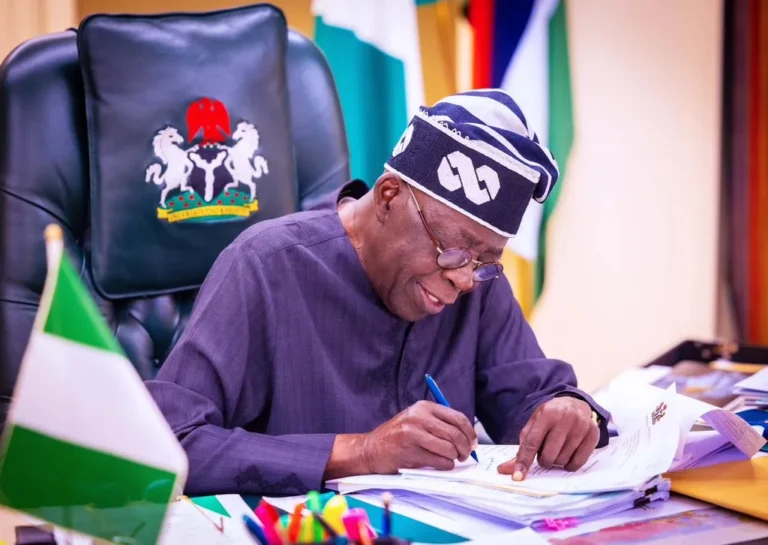
But to regain power in 2015, the north led by Muhammadu Buhari had to go into a ‘’marriage of inconvenience’’ with the Yoruba speaking western half of southern Nigeria, led by Asiwaju Ahmed Bola Tinubu. Marriage of inconvenience because both men have absolutely nothing in common in terms of shared values, vision, world view or even politics. An astute political tactician, pro-democracy activist and prominent Yoruba tribal chieftain, who served previously as the governor of Lagos, Tinubu had over time emerged the undisputed leader of the south west geo-political zone of Nigeria with an extensive network of connection and alliances across the country, going into a political alliance with a former military dictator, who truncated Nigeria’s Second Democratic Republic and is not known to have pro-democracy credential was definitely a marriage of inconvenience. And once a deal was struck between the single most popular individual in the north and the most powerful politician from the south west of Nigeria, it was almost certain that victory was within sight. That deal was the formation of the APC from Buhari’s CPC and Tinubu’s APC, with the main agenda of returning power to the north against PDP’s insistence on denying the region its rightful turn of the Nigerian presidency.
And after eight years of consistent support for the north to have its two terms in office, despite the many challenges associated with a marriage of inconvenience, Tinubu demanded it was his turn [emi lo kan] to be president of Nigeria. That demand was necessary because, throughout the eight years of the Buhari administration, Tinubu, was like the loyal and faithful spouse who endured the indignity of being despised, cheated, maligned, humiliated and deprived of all marital rights and privileges and was about to be denied inheritance before raising a strong voice of protestation. Whereas, his marital partner and his in laws were clearly unwilling to see him inherit the presidency of Nigeria from President Buhari going into the 2023 presidential election, their conscience apparently prevented them from out rightly going ahead to openly oppose him; a situation that allowed the old war horse to rally his loyal troops to victory in the 2023 battle for the presidency.
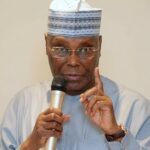
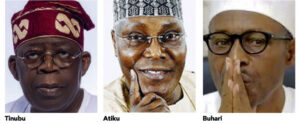
As Nigeria approaches another presidential election in 2027, it is being heralded as one that will the country’s most consequential because it may result in the dissolution of the ‘’marriage of inconvenience’’ between the Hausa speaking Muslim north and the Yoruba speaking south west of Nigeria; a marriage that represents the last glue that binds Nigeria’s northern and southern half, with consequences for national unity, equity, fairness and justice. The north appears to have found a replacement for the late President Muhammadu Buhari in the person of former vice president Atiku Abubakar, who has now emerged as the main challenger to President Tinubu going into the 2027 presidential election.
If the support for President Tinubu in the north in 2023 was reluctant and sluggish, the prospect of this support going into the 2027 presidential election appears unwilling and possible outright rejection. And the reasons for this state of affairs in the north is said to be the combined effect of President Tinubu’s economic policies and ineffectiveness of his security measures that deepened poverty and insecurity in the region. But as real as the socio-economic condition in Nigeria is a hellish reality, the south is as impacted as the north just as insecurity in the north affects all Nigerian [north and south] that are resident there. In fact the cry of ‘’ebi npa wa’’[we are hungry] started in Lagos, the home state of President Tinubu. And whereas, the President may appear to have appointed a large number of his Yoruba kinsmen into government, nevertheless, he has managed to balance every Yoruba appointment with a northern counterpart sector by sector from the cabinet to the commanding heights of the economy and to the leadership of Nigeria’s security and intelligence community, in a manner that portrays the president as almost beholding to the northern region.
After Appointing Femi Gbajiagbiamila from south west as chief of staff, President Tinubu appointed George Akume from northern Nigeria as the secretary to the government of the federation. While the minister of finance,Taiwo Oyedele and governor of the Central Bank of Nigeria, Yemi Cardoso are from the south west, the minister of budget and national planning, Atiku Bagudu as well as the director general of the budget office, Tanimu Kurfi are from the north. Just as the director general of NIMMASA, Dayo Mobereola is from the south west so is the MD of NPA, Abubakar Dantsoho from northern Nigeria. Similarly, while Tosin Ajayi from the south west is director general of DSS, the director general NIA, is Mohammed Mohammed from northern Nigeria, just as Tunji Disu is IGP of Police so is Geidam the minister of police affairs with DIG Hashimu Argungu as chairman Police Service Commission.
One thing is certain, President Tinubu did not and cannot be said to have marginalised northern Nigeria and its people in the three and half years of his first tenure neither did he deliberately impoverish the region and inflict insecurity. Therefore, any opposition to President Tinubu’s re-election should not be framed around ethno-geographic sentiments as it will be unfair to him and put a strain on the already fragile state of the Nigerian state post 2027 presidential election.